
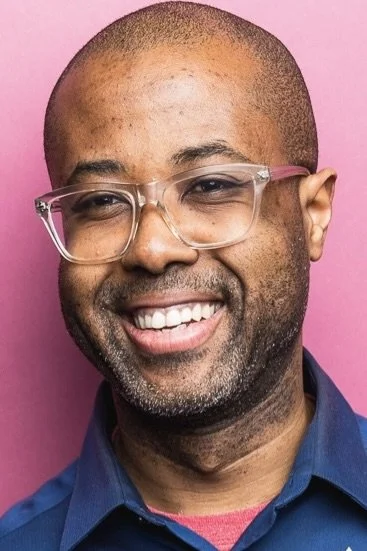
Interview with Lavell Blackwell
In anticipation of our upcoming concert, we interviewed composer Lavell Blackwell to learn more about his background and thought process in composing a new piece for Winsor Music, On the Impulse to Move. We hope you’ll join us on September 30th to hear the premiere of this piece and a lively program that celebrates the connection between music and dance!
In anticipation of our upcoming concert, we interviewed composer Lavell Blackwell to learn more about his background and thought process in composing a new piece for Winsor Music, On the Impulse to Move. We hope you’ll join us on September 30th to hear the premiere of this piece and a lively program that celebrates the connection between music and dance!
How did you get started composing? What was your early musical training?
I've been writing music since I was about 15-16 years old--back when I discovered music notation software. Usually short pieces--songs and piano ditties, etc. I'd say my first semi-serious efforts in composition started in undergrad at Oberlin, when I started arranging for my a cappella group, In-A-Chord. I had this idea that instead of the usual "soloist and vocal accompaniment" model of a lot of a cappella groups, I'd take a more egalitarian approach to my arrangements. So all the sections got a piece of the melody at some point, even the basses. And I put the focus on group singing--more like a choir. It led to some very creative arrangements, bordering on original compositions. I didn't start studying "classical" composition until I became a Continuing Ed. student at Mannes in 2013. This was after getting my MFA in Musical Theatre Writing from NYU.
You have an MFA in Musical Theater Writing from New York University. Tell us a little more about your interest in musical theater and how it influences your music today.
I've always loved to explore story, image and metaphor in my music. I write so-called "pure music" less often. The main focus of the NYU program was storytelling through the music, and so I think that's where that interest comes from. My first serious score study was looking at scores for musicals--"Rent," "Sweeney Todd," "A Chorus Line," etc. So my music often draws inspiration from things other than musical ideas. Even "On the Impulse to Move," while not telling a story per se, takes inspiration from experiences I had that are not related to music. But I often use the language of music to get at the ideas, the emotions, the experience. That's the influence of musical theater.
What is it like teaching at Berkelee?
It's great, and also a challenge. I trained at conservatories and teach classes based on 18th and 19th century musical techniques, and it's a different kind of vibe at a school that focuses on jazz and pop! It's fun, though. I feel like I'm building bridges between different styles and eras in the Composition Department. I've learned a ton from the students there.
How is your new piece influenced by Stevie Wonder and John Adams? (is this still the case? We know you wrote that months ago!)
I'd say the influence of Stevie Wonder got a little less obvious as the piece evolved to its present form, but it's still present in some of the funkier harmonies. The John Adams is coming through in the pulsing 16th notes I use in the first section of the piece--and I'd say somewhat in the 3rd section as well.
What is your relationship to meditation and stillness in this new work?
This piece is about how hard it is for me to remain physically or mentally still, that struggle, those tensions that happened in my body and brain during meditation. So, I'd say the relationship to stillness and meditation is...adversarial? Adversarial, but not mocking--at least I think. A lot of the work is this interplay between stasis and volatility, the pulsing rhythms combined with the suddenly changing harmonies and dynamics, for example.
Anything else you would like to tell us about this piece? We can’t wait to play and share it with our audience!!
The piece has a quirky humor to it. I hope that comes through for listeners and that they enjoy that aspect of it.

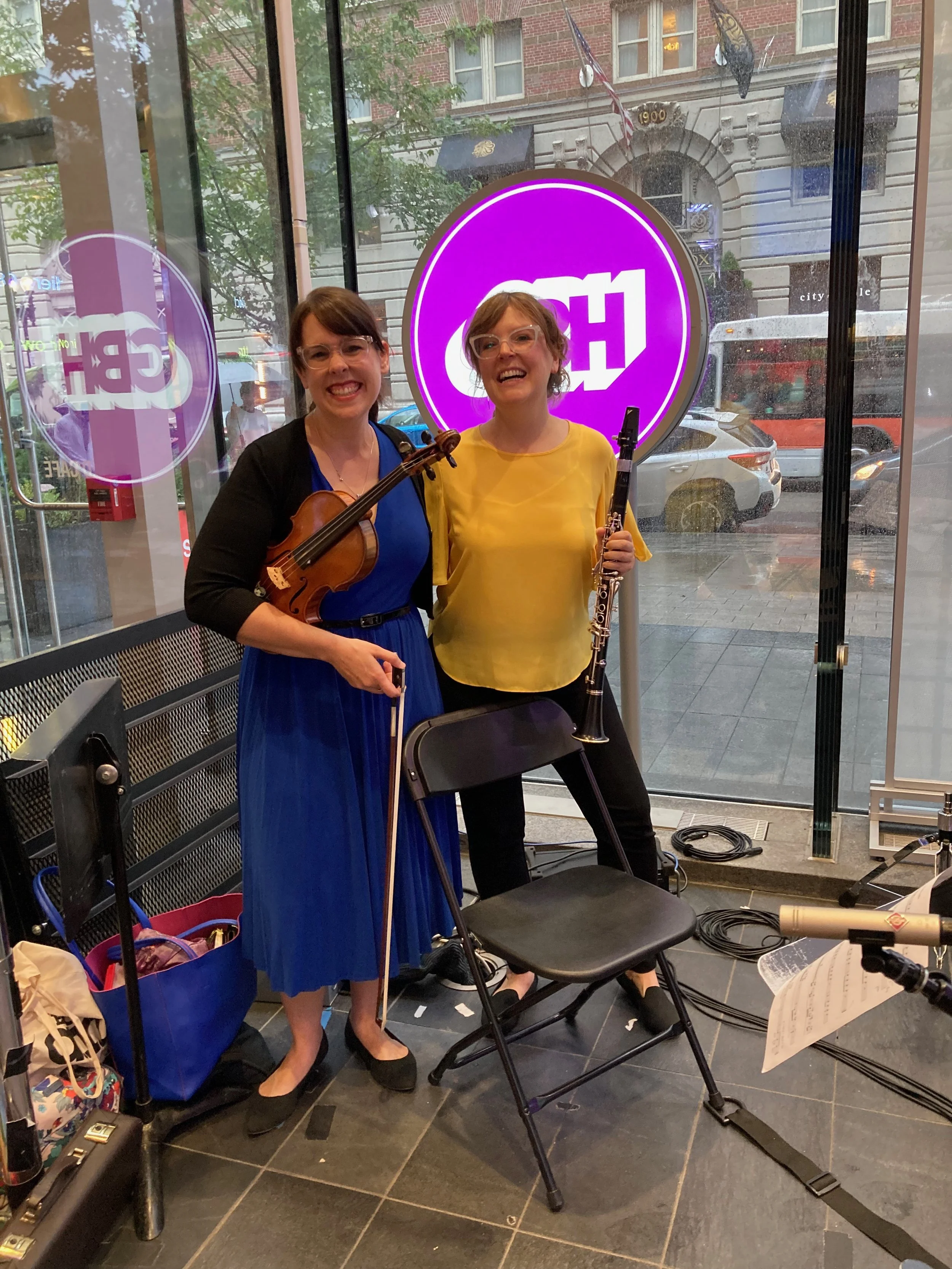
Listen to Winsor Music on WGBH!

Boston Public Radio with Jim Braude and Margery Eagan featured Winsor Music and Kevin Harris in advance of our performance at the Mission Hill Arts Festival sponsored by Celebrity Series. Listen to Gabby and Kevin talk about Kevin’s work “Pulse” and Winsor musicians play excerpts of that piece here! The interview begins at minute 22:15 of the recording.


2020 UPDATES (post from fall 2020)
Original post from Fall 2020
We hope you are all staying well and safe! In the absence of our regular concert and outreach schedule here is what Winsor has been up to:
As we think about the future of Winsor Music, racial justice is at the forefront of our minds and recent actions. The events of this spring have catalyzed an examination of our organization and our individual lives and through this process of investigation, introspection, and contemplation we are implementing changes that reflect Winsor’s core values. Please read in more detail about our plans here.
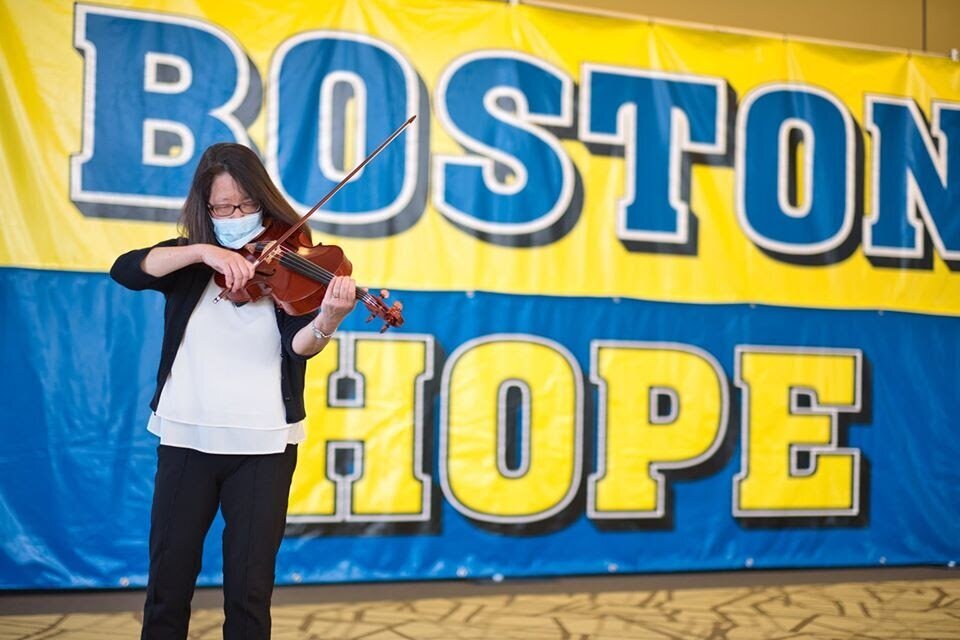
Dr. Lisa Wong plays at the Hope Hospital
Winsor was proud to be part of the group of musicians who created musical content for the COVID-19 patients at Boston Hope Hospital, as part of Boston Hope Music. The Boston Hope Hope Hospital was a 1000 bed temporary hospital set up in the Boston Convention Center, and because of its CMO Ronald Hirschberg and Dr. Lisa Wong, had as one of its priorities the use of the arts and music in the healing process. Three 30-minute musical playlists were available to patients throughout the day to receive their “doses” of music. You can listen to these curated playlists on the Boston Hope Music Healing Youtube Channel. Boston Hope Music is evolving and continuing to give music to patients and caregivers in the Boston area through a music lesson program for medical workers and performances at vaccination sites. WGBH’s Jared Bowen interviewed Gabby, Lisa, and Ronald about the Hope Hospital for his program “Open Studio.” You can watch the interview here.

World Busk for Health Facebook Live Concert
Winsor was part of the team that created WorldBuskForHealth, a social media initiative to encourage people to upload musical videos of gratitude for the nurses in their lives that started on May 6, the beginning of National Nurses Week, and culminated in a live Facebook performance from musicians all over the world on May 12, International Nurses Day. You can watch Gabby’s tribute to her nurse at Dana Farber here.
Winsor was part of Gloria Chien’s incredible project "Notes of Hope - Music for the Frontline" broadcasting nightly music videos for medical workers at Mass General, Brigham and Women's, Children's, and Boston Medical Center.
Díaz Family Reunion Concert (from Jan 2019)
Originally posted January 2019 — Gabby Díaz on the upcoming family reunion
On our next Winsor Music concert on March 16, 2019 my parents, brothers, and I will be performing together as a family for the first time in Boston! Each one of us has deep ties to Boston and the music scene here, and I am so excited to introduce my brothers to the Winsor community.

Manuel, Betty Anne, Andres, me, Roberto
People often ask me what it was like to grow up in a family of musicians. Music was everywhere in my childhood, some of my oldest memories are of playing underneath the piano while my parents rehearsed. My parents and I played and listened to music constantly. I’ll never forget the sound of my dad remarking on my practicing, “Out of tuuuuuuune” as he chopped carrots in the kitchen.
In addition to my parents, I had two musician brothers to look up to. When I was just starting to play, they were well on their way to phenomenal careers as performers. The closeness of my family is due in a large part to our relationship with music. The three string-player kids, me, Andres, and Roberto, all had our first moments on our instruments guided by our father. His deep connection to music influenced us all from the very beginning. The road to a life in music was a rather bumpy one for him, and I thought I’d share a little bit of that story with you.

Refugees in France, before going to Chile, and my grandfather, Gabriel
In the 1930s my grandfather, Gabriel Díaz, was forced to evacuate his family from Spain because of his heavy involvement in the resistance against Franco. After a series of harrowing events including hiding from air raids in an orange grove, being separated for months, the loss of a son named Gabriel, and walking to France, my grandfather, my grandmother, Manola, and my father, Manuel, boarded a boat to Chile. After one year of being bedridden by tuberculosis, my father began his childhood in Chile. One afternoon he and my grandfather walked by a pawn shop and saw a violin hanging in the window. Pop begged for the violin and my grandfather laid out two conditions:
1) He must take it seriously and practice.
2) He would have to get a degree in something else first.


Gabriel, Manola, and Manuel
My dad agreed and the violin was his.
Pop and his pawn shop violin
Pop was very serious and creative about music from the beginning. He was given a recording of Rimsky-Korsakov’s Scheherezade but had no record player, so he made his own out of a little motor, a cone of paper, a violin bow stick, and a cactus needle!
Pop obtained his degree in mechanical engineering while also completing a music performance degree. After graduating, he began life as a professional musician, performing the Chilean premieres of concerti by Bartok, Hindemith, Berlioz, and Walton.
At the suggestion of a mentor he applied for and received a Fulbright Scholarship to study with the greatest violist of the 20th century, William Primrose, at Indiana University. Pop picked up his family of 5: his wife Pauline, and children Jenny, age 7, Roberto, 6, and Andrés, 2, and flew to America. (Fast forward: Roberto now plays on one of Primrose’s instruments, a 1600 Amati viola!)

William Primrose, an inspiration to us all!
After his Fulbright was complete, Pop and the family returned to Chile, where political tensions were high. He knew that he did not want to stay in the collapsing country, and wanted to return to the United States. While playing with the Chilean Chamber Orchestra he got to know the great American composer Gunther Schuller.
Pop asked Gunther if there was any work available to him in the States, and Gunther contacted his friend Robert Shaw, conductor of the Atlanta Symphony. Mr. Shaw graciously allowed my father to join the orchestra as long as he was in the American Musician’s Union, luckily he had joined so he could play some gigs while living in Bloomington. Pop immediately traded their car in exchange for plane tickets, and landed in Miami on September 11, 1973, the day of the Chilean coup.
Me with Gunther at NEC after a performance of John Zorn’sContes De Fées

Once in the States, Jenny, Roberto, and Andres were all interested in music and took lessons from their parents. Tragically, Pauline was killed in a bicycle accident a few years later. Now a single father, my dad continued to play in the Atlanta Symphony and took odd jobs on the side to support his family, like a paper route and repairing old cars. Pop’s engineering degree proved beneficial as he soon got work as a draftsman. Jenny focused her interest in fashion and cosmetics and decided music was not for her. Roberto, then a violinist, and Andrés, a cellist, became quite serious about music. They both decided to go to music school, and moved to Boston to attend the New England Conservatory of Music. Around this time, my dad met and married Betty Anne, a fabulous pianist, and I came into the picture. My mom, a Georgia native, studied with incredible pianists Menahem Pressler, William Masselos, Edward Kilenyi, and Lee Luvisi. Her beautiful, soulful playing fit right in with the Díaz boys.

Andrés with a mustache, and Tito (Roberto)
After completing their schooling at NEC, Roberto became a member of the Boston Symphony, and Andres won the Naumberg Competition and toured worldwide as a soloist and chamber musician. I had just started playing the violin and piano, studying with my parents, and I remember thinking how amazing my older brothers were. They would always play for me when they came home for holidays, and I absolutely loved listening to them practice. Roberto would send me presents from the exotic places he traveled to on tours with the Symphony and the Boston Pops, and Andres would tell us hilarious stories about places he played and the people he met, like the time a violinist went missing during a rehearsal and was found later stuck high up in a tree!
They would send us cassette tapes of their concert performances, and I would secretly listen to them every night under the covers on my walkman.
I would listen to certain pieces they played, like the Dohnanyi Serenade, over and over again until I knew exactly how every moment of the music sounded. I hoped that some day I might be able to play with them.
When I was 16, I was diagnosed with Hodgkin’s Disease, a type of lymphatic cancer. This difficult period in my life solidified my need to become a musician. Music was a release for me and no matter how crummy I felt, listening to music always made me feel better. After about a year of chemo and radiation, I was healthy again, and it was time to think about college. There was no doubt in my mind I wanted to come to Boston to attend NEC. By this time, Roberto had moved away and was now principal viola of the Philadelphia Orchestra, and Andres was teaching at Boston University.

Mom, Pop, and me
I started school, and in the years following Andres moved to Texas and began teaching at SMU, and Roberto became President of the Curtis Institute of Music, the prestigious music school in Philadelphia. Jenny went on to an impressive career at Neiman Marcus, where she is a top saleswoman for Chanel. A few years ago, my mother was diagnosed with breast cancer, and during her treatment and recovery she worked on Bach’s Goldberg Variations as a kind of personal therapy. Once she was healthy, my brothers and I performed a string trio arrangement of this great work to benefit the cancer center in our home town.

Fun times with big brothers!
Three years ago, after retiring from teaching, my parents relocated to Winchester! Although Boston is quite different from Columbus, Georgia, they have settled in and are enjoying Boston to the fullest. My mom has gotten to know a wonderful singer and is playing the great Lieder repertoire with him every week, and my dad has joined the Longwood Symphony. They are avid concert-goers, and I love hearing their opinions on the concerts they hear every week.
Our Winsor concert on March 16 is going to be a fun one! The bros will play a piece I have heard them play many times and love hearing them play, the charming “Eyeglasses” duo by Beethoven. The three of us will play epic trios by Beethoven and Dohnanyi, and my parents will join us in a new Song for the Spirit by a local favorite composer, Marti Epstein. We will teach this song to the audience, and then we will all perform it together, bringing the Winsor family so dear to me and the Díaz family together.
Throughout the many twists and turns in the Díaz family history, music has been a constant source of joy, relief, and bonding. It has been quite a journey from Spain to Boston, but through it all my family stayed connected through the joy of music-making. We are so looking forward to playing together again and I hope you will be able to join us!!
2002, Me, Mom, Andres, Tito
Jenny, Tito, Pop, Me, Andres
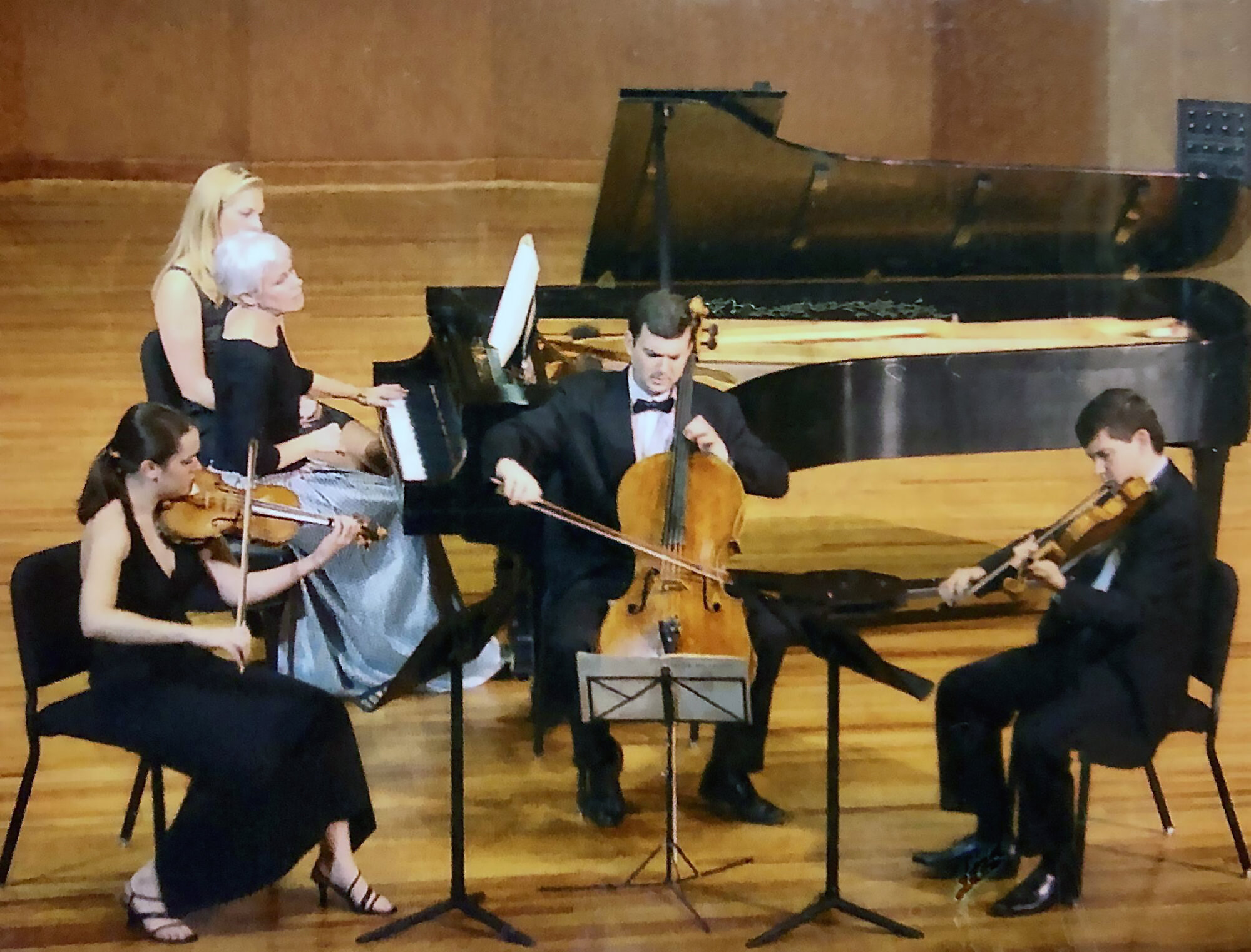

Interview with Marti Epstein

The title of the piece you wrote for us for our Nov 26th concert, Komorebi, means the light that is filtered through the leaves of trees. Where did that image come from?
I have a book called "Otherwordly" which is where I found this beautiful word. The word inspired the piece- I love the image of the sunlight on the leaves. I often start the compositional process from a visual image.
Did the Winsor Music players' personalities and our friendship influence what you wrote?
While I don't really know Peggy, Rane and Gabby have played my music a lot, and I am friends with them - so absolutely both their gorgeous playing and their lovely personalities entered into my compositional process. Also, I do know Peggy's playing and was very much inspired by how beautiful her sound is.
Is one instrument more difficult to write for than another?
Not really, but I played the clarinet (unofficially I still do) for many years and feel like I understand that instrument on a deeper level.
Who are your major influences? Do you think of them when writing?
Toru Takemitsu, Ruth Crawford Seeger, Morton Feldman, and Jean Sibelius are my biggest influences- I don't think of them consciously, but they're in the mix, for sure.
When did you feel like you found your compositional voice?
I was pretty young- if I played pieces for you from my freshman year, you would recognize them as my voice. I'm just a much better version of that now.
Are you writing for us, yourself, or the audience?
All three- but when I write for "the audience", I am putting myself in the seat of the critical listener and writing from that perspective. I am not interested in trying to guess what everyone in the audience will like; I'm more interested in inviting them into my world.
Your scores are always so beautiful. Is the care you take with making the score part of your process or something that happens after a piece is complete? Do you have a visually artistic side as well?
I am 100% a frustrated, no-talent visual artist! My calligraphy is absolutely part of the process, and the sound of my music itself is like aural painting (to me, anyway!)

Come hear Komorebi and a whole program of fabulous music on Winsor’s concert Nov 26th. More info here.

Remembering "Remembering Gatsby"

I first heard of John Harbison's orchestral work, Remembering Gatsby, as a kid growing up in Columbus, Georgia. My parents were both members of my home-town orchestra, The Columbus Symphony - my mom on piano and my dad on viola. (Fun fact: this orchestra was the second orchestra formed in the United States!). I would go to their concerts and always sit way up high in the balcony. One concert in particular is etched in my mind. I remember thinking the first piece on the program was super fun and made me want to get up and boogie. A few weeks later we acquired a cassette tape recording of the concert and I would secretly listen to it every single night under the covers on my Walkman while I was supposed to be asleep! I later learned that first piece was Remembering Gatsby (Foxtrot for Orchestra) by John Harbison.
A few years ago Emmanuel Music produced a concert version of Harbison’s opera, The Great Gatsby and both Rane and I were fortunate to play in that production. When we started the overture in our first rehearsal I thought to myself, “Whoa, this sounds really familiar!” The overture uses the same toe-tapping themes as that piece I loved as a child and memories of listening to Remembering Gatsby came flooding back. This past summer as Rane and I were thinking about programs for Winsor's 21st season I recalled the wonderful saxophone and violin solos in Gatsby, still fresh in my mind. My eleven-year-old self would never have imagined that someday I would know John Harbison well enough to ask if I could make an arrangement of Gatsby, and that he would say yes!

Rane Moore, John Harbison, Gabriela Díaz
It's a luxury arranging a piece in which you'll also perform. In this particular case, that luxury meant indulging myself in a chance to play the flexatone, a cartoony-sounding percussion instrument which makes two appearances in Remembering Gatsby - I couldn’t resist (click here to listen)! Arranging this piece also gave me the chance to highlight the many talents of my fellow musicians. For example, Rane Moore: she is not only a gorgeous clarinetist, but a fantastic saxophone player as well!
I’m so looking forward to playing his piece, and I hope you will join us on October 15th for a whole program of incredible music.
-Gabby Díaz
Check out the orchestra version of Remembering Gatsby played expertly by the Royal Concertgebouw Orchestra here:

Interview with Anna Weesner
Our March 26 concert will feature the Boston premiere of composer Anna Weesner’s Love Progression: A Personal Essay, for oboe and string quartet, a Winsor Music commission. Dr. Weesner is chair of the music department at University of Pennsylvania in Philadelphia, and describes her new piece as “equal parts reflective, studious, and cheeky.” Recently, we had a chance to talk with her about the premiere and her background.
In your musical education, what instruments did you study, and how did you arrive at your current identity as a composer?

My first instrument, at five, was the violin. I studied with the Suzuki method, learning at first by ear, and absolutely recoiled when it came time to learn notation, something that is quite funny to me now. I started piano not long after—my mother was a piano teacher, though not my teacher—and then at twelve, I fell in love with the flute. I spent much of high school and part of college wanting to be a professional flutist. My years in youth orchestra during high school were profoundly important and rich (Thank you to Claude White and Ben Zander). Sitting as a flutist in the midst of an orchestra playing Brahms was unimaginably exciting. My identity as a composer is certainly grounded in those experiences. At the same time, I was a young girl growing up in New Hampshire, listening to Top Forty radio and singing along. So there’s pop music, too. Always.
How would you describe your music to someone who wasn't familiar with it?
My music as oriented to pulse and melody. I like meter and I like line. I’d say that I use tonal—that is, in many cases, familiar—materials in non-tonal ways. I’d say that I am interested in reflection and speculation in sound. I’m interested in using simple materials to make complex and—hopefully—emotionally rich textures. I’d say that my music sounds American. Echoes of Copland, Ives, Rock and Roll.
How did the commission from Winsor Music come about?
Through various connections. I’ve long heard of Peggy Pearson, in part through John Harbison, who was a teacher and remains a significant influence for me as a composer. I have other composer friends who’ve written for Peggy, including Andy Waggoner and my colleague at UPenn, Jim Primosch.
Have you written for oboe before? Was Peggy Pearson a particular inspiration?
I’ve written for oboe infrequently and until recently only in the context of orchestra or chamber orchestra. My recent song cycle for Cygnus Ensemble includes oboe in a group of six. The oboe was certainly a part of that formative experience in youth orchestra—the instrument that first drew my attention when I went to my first rehearsal. I will never forget hearing the Overture to Rossini’s Italian in Algiers, when the girl to my left in the wind section who came from Hanover, NH rolled out that solo with such grace. The oboe is very special. While I haven’t had the chance to work with Peggy before, her playing is long known to me by reputation, which makes this very exciting.
Is your quintet for oboe and strings typical of your compositional style, or a departure? Could you describe the piece?
I suppose the joke on composers is that they like to imagine that their pieces are departures, carving out new territory, when more often than not they are like next chapters in the unfolding book of their work. My piece for Peggy Pearson and Winsor Music is a mix of typical and new, perhaps a more explicit realization of something that’s been lurking in my work for a long time. It has elements that are familiar, including pulse and tune, but it makes more explicit use of a chord progression that I associate with pop music than ever before. I was thinking about how lots of songs are based on the same very few progressions and wondered what it might mean to play around with one myself. From that, the piece grew into an exploration of ideas around that progression which came to constitute a dramatic or narrative sequence that I try to represent in my movement titles.
Do you have a preference for writing for orchestras or for chamber ensembles?
I have mostly written for chamber ensembles, in part because these performances are more available than those for large groups. I do love the intimacy and collaborative spirit of chamber music. It’s like nothing else. That said, I like the big sound of many, too, and was pleased during this past year to hear a performance of a string orchestra piece of mine called Still Things Move, by the Riverside Symphony in New York.
Can you identify certain teachers or composers who were important influences on your development as a composer?
Important teachers (including influence, aesthetic kinship): John Harbison, Steven Stucky, Roberto Sierra.
Important influences: Judith Weir, Gyorgy Kurtag, Virginia Woolf, Charles Ives, Stravinsky.
What projects are coming up in the future for you?
Upcoming projects include a clarinet quintet for the Lark Quartet and Todd Palmer, and a new version of My Mother in Love, an album of ten songs.
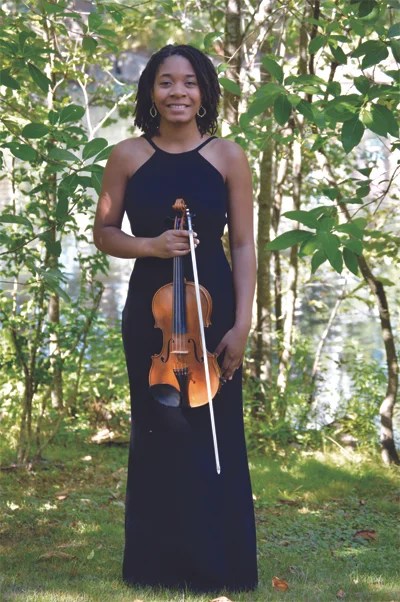
Interview with Njioma Grevious

Njioma Grevious, of Newton, Massachusetts, is a 17-year-old violinist who has been a scholarship recipient of Project STEP’s string training program since she was 5 years old. A student of James Buswell, Njioma recently performed as a guest artist at the White House in a Project STEP string quartet and with the President’s Own Marine Chamber Orchestra during a State Dinner hosted by President and Mrs. Obama. As a member since its inception of the Boston Philharmonic Youth Orchestra led by maestro Benjamin Zander, Njioma has performed in concert halls throughout Europe. Njioma is passionate about chamber music, currently performing in ensembles including Winsor Music’s mentored Whistler Quartet, a New England Conservatory Preparatory School piano quintet, and with her siblings in the Mahewa Trio. From a recent conversation with Winsor Music:
As a senior in high school, do you find it hard to balance academic subjects with the demands of practicing? Do you have a planned schedule to make sure everything gets done?
It is hard to find a consistent balance so I take a flexible approach to getting everything done (or at least trying to!). I am always ready to adjust to any day’s biggest demands by shifting my homework or practice or rehearsal schedule to accommodate so much to do. But my basic structure is getting a good night’s sleep, finishing up any homework before school, either beginning practicing right after school or later in the evening on school nights. Because I have a lot of rehearsals in addition to practice, each day depends on what makes the most sense in terms of being efficient and how I am feeling.
What’s it like studying with a great musician like James Buswell?
It is absolutely wonderful studying with Mr. Buswell. I feel tremendously fortunate and I really enjoy his inspirational and intellectually rewarding approach. I am thankful for the high expectations he has for me and I love reaching for them.
You’ve been a player in the Boston Philharmonic Youth Orchestra since its founding, and traveled with the BPYO to Europe. Can you tell us something about that experience?
My experience with Mr. Zander and BPYO has also been life-changing. I can’t imagine what these last four and a half years would have been like without the great opportunity and excitement of developing as an orchestral musician under Mr. Zander’s leadership, and performing with amazing musicians and traveling to so many countries to make music even before reaching college. BPYO is such a high-level orchestra, and when we play amazing repertoire including works by Mahler, Stravinsky, Beethoven, Gandolfi in some of the world’s greatest halls, it is pure joy.
Do you find that you preference for chamber music or orchestral? Does your approach to music differ between the chamber groups you play with?
I love them both because each is collaborative! My general approach is always the same: bringing my love for the music and music-making. But I do bring a different kind of discipline to practicing and expressing myself to meet the unique demands of large ensemble and small ensemble playing.
You recently performed for President and Mrs. Obama at the White House, which must have been very exciting. What was that like?
Performing at the White House and meeting President and Mrs. Obama is still something that I have to pinch myself about! It was more than exciting!! The Obamas are such wonderful and warm and incredible role models to me and so many people I know. And to be able to play in the White House with a Project STEP quartet and with members of the President’s Own Marine Orchestra—it was surreal.
Apart from the appearance with Winsor Music on December 3, what other performances do you have coming up? Do you have a past performance that was particularly memorable for you?
Coming right up, I will be performing with The Whistler Quartet, a Winsor-mentored quartet this weekend at an assisted living and nursing home facility. Outreach concerts are meaningful to me because they are a chance to hopefully add joy to at least one person’s day who doesn’t regularly get to hear live classical performances. Performing with Saul Bitran, our coach, Alma and Peter helps me develop and is so much fun because they are excellent musicians and friends. In addition to the Brahms we’ll be playing, I’ll also be performing a movement from a Bach sonata for solo violin. In addition to the White House performance, I remember another performance where I felt a particular kind of satisfaction. This was on tour with BPYO in Madrid as we successfully finished recording Beethoven’s Eroica. I also will always have sweet memories of the many times I have had the opportunity to play really beautiful music with Peggy at Winsor benefit concerts since I was about 7 years old.
What are your plans after high school? Is there a conservatory or college that you dream of attending?
Right now I am in the process of applying to colleges and conservatories and for scholarship opportunities to afford college. I want to continue my violin studies with the goal of a professional chamber and orchestral career. I am truly excited about my next four years of violin performance learning from great teachers and peers.
We’re looking forward to your performance on December 3rd of the Bach Concerto for Oboe and Violin. Is this a work that presents special challenges for you as a performer?
Playing Bach is always a challenge and is always an opportunity to learn something new and improve both technically and musically. With that said, rehearsing and playing this concerto with Peggy Pearson, one of the most amazing musicians I have ever heard, only adds to that challenge! And added to even that I will also be performing this moving piece as a Young Artist with six other amazing professional musicians who I admire. This is definitely a very special opportunity. Thank you Winsor Music!

Meet Pianist Diane Walsh
La Fenice's pianist Diane Walsh describes her musical background, working with Peggy Pearson, her role in the Broadway play "33 Variations," and the future of chamber music.
La Fenice's pianist Diane Walsh describes her musical background, working with Peggy Pearson, her role in the Broadway play "33 Variations," and the future of chamber music.

How did you first get into chamber music? What was your first chamber music experience?
Well, my first substantial chamber music experience was when I was 16 years old. I went to the Merrywood music camp in Lenox, Massachusetts for two summers. And that’s when I first had the experience of having colleagues and playing duos and trios. It was just fantastic, and, coincidentally, that was the same summer that I met Peggy Pearson! (Although I didn’t play with her, I’ll never forget hearing her play in the Beethoven Eroica Symphony and the Brahms 4th Symphony.)
Pianists in particular tend to be kind of solitary creatures, because the piano is sufficient in itself, and we don’t naturally get thrown together with other pianists. But violinists or singers or oboe players almost always have to play with a pianist, so they’re always interacting. For me, this was a wonderful new thing and I really loved it.
Given the major differences in range and capacity between the piano and string or wind instruments—do you feel that the pianist has a distinct role in chamber music?
Yes. I believe the piano’s role is to support the other players. That’s something that I had to learn, when I was starting out. There’s a different kind of sound that the piano makes when you’re being a soloist. You want to project, and you want to sound brilliant and wonderful; that’s one kind of tone quality. But when you’re trying to blend with other instruments, that’s a different kind of sound. So I learned to make the kind of sound that blends, and also how to be responsive to colleagues. The goal is to blend your sound so that you have a unified tone color, which is hard to do when you’re playing an instrument that sounds so different from the others. So that’s a very rewarding project, that goes over many years and with many colleagues.
So from your experience both as a performer and, I’m sure that you’ve coached chamber music groups…
Yes I have.
And sitting back and listening when your colleagues play something in a quartet, or when you're not participating in a given piece, have you observed that they approach performing with you differently? Because, as you say, even the construction of the instrument is so fundamentally different from those of your colleagues.
Yes. I have occasionally had the experience, when I’m playing with new colleagues, that they’re sort of on edge because the piano can be such a powerful instrument, in terms of volume. It’s so big and you can play ten notes at a time, you know, so it can very easily overpower. So part of my job is to reassure them that I’m not going to drown them out, and I’m going to enhance their sound, rather than compete with it.
You mentioned new colleagues, but I’m going to ask you about some very long-time colleagues in La Fenice. You just told me that you met Peggy so young, and Peggy speaks of your group so fondly as some of her oldest and dearest friends, that the five of you just meshed so well together. You've told us how you met Peggy; how did you meet the other members of the group, how did it come together?
I met Marcy Rosen back in the 1980’s, I think, when we were both playing at the Caramoor Festival— I believe it was St. Luke’s Chamber Ensemble that brought us together. I met Cathy and Maria both through Marcy, because she directs Chesapeake Chamber Music, a festival in Maryland that has been going for thirty years, and I’ve been there almost every summer since the beginning. I’ve been so lucky in meeting and playing with so many wonderful colleagues, but I particularly love playing with the four women in La Fenice.
Did you have a model or a mentor who influenced how you approach chamber music? And not necessarily a pianist, but they certainly can be.
Well, yes that’s a really interesting question actually. I had several mentors when I was still in school. My primary mentor was my piano teacher Irwin Freundlich, with whom I studied from the time I was eleven years old up until I was twenty-one, when I graduated from Juilliard. I didn’t actually study chamber music with him, but tone quality was very important to him, so that helped me when I played with colleagues. I was lucky enough to be coached by Felix Galimir at Juilliard, and also again at Mannes, when I went back to get a belated Masters degree. He was a violinist and played in the Galimir Quartet for over 60 years. He had deep, deep experience, having known Ravel, Schoenberg, Webern and Berg in Vienna, so he was like a conduit to decades of musical history and experience. So I was very fortunate to have been influenced by him. After I graduated from Juilliard, I studied with Artur Balsam for a year, too. He was a renowned chamber music player and accompanist, who played with Rostropovich, Milstein and Oistrakh, and I learned about being a supportive colleague both from his lessons and also from hearing him perform. Both Freundlich and Balsam taught me the importance of being versatile, someone who can be a soloist and also be a considerate chamber music partner.
I see what you mean. So I have to ask, having read your bio, I do have to ask you about "33 Variations."
Oh, sure!
Because it's such a unique point for a musician like you to have in your bio. And I want to know how you got involved in it and that sort of thing, but I also wondered if it was in any way comparable to a chamber music experience, because you were performing live every night with these actors.
Yes, it was actually very comparable. The way I got into it is that a colleague of mine, a pianist named Peter Vinograde, called me back in the mid-2000s, and told me had had gotten a call from a theater company called Tectonic Theater Project. They were creating a theater piece about the Diabelli Variations of Beethoven. Peter didn’t play then, and he knew I did, so he said, “If you’re interested, why don’t you give them a call,” so I did! It led to my auditioning for the playwright, Moises Kaufman, who also directed all four of the productions that I was in. I played for him in this little rehearsal hall near Times Square in New York. It was a bad upright piano, and I played through a bunch of the variations, including the Fugue and the Finale, and then we just chatted about it. At the time, he was obsessed with this piece and the idea of creating a play from it, and I had just performed it a few months before, and was similarly obsessed with it, and something clicked, and that’s how it all began. I took part in a few workshops where he worked out the scenes with actors, and the piece started to take shape into a play, and then we had an out-of-town tryout in Washington, D.C., and two years later we were on Broadway! It was quite a journey! Playing the same music every night was a new experience, too. I was a little worried, but it turned out to be a pleasure, watching the actors perform every night. There were always subtle differences each night, which kept me on my toes. I never got bored, and I never got tired of the piece either, which is a tribute to the greatness of Beethoven’s music. Any other piece might have gotten very old after a while!
I don't know if this is possible, but can you give an example of one way in which you and the actors might have played off of each other in a performance?
Well, there were several monologues where the music had to be exactly times to finish with the end of the speech. A couple of speeches that Jane Fonda had, we rehearsed again and again so that it would time out exactly. The high point for me of the whole play, is towards the end there’s a duet between me and the actor who plays Beethoven. He’s creating the fugue, Variation 32, in his mind, and kind of stomping around the stage in the throes of creation, and he says, “now the theme is in the treble…now it sinks to the bass…pianissimo…forte!” and he describes what should happen in the music a split second before it actually happens in the music. He’s not reacting to what I’m playing, he’s evoking it, for me to illustrate—that’s the theatrical effect, but in fact he has to say it before it happens in the music, which is quite tricky. Plus, once I get going, it’s very hard for me to stop and wait for him—actually, it’s impossible! So we rehearsed that scene for many weeks to get it exactly coordinated. It’s very dramatic, and most nights there was applause which stopped the show. I also had to be loud enough for the music to have full expression, but not too loud so the words couldn’t be heard. That kind of teamwork really is the essence of chamber music!
Did Kaufman have any musical background, did he rely on you, did he use you at all as a resource, as the play was being created?
Yes, he used me as a resource. He does have some musical background, and he plays the piano and reads music, but he is not a musician. He did a tremendous amount of research about this piece, and he became an expert on this one piece by Beethoven, after reading many biographies and analytical works about the piece, but when the play was being workshopped, he did rely on me to answer musical questions. I also suggested some variations which would work with various scenes. When the play ran on Broadway, I was Music Director, and helped rehearse the actors when they sang sections of the Missa Solemnis of Beethoven, as well as teaching them their musical cues for certain monologues. The meshing of music with text was my responsibility too. It was a unique experience for me.
Obviously the last question about that play is, what was it like to work with Jane Fonda?
Well, it was wonderful. She was a great colleague. She’s so famous that the first few seconds meeting her were a little scary, but she was just so natural and welcoming—I mean the first time I met her, she immediately gave me a big hug. So it was very easy to work with her, and she was a really hard worker during the rehearsal process, too. She absolutely was not a diva at all. She hadn’t been on Broadway for over forty years, and preparing something for live theater is really hard work, and she was absolutely a workhorse.
One night when we were both leaving the theater at the same time, she asked me to come have a drink with her at Joe Allen’s. So we got in her limo and rode the four blocks to get to the restaurant, and when we walked in, there, at a round table in the back, was James Gandolfini (who was then starring on Broadway in a different play) waiting for us. So I had a martini with “Tony Soprano,” and he teased me about being a martini-drinking pianist. Actually, I never drink martinis, but it seemed like the right thing that night!
Is the play published in the Samuel French edition now?
Yes, and I helped to edit it before publication. It is a unique document, because it has all of the piano music incorporated into the script, note for note, right where it occurs in the play— about 35 minutes of music.
What an incredible experience. And did you ever think that you would see a play, or let alone be involved in a play, about a musicologist?
*laughter* No, I certainly didn't! And yeah, it really unfolded in a very surprising and wonderful way.
Before we wrap up, I just wanted to know about this upcoming concert. I know that you've rehearsed, and I think performed, most of the pieces from it already down at Chesapeake [Chamber Music], and I'm just wondering, what are some of your "wow" moments for this concert? What are you really looking forward to?
Well, I'm in just one piece, the Brahms G minor quartet, and that is always a sure-fire audience pleaser, because the last movement is a Rondo in Gypsy-style and it is always very, very effective and brilliant, and people always go nuts for it. The last movement of course is very effective and wonderful, and an instant crowd-pleaser, but the other three movements are really subtle and dramatic have a lot of feeling, and I always really enjoy playing Brahms chamber music because it has really special sensibility. And I'm also looking forward to, although I'm not playing in it, Lev Mamuya's pieces: he's a young cellist and composer who Peggy has mentored. You probably know more about it than I do, but I'm really interested in hearing it myself, because I don’t know his music.
Yeah! This is actually going to be Lev's fifth piece for Winsor, which is just amazing. I think he's only 20 or something, so...
There are videos on YouTube of him playing cello when he was eight years old... He's a phenomenon.
Exactly. So, to get the spirit of the season: it is our twentieth anniversary this season, so I wanted to know, what are some of the changes that you've observed in classical music over the last twenty years?
Yikes! I think it just gets harder and harder to... how can I say this? It feels like classical music is losing some of its popularity because it seems harder and harder to get audiences to come. And there's a lot of different reasons for that, but the funny thing is that the people who DO still come to concerts, are just so full of love and enthusiasm for it. So you just get this mixed message from the world, that some people get distracted by popular culture and whatever else is going on in the world that they sometimes forget about these wonderful, timeless masterpieces that are still so full of nourishment for all of us. And yet the people who do still go to live concerts, they're so full of gratitude for the experience. And so, I guess it's kind of a glass half-empty, glass half-full situation: you can look at it as a good thing, you can look at it as a bad thing, depending on your attitude. But just for myself, I'm happy to still be playing music and have people want to come and hear it; I guess that's the bottom line. I enjoy performing, and I'm very glad that performing classical music is still a thing.
What would you like to see happen over the next twenty years? Where would you like to see us twenty years from now?
Well, I think it's up to the next generation. I spent forty years as a teacher, and I've tried to pass along the musical values I learned from my teachers to my students, and and now it's up to them to take that out in the world. And if I look at it that way, I feel very hopeful, because I feel like they're ready to do it, and many of them are already doing it. And, oh gosh, so many issues come up. When I was first becoming a professional musician it was all about, well for a pianist at least, it was all about entering as many competitions as you could, and winning as many prizes as you could, which would supposedly lead to a career. But, I think that chamber music is the opposite of that view: it's more about communication and friendship and emotion and all those wonderful things, and so I think that chamber music may be the saving grace of the whole profession. That's what makes us really feel good as musicians, it's what makes the audience feel good, and so I hope that young people today who are going to be the performers of tomorrow, are aware of how important that is, and how it should be part of their lives. It seems like an increasingly kind of difficult task to take on these days anyway, to hope to be a soloist. And so, chamber music is a built-in, wonderful way to make a difference in the world as a musician. That's kind of a shortened version, but I hope that makes sense.
Well, on that note: this has been brilliant, thank you.
Well sure, my pleasure.

Lev's Interview
Our opening concert this season features the Boston premiere of a work by one of our dear friends, Lev Mamuya. I have known Lev through Project STEP since he was about 3 feet tall and eight years old! He is currently entering his second year of the Harvard/NEC program, and I am honored that he took the time to write a piece for Winsor Music (our 5th from him).
Our opening concert this season features the Boston premiere of a work by one of our dear friends, Lev Mamuya. I have known Lev through Project STEP since he was about 3 feet tall and eight years old! He is currently entering his second year of the Harvard/NEC program, and I am honored that he took the time to write a piece for Winsor Music (our 5th from him).
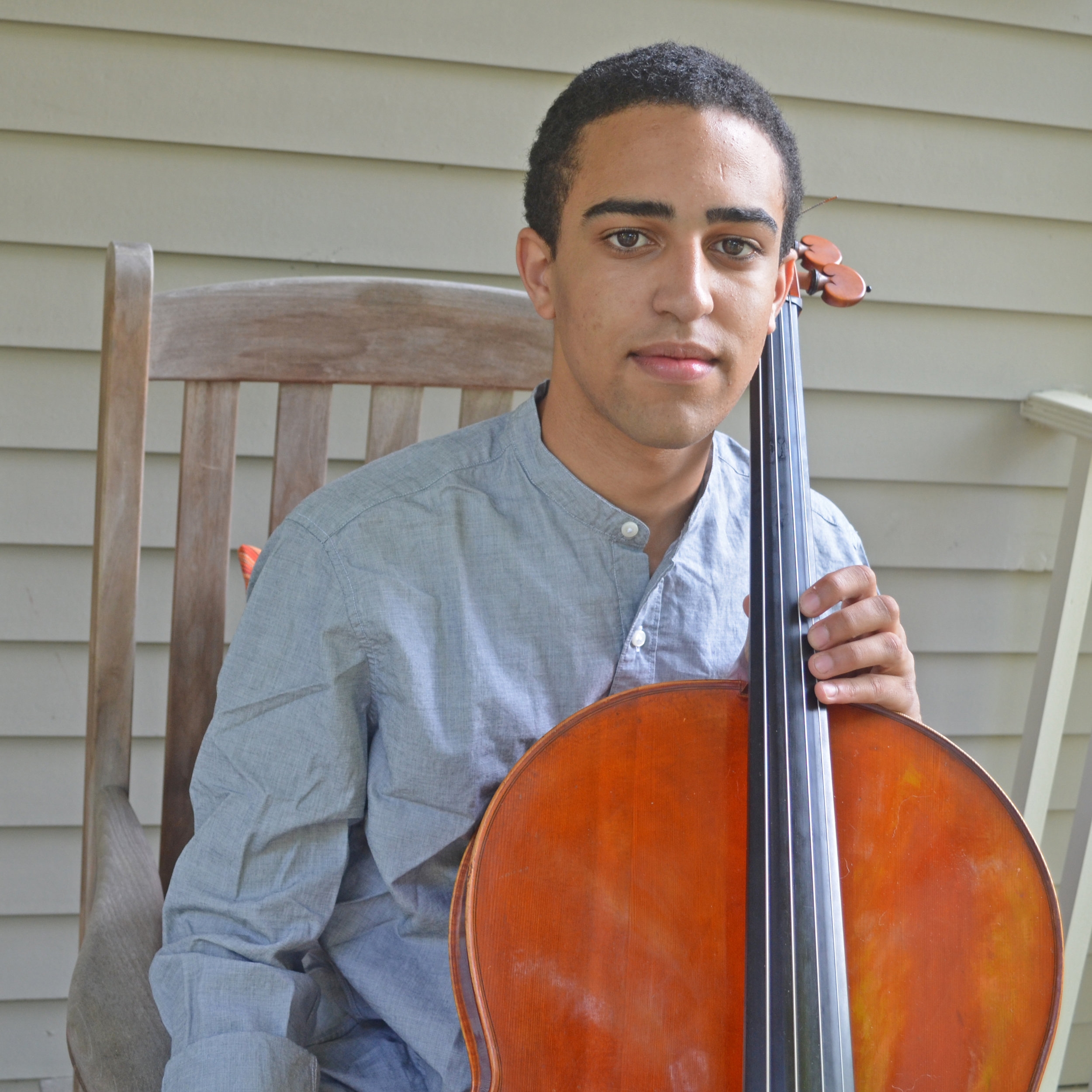
What are your days like in the Harvard/NEC program? What are you currently studying/what are your majors?
Life in the Harvard-NEC program can get busy indeed! Most of my class time for now is spent over at Harvard, working towards my degree in History and Literature, but I make the trip over to the conservatory about twice a week, for lessons and studio class. I'm also a frequent participant in Harvard's Music 189 chamber music course, taught by the fantastic Parker Quartet, and a member of a small, conductor-less chamber ensemble, the Brattle Street Chamber Players. And you can often find me in my upperclassmen dorm's common room late at night, trying to squeeze in just a little more practice time after my homework is done!
How do your liberal arts courses inform your music education/music making and vice versa?
I've always found the dialogue between my academic coursework and musical pursuits as an essential factor in the pursuit of meaningful musicality. "loosely turing," one of the pieces on the program, was inspired by some of the work I did in both a History and Literature class and an installation and video art studio I took during my spring semester this past year. Engagement with historical and literary texts, as well as with various forms and philosophies of performance has been imperative for me in placing different performance practices within a more robust historical context, and deepening my view of the role of the performer in today's society.
Can you tell us about any of your other compositional projects (for school or otherwise)?
Right now, I'm working on a piece to be completed this spring for Brattle. It's the first piece I've written for string orchestra, so it's been an exciting process!
What is your performance life like right now? Do you find yourself gravitating more towards one type: chamber music, solo performance or orchestral, etc? If so, why do you think that is? Is there a type you’d like to be doing more of?
My performance life has been lovely as of late! This summer I did a bit of performing on some of the concerts at the Banff Centre's masterclasses for winds and strings, and during the year, I'm usually active, giving a number of small, mostly chamber performances with friends around campus and the Boston area. I've always enjoyed and gravitated towards chamber performance since I was very young, but I relish the opportunity to really dive into solo repertoire head first as well. This past summer, I studied and performed the Crumb Sonata for Solo Cello, which was an immensely fulfilling experience.
Is there a particularly meaningful performance experience you’ve had during your time in college?
Picking just one performance experience is so hard! This past fall, I performed the Ravel Piano Trio with two wonderful friends and musicians, as the culmination of a semester's work in the Music 189 Chamber Music course. I've also participated for two winters now in an intensive chamber music workshop during the last week of winter break, that's put together chamber music programs for performances at the Harvard Club of New York, and Princeton University. Being able to interact, workshop, and polish pieces alongside a group of dedicated peers has definitely been one of my best musical experiences at school.
Can you tell us about your process for this new Winsor commission? What inspired you? Was there anything about this process or the result that was markedly different from your previous works (either for Winsor or generally speaking)?
This piece, "loosely turing," was, as I mentioned, inspired by a lot of work I did in my History and Literature sophomore tutorial class, which focused on the historical and literary depiction of new media from the advent of the telegraph, up to the modern day. In reading about Turing's work concerning the powers of computation, I marveled at his amazing predictive powers--in many ways, Turing defined bounds of what machines like computers are capable of a considerable time before the invention of such devices, and those bounds remain largely unsurpassed. In my studio art class, I explored many similar themes, especially as the related to the bounds and failings of human perception, and the distinction between humans and machines. Much of that exploration is reflected in the structure of the piece, and the way melodic fragments are stitched together and refracted through different parts of the ensemble. This was really the first composition where I've drawn such direct inspiration from an academic source.
You have performed on all of your compositions for Winsor Music. Do you find that you write differently when you know that you’re writing for yourself as opposed to when you’re writing for someone else/another instrument?
Writing for different instruments and orchestrations is always a unique challenge, and I'm so lucky to have had such support from Peggy when writing pieces for Windsor in understanding how to orchestrate for instruments like oboe, with which I wasn't as compositionally familiar initially. In terms of a distinction between writing for myself and other cellists or string instrumentalists, though, there's no real noticeable difference--it never really enters my mind while I'm writing that I'm writing a part for myself. In fact, a couple of years ago, my teacher asked me to write myself a cadenza for the Haydn D Major cello concerto, and when I had finished, I was astounded at the difficulty of the cadenza, and as a performer was more than a little unhappy with myself as a composer!
A lot of people talk about college as being a time of your life where your mind is constantly being blown wide open. Is there something you’ve learned in the last couple of years that has surprised you or changed your perspective? (The kind of thing that you can’t stop explaining to your family when you’re home on break.)
Just the experience of living by myself in such an exciting community of peers, and engaging with extracurricular, academic, and social obligations is a source of constant amazement for me! I feel as if I've learned a lot about myself and the place I would want to occupy in society as a professional and an adult.
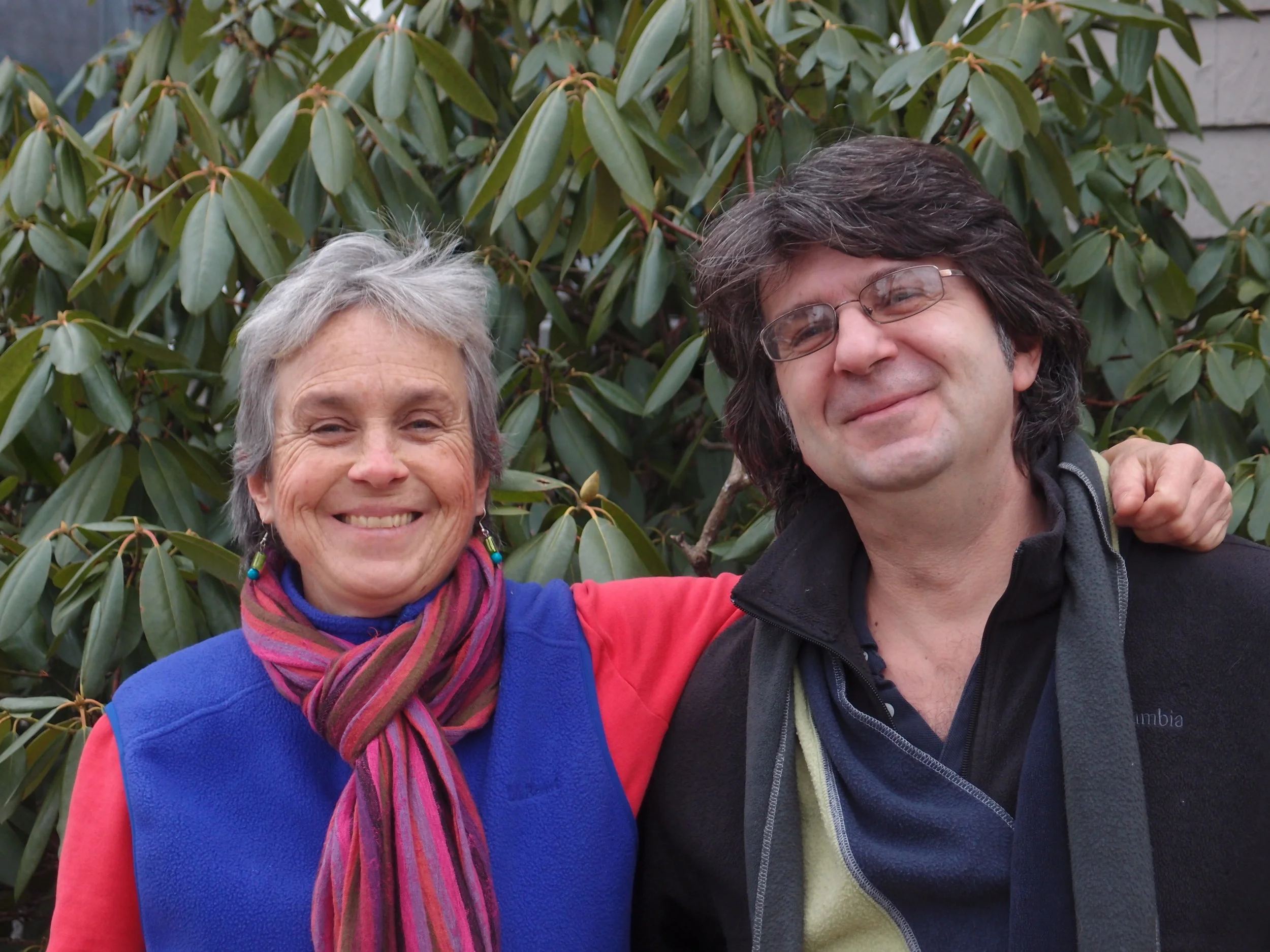
Remembering Roberto Cassan
All of us at Winsor Music were shocked and saddened yesterday to learn of the passing of our friend and colleague Roberto Cassan. Roberto was a talented and expressive musician with an enormous heart. We will miss this beautiful soul.
All of us at Winsor Music were shocked and saddened yesterday to learn of the passing of our friend and colleague Roberto Cassan. Roberto was a talented and expressive musician with an enormous heart. We will miss this beautiful soul.
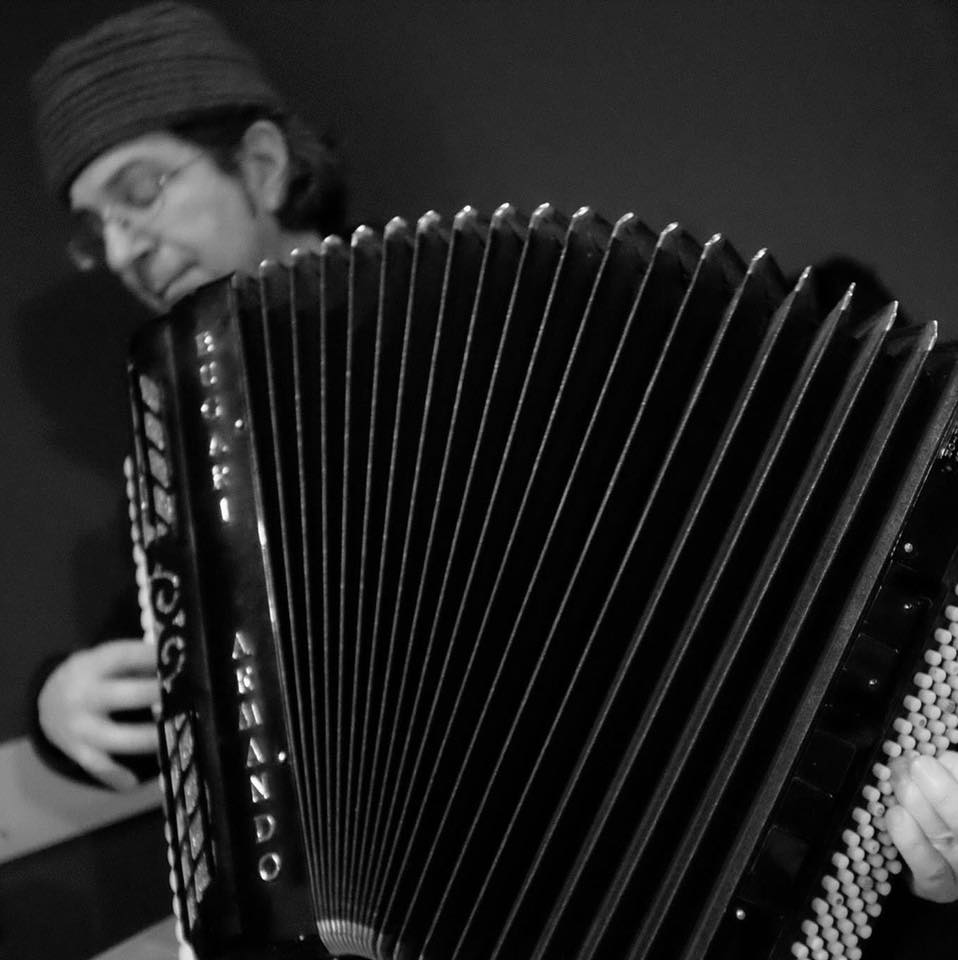
This is his beautiful performance of “Brazil" from John Harbison's The Great Gatsby.

How George Li Captures Time
It's been a big year for George Li, and for someone who had already performed at the White House for Barack Obama and Angela Merkel by age 15, that's saying something. A Lincoln Center/New York concerto debut, a silver medal from the Tchaikovsky Competition, a string of high profile recital and concerto bookings, and a $25,000 Avery Fisher Career Grant... and those are just the highlights. Did we mention that he's also in a dual degree program at Harvard and NEC?

It's been a big year for pianist George Li, and for someone who had already performed at the White House for Barack Obama and Angela Merkel by age 15, that's saying something.
In May 2015, George made his Lincoln Center/New York concerto debut with the Orchestra of St. Luke's and Gerard Schwarz, to rave reviews by the New York Times. That July, he took home a silver medal from the Tchaikovsky Competition, setting off a chain of high profile recital and concerto bookings that have continued to intensify his popularity at home and abroad. And just this March, George was one of five recipients of a $25,000 Avery Fisher Career Grant.
Did we mention that he's also in the second year of a dual degree program at Harvard University and the New England Conservatory?
We are delighted that he made time not only to perform on the final concert of Winsor Music's 2015-16 season, but also to give this interview. Don't miss your chance to hear him live at St. Paul's Church in Brookline on Tuesday, May 24 at 7pm.
It’s been a year and a half since we spoke: a lot has happened since then! In our last interview, I asked you what you were most looking forward to, and here’s what you said: "A concert next May in Lincoln Center; that will be a very big moment for me. It will be a great experience to play with St. Luke’s Orchestra, and I’m very excited to play the Tchaikovsky Concerto.” Before we get into everything else: how did that go?
Yeah, that was great experience! It was my orchestral debut at Lincoln Center, and I had a great time.
Speaking of Tchaikovsky, how about that competition? Congratulations on your incredible placement. What sticks with you the most about that whole experience?
It was a life-changing experience for me. It was really something else. It was of course, extremely stressful, for the whole month; it was not only hard physically, but it was a mental marathon as well. I guess what helped, and made it easier for me, was the kindness of the people in Russia. They were all great listeners, and I felt an amazing chemistry with the audience, so I didn't have to just worry about the competition and the stresses of it. When I played, I just felt really comfortable on stage, and I felt like I could really communicate myself to them. That made the mental aspect much easier.

Photo from the Tchaikovsky Competition website
What is life like for you as a full-time (dual-degree!) college student and a high-profile, internationally sought-after performer? How do you prioritize, make decisions about where your time goes?
It's tough, but of course, the first thing I prioritize is music. It is tough to balance out when I can get my work in, and if I can complete everything by the deadline. But, when it gets to those crunch times, then I prioritize: I have to play this concert first, I have to practice for that concert, and then I go from there and just do my best and try to survive. Academically, for me, it’s not as much about the grade as it is about learning something. That’s why I wanted to come to the Harvard/NEC program. As long as I feel like I learned something and was able to get something out of my education, I’m pretty happy.
What are you studying in the Harvard half of your degree?
I’m majoring in English literature.
Any particular area of focus?
I’m currently in the elective program, so it’s more of a free choice of courses, as long as you’re within English literature. Last semester I took English romantic poetry, and this year I’m taking “Shakespeare after Hamlet” and “The Modern Novel,” a course that focuses on James Joyce and Dostoevsky. They’re all really good classes and I’ve learned so much. I feel that English and music are really deeply intertwined. Studying English has really helped me grow musically and as a person just over these last few months, which has been great.
Are you sleeping at all?
There are times when I don’t sleep as much as I should, but that’s college life. Everyone deals with moments like this!
Have you done much chamber music since we saw you last?
I did chamber music during the fall semester of this school year, but instead of the usual piano trio/quartet/quintet, I was in a duo piano group with one of my best friends and fellow pianist Alex Beyer. We played the Rachmaninoff Suite No. 1 for two pianos, and it was an awesome time. I also played the Brahms Piano Quintet as a component for a piano competition at the Verbier Festival (the Vendome Competition), and I had the privilege of playing it with the Jerusalem String Quartet, which was an unbelievable experience.
So you’ll be performing that same Brahms Piano Quintet for this concert. What's your history with him? You mentioned that you played it for the competition, but have there been any other memorable encounters with his music?
Yeah, I think most of the stuff that I've played of his has been chamber music, actually. I played the Brahms Trio in C major and the Brahms piano quartet in G minor. I'd definitely love to explore his music much more, especially the solo repertoire. Most of my experiences have been with his chamber music, but even from that aspect, his music is so profound and deep. It's something to do with his harmonies but also with the manner that he composes in terms of texture and sonorities that feels so heartfelt. The sounds that he gets from those harmonies are very special indeed.
You mentioned that you recently took a course on English romantic poetry, so I'm wondering how that course, or any of the work you've done in that era, informed your approach to Brahms now, after having taken those courses.
I think that reading poetry and literature helps with music making because they’re so intertwined— I believe that literature and poetry is about how we verbalize feelings, capturing any given moment and describing it in great detail, with finesse and nuance, preserving that particular memory and making it timeless. I feel like understanding that is so relatable to our lives, and therefore reading literature can really help us understand why we feel a certain way when there is a spectacular sunset, for example, which is really inspiring and nurturing for our soul. Applying that understanding to music really helps when you approach, for example, a passage in Brahms, when it requires this ethereal imagery or feeling. You can draw from moments that you've read in literature, which is basically a verbalization of moments you've experienced yourself. It's amazing how wonderful writers were able to put any moment into words in such an accessible and inspiring manner. It really helps me to use what I've learned from literature and apply it to music.
I know that there are many musicians who were particularly drawn to music precisely for its nonverbal qualities, for the more abstract approach to emotion. I'm curious: for you, how do you relate the more specific, verbal expressions that you work with in literature to the non-verbal expressions in music?
Like you said, music is very abstract, and very open to interpretation. For me, however, that understanding of literature helps me to further understand music. It’s of course not a word-for-word parallel to music, but there’s a mutual sense of understanding between music and literature where both are able to evoke all aspects of humanity with such clarity and profundity, and it’s these moments that are so moving. Maybe, in a sense, literature is like a stepping stone to understanding music.
So you have been traveling all over the world to perform. I'm wondering if you have a favorite travel experience from the past year?
Yes, I just came back from two weeks of touring, which was very tiring, of course, but one day, at five in the morning, I was about to travel from London to Switzerland, and at the airport I saw this beautiful sunrise that was just incomparable to anything I'd ever seen before. There was a mixture of beauty and a sense of the overpowering, which really struck me. It totally cleared my head and woke me up for the rest of the day!
Have there been any particular cities that you've visited that you thought you might like to go back for a more extended period of time, or maybe even thought: "I wish I could live here!"?
In general, when I play in cities abroad, I don't really get to explore as much as I would like, because I'm always either practicing or resting. I never really get a good chunk of a day to explore and walk through a town. When I was in Freiburg a couple of weeks ago, driving through the countryside, it was so beautiful, and walking through the streets just to get to the concert hall and around really showed the character of the place, and just I wish I could get to know Freiburg better in the future!
And when you come back to Boston, is there anything in particular that you look forward to?
Whenever I look out of the window at the skyline, just seeing familiar things like the Prudential Center or Fenway Park, it just brings an overwhelming sense of finally being home. It always feels so good to be back, and even just seeing Storrow Drive contains this wonderful feeling to be back home.
Well, we're always glad to have you back, and we're really looking forward to having you on our final concert of this season. Thank you so much for your time today.
Thanks, I'm really looking forward to it as well.
Biography from GeorgeLiPianist.com
"Silver medalist in the 2015 International Tchaikovsky Competition and winner of the prestigious XIV Concours International Grand Prix Animato 2014 Paris, George Li (黎卓宇) is regarded as one of the world's most talented and creative young pianists. His astonishing technique, distinctive tonal quality, and exceptional musicality have earned him consistent critical acclaim (New York Times, Washington Post, International Piano Magazine, Toronto Star, The Boston Phoenix, The Boston Music Intelligencer) and enthusiastic audience response worldwide for his solo recitals, orchestral collaborations, and chamber music performances.
In addition to winning the Grand Prix Animato Piano Competition (with the Schumann Prize, the Brahms Prize and the Audience Prize) in December 2014, George won third prize in the 2015 US Chopin Competition, and second prize in the 2014 Vendome Prize. In 2012, George received the prestigious Gilmore Young Artist Award, becoming its youngest recipient. With his exceptional musical gifts being recognized by Alfred Brendel, Dimitri Bashkirov, and Menahem Pressler, George was the winner of the Tabor Foundation Piano Award at the 2012 Verbier Academy. In 2010, George won first prize in the prestigious Young Concert Artists International audition and since that time has been under management of the YCA. In 2010 he also won first prize at the Inaugural Cooper International Piano Competition. In 2008 George won second prize at the Gina Bachauer International Piano Junior Artist Competition. In 2011 George performed at a State dinner for President Obama and German Chancellor Angela Merkel at the White House.
In 2005, 9-year old George made his first orchestral debut as a soloist with the Xiamen Philharmonic Orchestra. Thereafter, he has frequently appeared as a soloist with many symphony orchestras, including the Cleveland Orchestra, Simon Bolivar Youth Symphony Orchestra of Venezuela, Boston Philharmonic Orchestra, Albany Symphony Orchestra, Symphony Pro Musica, Brooklyn Philharmonic Orchestra, Spartanburg Philharmonic Orchestra, Miami Symphony Orchestra, Nordic Chamber Orchestra (Sweden), the Norrkoping Orchestra (Sweden), Princeton Symphony Orchestra, Lexington Symphony Orchestra, Ridgewood Symphony Orchestra, Orchestra “I Solisti di Perugia” (Italy), Southern Arizona Symphony Orchestra, Waltham Symphony Orchestra, Boston Philharmonic Youth Orchestra, Boise Philharmonic Orchestra, Pasadena Symphony Orchestra, The Orchestra at Temple Square, the Longwood Symphony Orchestra, the Stamford Symphony Orchestra, the Akron Symphony Orchestra, the Hilton Head Symphony Orchestra, the Edmonton Symphony Orchestra (Canada), and the Orchestra of St. Luke’s.
An active recitalist and orchestral soloist, George has performed in venues throughout the world, including the Concertgebouw (Amsterdam), the Musikverein (Vienna), Rudolfinum’s Dvorak Hall (Czech Republic), Severance Hall, Symphony Hall, Jordan Hall, Mechanics Hall, The Tabernacle, Alice Tully Hall of Lincoln Center, Merkin Hall, and the Kennedy Center.
George is also an enthusiastic chamber musician. Since the age of 9 George has regularly performed in chamber music concerts, with repertoire ranging from Haydn to Beethoven, Brahms, Shostakovich, and Bolcom. As a member of the Vivace Trio, George performed for members of the US Congress on Capitol Hill. He has also played chamber music concerts with The Boston Trio and in the Winsor Chamber Music Series.
George has frequently been featured as guest artist on National Public Radio (WGBH). He also appeared on CBS TV (the Liz Walker Show and the Martha Stewart Show). At the age of 11, George performed at Carnegie Hall as a featured pianist in the TV series produced by From the Top. George has participated in numerous world-renowned summer festivals including the Verbier Academy (Switzerland), the Miami International Piano Festival, the Southeastern Piano Festival, and the Gilmore Keyboard Festival. He has had master classes with renowned pianists Alfred Brendel, Emmanuel Ax, and Richard Goode.
A resident of Lexington, Massachusetts, George Li graduated from Walnut Hill School for the Arts and the Preparatory School of New England Conservatory, where he studied piano with Ms. Wha Kyung Byun (卞和暻). George’s previous piano teachers include Mrs. Dorothy Shi (杨镜钏) [from the ages of 4 to 12] and Mr. Chengzong Yin (殷承宗) [ages 7 to 12].
George is currently enrolled in the dual degree program at Harvard University and the New England Conservatory, continuing his piano studies with Ms. Wha Kyung Byun as well as Maestro Russell Sherman, a renowned pianist and Distinguished Artist in residence at the New England Conservatory."
Learn more at http://www.georgelipianist.com/

Living Among Legends: Andreia Pinto Correia's Life and Work
Andreia Pinto-Correia is an award-winning Portuguese composer, a student of John Harbison, and the featured composer on the final concert of Winsor Music's 2015-16 season. The prestigious Jornal de Letras wrote: "The music of Andreia Pinto-Correia has been a major contribution to the dissemination of Portugal’s culture and language, perhaps a contribution larger than could ever be imagined."

Andreia Pinto-Correia is an award-winning Portuguese composer, a student of John Harbison, and the featured composer on the final concert of Winsor Music's 2015-16 season. Born and raised in Lisbon, educated in both Lisbon and Boston, and now commissioned by ensembles and institutions all over the world, Ms. Pinto-Correia "writes music of visceral sonic impact, combined with an eclectic, even scholarly curiosity about music’s place in the world. With a strong tendency toward drama and theater, she frequently draws on literary sources for inspiration" (Robert Kirzinger, Boston Symphony Orchestra).
Andreia's composition for Winsor Music, Dalla Legenda aurea, is a response to her encounter with a famous Italian fresco, Piero della Francesca's "Legend of the True Cross," and was written specifically for Peggy Pearson's sound. Do not miss the opportunity to hear a world premiere by Andreia Pinto Correia alongside stellar performances by rising star George Li, piano, and our own artistic director Peggy Pearson, oboe. As one of the major Portuguese newspapers, Expresso, wrote: "Andreia Pinto-Correia. Remember this name."
How would you describe your music to someone who has never heard it before?
I am very attracted to instrumental colors and timbres, and harmony has always had a very important role in my work. As I descend from a family of scholars and writers, my compositions are often influenced by literary works.
I tend to do a lot of research prior to my “composing mode,” since I enjoy writing with a strong sense of tradition. In the case of Dalla Legenda aurea, I studied in depth several oboe quartets by Mozart, Elliott Carter, Harrison Birtwistle, Benjamin Britten, and Colin Matthews as well as writings about Piero della Francesca, including biographies, monographic works, and articles by Della Francesca’s scholars such as Marilyn Aronberg Lavin.
Regarding Dalla Legenda aurea: I started to write this work while in Umbria, Italy, where I was a fellow at the Civitella Ranieri Foundation. I was fortunate to spend a substantial amount of time looking at Piero della Francesca’s frescoes, traveling throughout Umbria and Tuscany to cultivate the appropriate frame of mind.
How did you come to composition?
I have a somewhat atypical background. I started studying music as a performer simultaneously in two different institutions with two different approaches: classical and jazz. When I arrived in the United States I was enrolled in a performance degree. During my first semester I suffered an accident that left me paralyzed in my right arm. I returned to my country, Portugal, and I curtailed my studies for 6 years while I underwent several surgeries.
Eventually I returned to the United States and, knowing that I could not be a performer any longer, I decided to make the most of my education. I studied theory, orchestration, conducting, and film scoring. Eventually I wrote my first work Aljezur, for jazz orchestra, during the last semester of my undergraduate studies. After that I never stopped writing music.
What do you remember about the first piece you wrote? Did you know at that point that you would want to make this your profession?
Aljezur was influenced by Iberian folk traditions and rituals, and in particular by the processions in southern Iberia. I think these are aspects that informed my writing. Alzejur is much more rhythmically oriented than my recent works. Curiously, there is a large section that shows my early interest in set theory without me being fully aware of it.
After Aljezur, I started to receive commissions yet I felt the need to further develop my skills. So I went back to school (New England Conservatory of Music) where I studied for a masters’ degree – with the late composer Bob Brookmeyer – and a doctorate – with composer Michael Gandolfi. I was also fortunate to have crossed paths with John Harbison, a composer that who has been a major influence on my music.
“I can say that I am pretty much a Boston “product”!”
One of my most important “teachers” was the Boston Symphony Orchestra. During my student years at the New England Conservatory, I deeply cherished my College Card and would attend concerts and rehearsals almost every week, having studied previously the scores to be performed. Being accepted as a fellow at Tanglewood in my early composer years was also very important. It opened many doors and possibilities for my growth as a composer. I can say that I am pretty much a Boston “product”!
In answer to your initial question, I would not say that one single moment defined my choice to become a composer, rather a set of circumstances, some more sanguine than others. One of those moments was when I realized that I could never become a soloist, the other when I heard my work being performed with an orchestra for the first time. That was like discovering a whole new world for me. But, I was extremely fortunate to have crossed paths with fantastic mentors and to have them as my role models. That was part of my ultimate decision to become a composer.
What composers and/or other musical traditions would you cite as influences?
I am a huge Mahler fan, although it might not be immediately evident for someone listening to my music. Messiaen, Stravinsky, Debussy, Bartók, Ravel, Ligeti, Dutilleux, and Birtwistle are some of the composers who have influenced me in one way or another. And Bach, of course. More locally, I would say Elliott Carter, Jacob Druckman, and John Harbison.
Regarding other musical traditions, I was lucky to have grown up surrounded by music from various parts of the world. My father listened mostly to classical music and in particular to opera. He also had a very good Jazz LP collection at home. Growing up in Lisbon, Portugal, I was exposed to fado (our urban song), flamenco, and music from our former colonies such as Brazil, Cape Verde and Angola. Later on I became curious about music from South of India, and in particular from Goa (a former colony of Portugal). This is all during my teenage years...
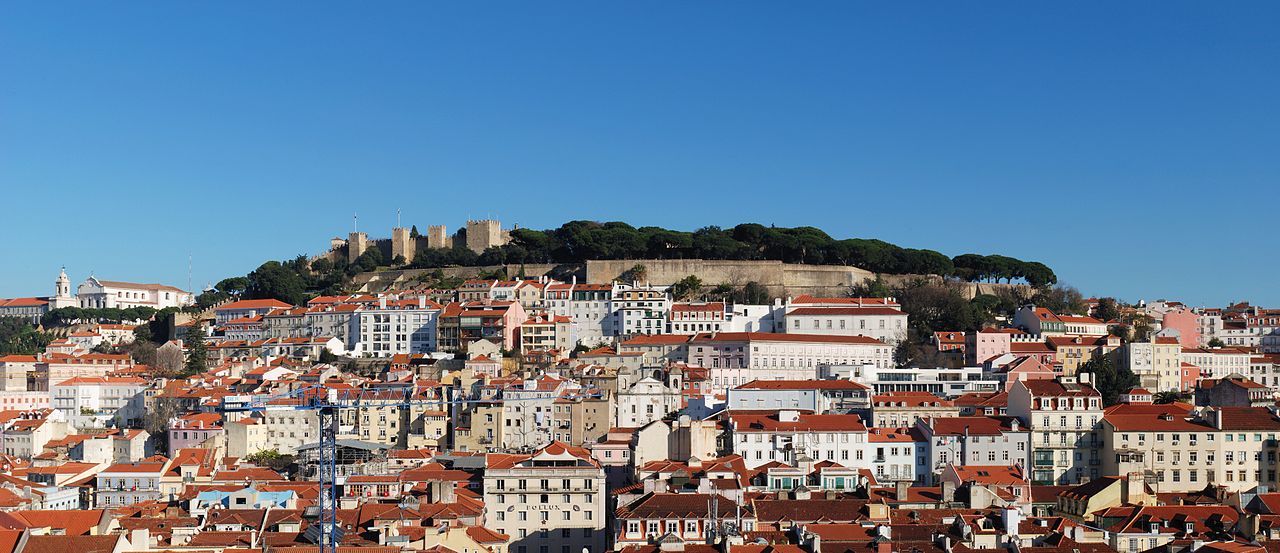
I owe this curiosity to my parents and in particular my father, who is a Medievalist. I often accompanied him during his fieldwork, and later on I worked with him in his Center of Research at the University of Lisbon. I am very interested in his work on Medieval Iberian traditions, tales, prayers, superstitions, and songs such as the incredible Cantigas de Santa Maria, a thirteenth century collection of medieval songs attributed to King Alfonso X, El Sabio (The Wise One).
My mother is a translator from German to Portuguese, and was a professor of German literature also at the University of Lisbon. I grew up watching her incessantly trying to find the word or expression that could do justice to Goethe or Zweig. My passion for detail is probably derived from my mother’s search for refinement and precision.

Are there places in the piece you wrote for Winsor that we might hear some of those influences?
I doubt that you will hear these influences in an immediate way. Probably, you will hear my affinity towards certain “ritualistic” atmospheres, in a more abstract, perhaps even subconscious way. I do tend to be attracted to certain emotional ambiences as a response or counterpoint to a source of inspiration – Della Francesca’s The Legend of the True Cross (1454-1458) in this case.
As I started to enter della Francesca’s world, and to know more about his personal story and work process, I gradually became more aware of his use of perspective, spatial
organization, proportion, and detail. Certainly my acute awareness of these elements in his work and in this cycle influenced my process of composition.
Can you give us a tour of some of the musical landmarks of the piece?
I chose to divide my work into ten separate parts corresponding to the main sections of Della Francesca’s cycle The Legend of the True Cross. These parts are performed continuously in an identical sequence to the events depicted in the frescoes.
On a smaller scale, and as indicated in my program notes, Della Francesca's rich array of colors, landscapes, personages, and parallel narratives – in continuous movement from one side of the cycle to the other – appear in my composition in association with particular musical gestures and instrumental textures.

For instance, the two battle scenes Section VI (Victory of Constantine) and Section IX (Victory of Heraclius) share the same harmonic material. While they both represent the two peaks of intensity, dynamics, and texture, these elements manifest in very different ways. Victory of Constantine presents continuous ascending lines (derived from the original oboe flurries) in a more predictable and organized manner, while in Victory of Heraclius, the texture is more raw, a de-construction of the former battle material. Similarly, Section II (The Story of Queen Sheba and King Solomon) and Section VII (Invention of the Cross) are related thematically mirroring the narrative arch and movement of della Francesca’s cycle.
The Raising from the Well (Section VII) is believed to have been painted by a disciple of Della Francesca. In my composition this section is shorter, and as though it were an unfinished imitation of something more refined. Throughout the piece a “unifying” chord, played at a pianissimo dynamic, functions as an anchor, continually emerging as a far-away remembrance.
Finally, The Death of Adam: Three Death Scenes Under the Blue Sky, the opening section, consists of three short expositions, each an exploration around pitch “A”. Curiously, it was only after the work was written that I realized that these three expositions were all developed around “A” as in Adam. At the very end, the work is reduced to its core skeleton, a simple recitative that reiterates the pitch “A” underlying its importance in the arch of the musical narrative.

Why did you apply this inspiration to this instrumentation? What about the Legenda painting sparked this particular sound in your mind?
I first heard Peggy Pearson many years ago while I was a student in Boston, and I remember that I was completely taken away by her sound, lyricism, and expression. I heard her many times at the Emmanuel Church, and perhaps in an unconscious level that association of her sound with the sacred remained with me. So, rather than being a piece that “adapts” or translates a certain work of art (della Francesca’s Legenda della Croce), this composition is a work written for a very specific soloist with her unique sound in mind.
Regarding your question about instrumentation: Paradoxically my reaction towards the overwhelming experience of the frescoes was one of scarcity and reduction of forces. There is so much color, detail, movement, and richness in Piero della Francesca’s cycle that I felt the need to relate the sensory explosion into a more confined and reduced impression. The instrumentation of Oboe Quartet with Peggy Pearson as a soloist seemed perfectly suited for the occasion.
Can you explain some of your approach to writing chamber music, specifically chamber music for a mixed (woodwind/string) ensemble?
Although I am at ease with larger instrumental forces, such as orchestral, I find myself enjoying more and more writing for smaller groups with particular performers in mind. I really appreciate the whole process of writing for a specific soloist, getting to know their sound, discovering their personal tastes, quirks, and repertoire.
In the case of Dalla Legenda aurea, I wanted to integrate key moments of virtuoso playing and lyricism, balanced within tutti ensemble textures. In addition, I wanted to incorporate some soloistic moments for the string trio.
Finally, do you have a favorite piece (or pieces) of chamber music by another composer?
I find myself enjoying certain pieces at different phases of my compositional life. Thus, I am not a big fan of lists. But, here is an effort, a list of some pieces that have influenced me in the past (not in any particular order):
Johann Sebastian Bach: The Well-Tempered Clavier, Goldberg Variations
Johannes Brahms: Clarinet Quintet
Olivier Messiaen: Quatour por la fin du temps, Vingt regards sur l’Enfant-Jésus
Henri Dutilleux: Ainsi la Nuit
Igor Stravinsky: Histoire du soldat
György Ligeti: String Quartet Nr. 1 and Nr. 2
Peter Maxwell Davies: Eight Songs for a Mad King
Elliott Carter: A Mirror on Which to Dwell, Night Fantasies, String Quartet No. 5
Luciano Berio: Sequenza
Bela Bartok: String Quartet Nr. 4
Harrison Birtwistle: Silbury Air
John Harbison: November 19, 1828, Mirabai Songs, Wind Quintet
Franco Donatoni: Omar
Jacob Druckman: Reflections on the Nature of Water, Second String Quartet
Georg Friedrich Haas: String Quartet No. 3 “ In iij. Noct”
From her website:
The prestigious literary magazine Jornal de Letras describes Andreia Pinto-Correia’s compositions as “a major contribution to the dissemination of Portugal’s culture and language, perhaps a contribution larger than could ever be imagined.” Her music — described by the Boston Globe as “compellingly meditative” and by the New York Times as an “aural fabric” — is characterized by close attention to harmonic detail and timbral color. Following a family tradition of scholars and writers, her work often reflects the influence of literary sources from the Iberian Peninsula and beyond.
Ms. Pinto-Correia is a 2015 John Simon Guggenheim Memorial Foundation Fellow. Honors include commissions from the European Union Presidency, League of American Orchestras and the Toulmin Foundation, Fromm Music Foundation at Harvard University, Boston Symphony Orchestra Brass Quintet, American Composers Orchestra at Carnegie Hall, Tanglewood Music Center, Albany Symphony Orchestra, and Culturgest National Bank of Portugal. Her work Timaeus, a concerto for orchestra commissioned by the Boston Symphony’s Tanglewood Music Center in memory of Elliott Carter, was recently premiered at the opening concert of the Contemporary Music Festival’s 75th anniversary.
Her works have been performed by the Minnesota Symphony Orchestra, Berkeley Symphony Orchestra, Calouste Gulbenkian Foundation Orchestra, Orquestra Metropolitana de Lisboa, and the Borromeo and the Mivos String Quartets. She has also been the recipient of a League of American Orchestras/ New Music USA Music Alive Composer Residency, a Rockefeller Foundation Center Fellowship, a Civitella Ranieri Foundation Fellowship, the Alpert Award in the Arts/Ucross Residency Prize, and the Toru Takemitsu Composition Award by the Japan Society. In addition, she was the curator of the Fertile Crescent Festival for Contemporary Music at the Institute for Advanced Study in Princeton.
Born in Portugal, Ms. Pinto-Correia began her musical studies in her native Lisbon and received her Masters and Doctoral of Music degrees with Academic Honors from the New England Conservatory of Music as a student of Bob Brookmeyer and Michael Gandolfi. She attended the Minnesota Composer Institute, the European Network of Opera Academies (ENOA), the American Opera Projects (AOP), the Composers Conference, and the Tanglewood and Aspen Festivals.
Photos of Ms. Pinto-Correia by Daniel Blaufuks

Open Doors, Open Minds: Rupert Thompson's Mission
Rupert Thompson's life story is a testament to the power of mentoring and the necessity of arts education in public schools. His belief in and advocacy of these ideas is compelling and urgent, grounded in his own history and lived every day through his work at the Apple Hill Center for Chamber Music. You can come and meet Rupert and the other members of the Apple Hill String Quartet, at our concert on Sunday, April 24, at 7:00pm, at St. Paul's Church in Brookline.
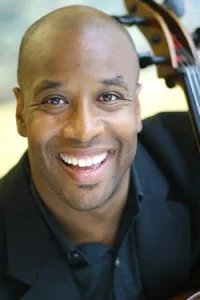
From applehill.org
Rupert Thompson, cello, made his solo debut with the Baltimore Symphony Orchestra at the age of 18. He has studied with Mihaly Virizlay and Timothy Eddy, holding degrees from the Peabody Institute (BM) in Baltimore Md; and SUNY Stony Brook of New York (MM and DMA). Rupert has received a career grant from the Concert Artist Guild, as well as the C.D. Jackson Memorial Award of Merit from the Tanglewood Music Center. Live radio broadcasts of his solo engagements include WFMT of Chicago and WQXR in New York City. He began his association with Apple Hill as a resident artist in 2000 and is now cellist of the Apple Hill String Quartet where he tours around the world through Apple Hill’s Playing for Peace program. In addition to his active concert schedule, Rupert is also a photographer, a screen writer, and served as film composer for the award-winning movie Sensation of Sight.
Rupert's life story, which he generously shared with us during the interview below, is a testament to the power of mentoring and the necessity of arts education in public schools. His belief in and advocacy of these ideas is compelling and urgent, grounded in his own history and lived every day through his work at the Apple Hill Center for Chamber Music. As both a teacher and performer — at the festival with students, on a Playing for Peace tour — his mission, and that of Apple Hill, is to "accept people for exactly who they are, where they are." You can come and meet Rupert and the other members of the Apple Hill String Quartet, at our concert on Sunday, April 24, at 7:00pm, at St. Paul's Church in Brookline.
How did you get started with the cello?
How did I get started with the cello? A very interesting question. I am probably what one might call the poster child for the arts in public schools. I am someone who started out knowing absolutely nothing about classical music. Some friends of mine, when I was in the fourth grade, told me that the music teacher was giving out instruments. They all played the cello, all my friends in the neighborhood at that time, believe it or not, all of my friends who are predominantly African American were all playing the cello, which is still in this current day, still a bit of an impressive thing to know that actually one small town in Annapolis, MD, at Parole Elementary School, there was a handful of young African American cellists who weren’t quite aware of what was going on and what they were doing, but the program — we had a great teacher there, Virginia Benack, who just loved to inspire young players, and we played all of these cute little Christmas songs and stuff like that. Somehow I ended up being the only one who stuck with the cello. I played football in high school, I did a few other things, and then my senior year, it all clicked. I was chosen to be a soloist with the Baltimore Symphony and the journey officially started. So public school and the arts: that’s me.

Timothy Eddy, cello | Credit: Heifetz Institute
And then how did you get started with chamber music?
Chamber music didn’t really happen for me until I got to college. I did a little bit in the Peabody Preparatory Program in high school and then in the undergraduate at Peabody, but it wasn’t the main focus. Then I went off to graduate school at SUNY Stonybrook, which was a more chamber music-focused school at the time, and things started to click there. So by the time I finished up my doctoral degree at SUNY Stonybrook, having worked with Timothy Eddy of the Orion String Quartet, I was then very much in chamber music. Looking back on it, a ton of us who graduated from that class with Tim Eddy, all of us are string quartet cellists for the most part.
You choose a program for a reason, so it’s interesting that having come from the solo and orchestral background at Peabody, you chose a teacher for your graduate work that put you in a chamber direction.
In terms of graduate school, you’re trying to find a situation where, first of all, you’re continuing on with a great teacher . So that was the pursuit, and I was very fortunate. The focus was chamber music. It was a smaller school that had the capability to do everything but there was more going on than just solo and orchestral playing.
I remember from interviewing the quartet last year that you in particular really spoke to a lot of what Apple Hill does as a holistic program: not just performing, but outreach and touring with Playing for Peace, with your education work through the camp. What about the Apple Hill job drew you and kept you there? You could have gone for a lot of string quartet jobs that would have been more straightforward or narrowly defined, but this is a very broad program and I’m wondering what the draw was for you.
You know, it was a very interesting thing: I made a decision after graduate school. I was taking auditions for orchestras, doing the usual thing that most people do: you’re practicing and trying to get ready to go out into the world. I was very fortunate to get into the Leonard Rose Cello Competition and compete with cellists from around the world and represent our country. Then there was the Apple Hill thing: I was touring and getting performing experience with Apple Hill, I also was getting great teaching experience at the music festival — which is very hard to do when you’re coming out graduate school, it’s hard to get a position where you can be teaching on a professional level — so coming from that perspective, Apple Hill was there, providing some important moments on a larger level. After a while, you start to realize: hey, this is it! You’re actually doing what everybody wants to do. You could freelance and that would be rewarding, you could be an orchestral player… but I happen to be doing something that a lot of people love a lot and really want to do.
Rupert with ProjectSTEP students Isabel, Maria, and Amir
For instance, we just did a great masterclass yesterday with ProjectSTEP down at Symphony Hall. There’s a lot of rewards , I mean, we’re in a room in Symphony Hall, and we’re working with these young players who are fantastic, and sound great, and they’re on their way to careers in classical music, and they’re like 10, 14, 15. That’s the life. That’s technically what it is at Apple Hill. Helping folks and learning from it. Teaching the tools of the trade so one can figure out this stuff and get the wheels spinning a little bit more in their brains about how much they actually love to play music — about how much music can give something back which fulfills and feeds the human spirit, perhaps even teaches us how to be better human beings.
William Ray, baritone | Credit: Hopkins Symphony Orchestra
Did you have any particular mentors in your career trajectory, who helped you find that spark, or helped you find your way to where you are in your career?
Yeah, I have a series of individuals that were really special. One was a really famous African American bass baritone, his name is William Ray. He was a professor at the Peabody Conservatory and had a huge career in Europe and in Germany in particular as an opera singer. He came up in the days when it was difficult to get work because of skin color. When I was growing up, he came to my high school and heard me play: he grabbed me, and took me to Peabody Prep.
There I met Eileen Cline, who was the first African American dean of a major conservatory in the United States; another Oberlin graduate— these two massive figures in classical music took me under their wings — and as William Ray said to me: “Oh, Rupert was just someone who didn’t quite understand where he was going.” They knew! And they got me in. And from there, I met Mihaly Virizlay, who was the principal cellist of the Baltimore Symphony, a great, Hungarian, virtuoso cellist, and he would say I was his “Hungarian son” and he took me in and he mentored me. And from there, I worked with Timothy Eddy, who just has a wealth of knowledge, another great cellist, who opened my mind up to critical thinking as a cellist.
Then I went to Tanglewood and I got to work with Joel Krosnick of the Juilliard String Quartet, who recently is retiring from that quartet and Eugene Lehner, violist of the Kolisch Quartet. Talk about a major figure: the Bartók String quartets were written for him, the Berg Quartets were written for him, he was also at Tanglewood. He was extremely encouraging of my gift.
You’ve got to understand how important it is to let the kids know — and at that point, I wasn’t really a kid anymore, I was in my mid-twenties — but to let the young musicians, the young artists, the young kids, know when they’re doing something right, that’s golden. Especially if you come from a situation where your parents aren’t classical musicians, like I did. Again, I’m a product of the public school system. Mentors are important!
Joel Krosnick, cello | Credit: Simon Powis, published in The Juilliard Journal
There is so much to talk about in that answer that I’m not even sure where to go next! There is so much in what you just said that resonates with everything happening in the conversation around the arts in Boston, our mentoring program at Winsor, the scholarship program and our collaboration with ProjectSTEP...
ProjectSTEP: that’s some serious stuff going on there, and the Boston Strings Program, my kids are a part of that. There’s a wealth of great organizations here: New England Conservatory Prep, the Boston Conservatory, I mean, the list just goes on and on and on… the stuff that Ben Zander does, there’s so much going on for the kids, and they’re learning and they’re doing great. Like I said, yesterday, our ProjectSTEP moment, that was just… top notch stuff. Their friends and family were there to say: we support you and we’re going to get you to the next level in style. Symphony Hall is style. That kind of support: you can’t go wrong with it, you just can’t. They can pursue excellence all day. What does it mean to open the door for someone? What does it mean to open a door for someone and say “Please, after you!” That’s what I’m talking about. People did that for me constantly. And a lot of times, I didn’t know where I was going when they opened that door, but they heard or saw or felt the spark in me and opened a door.
Rupert at the US Embassy in Malaysia | Credit: US Embassy, Kuala Lumpur
That’s exactly what our mission statement is about in a way. At Apple Hill, our mission statement is to accept people for exactly who they are, where they are. That’s what we believe in, that’s how we teach. That means, first of all, when you’re approaching a young player (after a performance), you’re encouraging what was positive about it before you even start to work. You’re automatically in it with the intent to encourage. “How did this young player do that?” The bow hold may not be exactly what you would have done, but they tapped into the music somehow. Or some young player who is really struggling: even that scenario is encouraging. You see them working through it. There are so many positive things that we can offer to a person when we greet them for the first time. That’s where we are at Apple Hill. So in a way, you started this whole thing off with: “How did you start?” Ironically, I ended up in a place that really is known for cherishing and nurturing and doing its best to accept and welcome folks from various different regions, areas of conflict, people whose countries may be at war with each other, and somehow, we’re able to go to these countries, offer scholarships to come back to Apple Hill, and play in chamber music groups with each other and become friends without ever having to talk about what their countries are going through. What does that mean? It means accepting people for where they are, who they are. And chamber music does that to us anyway. I’ve got to sit down and figure out how to match what it is that I want to do with three other people in a string quartet, and sometimes what I want to do is not the best thing for the whole. But when you learn to be flexible, you’re realizing that you’re still putting forth a great moment, perhaps an even more powerful scenario, because it involves a larger good, a larger whole, working together. A team working towards a bigger process.
You brought it full circle, and I cannot think of a better way to end. Thank you so much.
Thank you.

Autumn in Springtime: Yi Yiing Chen's Oboe Quartet
Winsor Music is honored to present the world premiere of a personal, powerful new work by a young composer, Yi Yiing Chen. Her credentials are impressive, but her intellect, empathy, and openness shine her writing, both verbal and musical. We are so grateful that she has shared her story with us in her music and in this vivid and thoughtful interview.

Winsor Music is honored to present the world premiere of a personal, powerful new work by a young composer, Yi Yiing Chen. As a student of John Heiss and Michael Gandolfi and a recipient of Tanglewood Music Center's Elliott Carter Memorial Composer Fellowship, her credentials are impressive, but her intellect, empathy, and openness shine through in her writing, both verbal and musical. We are so grateful that she has shared her story with us in her music and in this vivid and thoughtful interview.
Born in Taiwan, Yi Yiing Chen’s music has been described as “very different, showing the composer’s versatility and breadth of range and influence” and “an exciting amalgam of eastern and western styles.” Her works have been performed at the Tanglewood Music Festival, the Women Composers Festival of Hartford, and the Primrose International Viola Competition & Festival. Received awards include the Tanglewood Music Center's Elliott Carter Memorial Composer Fellowship, the LungShan Temple Scholarship, the NEC Honors Ensemble composition, the NEC Symphony Composition Competition and the NTNU Presidential Scholarship.
Besides writing music, she is also an active pianist. She presented a solo piano recital in Taiwan and currently is an affiliated artist at Massachusetts Institute of Technology. Yi Yiing also plays flute, Chinese bamboo flute and Dulcimer.
Yi Yiing has studied or worked with many other talented musicians, including John Harbison, Oliver Knussen, Bright Sheng and Dimitri Murrath. Currently she is a doctoral student at the New England Conservatory studying with Prof. John Heiss and Prof. Michael Gandolfi funded by NEC's Francis Judd Cooke Scholarship. She also teaches at MIT, Yamaha Music School of Boston and Children's Music Center of J.P.. She previously received her M.M. from the Manhattan School of Music and B.A. from the National Taiwan Normal University, where her mentors included Richard Danielpour, Mao-Shuan Chen, Gordon Chin, Kris Falk, Nils Vigeland, Reiko Füting and Richard Sussman.
How would you describe your music to someone who has never heard it before?
These pieces are my music diaries – scenes, events, and moments I want to record, poems I want to sing with. The process of writing music allows me to unravel and reorder my scattered inner voices and thus better define and express myself. When these voices become simpler and clearer, and when I am able to let go, the piece has come to an end.
How did you come to composition? How do you balance your composition with your career as a pianist?
I started playing piano at age 4, and in the elementary school found I often had an interest in transcribing various music works. Around ten, I became fond of transcribing songs or music I heard on piano, such as music from the film Titanic and Chinese pop songs I heard on the radio. I really didn’t write any notes down until 1999, my last year of elementary school. I wrote a song with piano accompaniment as part of a class activity. Luckily, I was the only one among 30 students who submitted a piece, so my song was chosen and sung by the whole class with me as the piano accompanist. Actually it was not even a composition--I think I just arranged a song I heard on the TV for voice and piano--but it was an amazing experience for me and really encouraged me to do more “composing.”
Because my first attempts at “composing” were initiated mainly because I played piano, I haven’t consciously felt the need to balance my career as composer and as pianist; I believe they are from the very beginning inextricably tied together. Writing music is a state of solitude, both physically and mentally, whereas performing or teaching piano requires more immediate communication. Now I love to “create” things on my own, but I still love to read a piece and try to speak it in my own language, play songs I heard from YouTube or from next door, and voluntarily accompany for my family and friends playing other instruments. Doing these really brings joy and peace to my life.
What do you remember about the first piece you wrote? Did you know at that point that you would want to make this your profession?
When I was in middle school, my piano teacher suggested that I take “harmony” lessons studying figured bass and roman numerals. I then spent two years writing pieces in some different styles, from the organum of the middle ages to very basic 12-tone method. These lessons were actually my very first composition lessons, and the pieces I wrote during that time were my earliest “quasi-compositions.” Soon after, when I was 14, I wrote something for two violins and piano. This piece could be considered my first official composition. I chose these two instruments because there are many violinists in my family, including my three siblings. At that point I didn’t know that I would make writing music as my profession. This piece was later edited and included in the portfolio when I submitted my college application for a music composition degree.
What can you tell us about the piece you wrote for Winsor Music?
This piece is about how my grandmother gradually lost her memory because of Alzheimer’s. Her loss of memory at first made our family breathless and confused. I am sure she felt the same herself. Like a palindrome, as her character slowly faded and fragmented, she became like a child, with my grandmother’s spirit. Therefore, the piece follows a palindromic contour; the first and the last movements share the same beginning (the autumn theme), as do the two inner movements (the dawn theme), even though there are changes between the first and second statements of each theme.
The first movement, Autumn Leaves in Your Eyes, begins with a broad, autumn theme, then proceeds with a passage evoking my grandmother’s youth, about how Taipei, the city I grew up in, had been like when she was young. This passage, under the veil of time past, opens with the viola speaking through a long line portraying the busy and unceasing work at the steel factory where my grandfather worked while my grandmother took care of the home and children, waiting for his return. You may also hear the bicycle, the grassland, and the leaves swirling in the winds. These events function like flashbacks, turning very fast until the music moves directly into the second movement without any pauses in between. The tutti ending of the first movement is followed by a lingering single note of the oboe, F-sharp, to which the violin responds by playing the same F-sharp two octaves higher.
The second movement, The Sunset at Dawn, then begins with a relatively slower dawn theme. While the first movement serves as the source of the horizontal intervallic cell that I apply to the entire piece, the second movement is the juxtaposition between her present and her past. Her memories become fragmented, or redisplayed in time. When the juxtaposition ceases, the movement ends with an a-minor theme.
Like the second movement, the third movement, Sailing Against Time, begins with the dawn theme, then proceeds with a passages describes how her memory “called” for help when it begins to disintegrate; the juxtapositions in the previous movement become even more severe here.
Finally, like the first movement, the last movement, (He is) Waiting For Me (Downstairs), begins with the autumn theme, but this autumn theme eventually dissolves into the a-minor theme at the end of the second movement. (She died in her sleep in 2015.) The last day before her death, she told us that my grandfather was waiting for her downstairs. I feel that during the course of her losing her memory, we could have been more patient with her, in many ways. This last movement is a way for me to express whatever was not said or sung in the previous movements.
Can you give us a tour of some of the musical landmarks of the piece?
In the first movement, you may hear the busyness, the leaves swirling by winds, the grassland, her waiting and my grandfather’s return. These events would be like flashbacks, turning very fast until the music goes directly into the second movement without any pauses in between. The tutti ending of the first movement is proceeded by the second movement begins with a relatively slow dawn theme, led by the violin. This theme appears again at the beginning the third movement. The piece can be traced by a palindromic contour, the first and the last movements share the same beginning, as do the two inner movements, even though there are changes between the first and second presence of each theme. The last movement is devoted to whatever was not being said and sung in the previous movements.
Why did you apply this inspiration to this instrumentation? What about your experiences with your grandmother sparked this particular sound in your mind?
Every weekend my parents took me and my sister from our house at Shipai to Cheng de Road to visit my two grandmothers until we finally moved there when I was 8. The time I got to spend with my grandmother the most were the first four years when we lived together. Every weekend when we went to the market nearby, we could hear the outdoor Taiwanese folk opera, so in some way I always associate my grandmother with the haunting sounds of the opera. The sound of the oboe is very similar to suona, a very important wind instrument in the Taiwanese folk opera.
I have a basket of ideas/things that I usually save for possible future use in my music, such as music fragments, images, emotional themes or an approach to handle notes. The theme of my grandmother has been in the basket for the last few years since she began losing her memory, but I hadn’t decided to focus on these thoughts until the beginning of 2015. Later in the same year when I knew that I would be able to write a piece for this particular instrumentation (oboe, violin, viola and cello), I decided to face and interpret these ideas and associations.
Can you explain some of your approach to writing chamber music, specifically chamber music for a mixed (woodwind/string) ensemble?
I sometimes try to utilize both the balance and contrasts between different tone colors of woodwinds and strings. I also at times disregard the differences and treat each instrument as a single person that has unique stories to tell.
What composers and/or other musical traditions would you cite as influences?
I will list some of my personal favorites: Bach, Mozart, Beethoven, Schumann, Brahms, Debussy and Berg. I also have been inspired by film scores written by Joe Hisaishi.
Finally, do you have a favorite piece (or pieces) of chamber music by another composer?
Brahms’s Clarinet Quintet in B minor, Op. 115!

Miracles and Memories: Apple Hill Quartet returns to Winsor Music
We're less than a month away from our third concert of the season, and we'd like to introduce you to the pieces, performers and composers. Do you know how Haydn's "Miracle" Symphony got its nickname? Any guess as to who our newest young composer studies with? (Hint: it's an old friend!)
At our Chamber Series III on April 24th we are thrilled as always to offer committed and passionate performances as the Apple Hill String Quartet returns to perform a superlative chamber version of Haydn’s Symphony no. 102, the “Miracle” Symphony, with Peggy Pearson. Ms. Pearson and the Apple Hill Quartet will also be giving the world premiere of Yi Yiing Chen’s quartet for oboe and strings, Sailing Against Time. Finally, the Apple Hill Quartet will take the spotlight in their performance of Beethoven’s “Harp” Quartet.
Haydn’s Symphony No. 102 was originally scored for two flutes, two oboes, two bassoons, two horns, two trumpets, timpani and strings. A year after the completion of the nicknamed “Miracle” Symphony in 1794, it gave its premier at the King’s Theatre, London. As the concert advertised that Haydn himself would conduct the new piece, the audience pushed forward, clearing out rows of seats so that when a chandelier came crashing down during the premier performance, it miraculously hit only empty seats. At this, the audience cried out “miracle, miracle!” giving the magnificent symphony its notorious name.

Yi Yiing Chen is a composition major at New England Conservatory pursuing her Doctor of Musical Arts degree as a student of John Heiss and Michael Gandolfi. She is a recipient of the Elliott Carter Memorial Composer Fellowship at the Tanglewood Music Center, and will have a new work premiered this summer at Tanglewood for the Center's 75th anniversary. Yi Yiing Chen has been noted as a young composer with versatility and a breadth of range and influence, which can be heard in her quartet for oboe and strings, Sailing Against Time, a reflection on her family’s experience with Alzheimer’s disease. This reflective 4-movement journey begins with a bright depiction of her grandmother’s youth and travels through the dim moments of her illness, evoked through the juxtaposing themes of her past and present life by her heartrending condition.
In 1809, Beethoven’s String Quartet No. 10 in E-flat Major, Opus 74, commonly called the “Harp” quartet, was published. During this time, Beethoven completed three major works, all in the key of E-flat major. This string quartet was dedicated to Prince Lobkowitz, one of Beethoven’s three primary patrons. It has a slow introduction, but the main portion of the movement and its coda contain pizzicato figures, which have given the work its “Harp” nickname.
If you haven't heard our dear friends from Apple Hill before, you are in for a treat! Since its founding in 2007, the Apple Hill String Quartet has earned praise around the world for its concerts presenting interpretive mastery of traditional repertoire -- including Haydn, Mozart, Schubert, Schumann, Beethoven, and Ravel -- as well as for world premieres and commissioned pieces. As resident musicians at the Apple Hill Center for Chamber Music, the Quartet is featured in the summer concert series held every Tuesday night at the Center in Nelson, N.H. These concerts attract hundreds of visitors and have become a mainstay of the Monadnock area summer music offerings. Education is an integral part of the Quartet's mission. For three months in the summer, the Quartet comprises the core faculty for five separate 10-day summer workshops held at Apple Hill and attended by 300 participants. During the regular concert season, the Quartet conducts mini-residencies in embassies, communities, schools, and universities from the Monadnock region to major U.S. cities and around the world as part of Apple Hill's Playing for Peace program.
Purchase your tickets now to experience these exceptional, evocative works.

Double your impact with a matching gift from your employer!
Did you know that many corporations offer employee giving programs where they match donations to non-profit organizations such as Winsor Music? Most employees (and retirees) are unaware that their company offers this amazing benefit, so even if you don't think that you're eligible, take a minute and take a look!
Did you know that many corporations offer employee giving programs where they match donations to non-profit organizations such as Winsor Music? Most employees (and retirees) are unaware that their company offers this amazing benefit, so even if you don't think that you're eligible, take a minute and take a look!

In less than five minutes, and at no additional cost to you, you could double or even triple your any of your gifts from 2014 by searching for your company in our new matching gifts database. If you are retired, you may still be eligible for matching gift benefits, and if you are married, don't forget to check your spouse's company, too! Click here to access details and matching gift forms for many employers.
Thousands of companies offer matching gift programs. A few examples include:
- Johnson & Johnson – Triples donations with $2:$1 matches for current employees while also doubling donations for retirees.
- Bank of America – Matches donations $1:$1 up to $5,000 annually per employee
- Home Depot – Matches donations $1:$1 up to $3,000 annually per employee.
The impact of these programs can be substantial! In 2011, Microsoft matched $48.9 million worth of employee donations to schools and 501(c)3 nonprofits.

More than 15 million employees work for companies with matching gift programs, but an estimated $6-$10 billion in matching gift funds goes unclaimed per year because many employees and retirees are unaware of this amazing benefit.
Even if you donated already this year, you are probably still eligible to have your gift matched! Although program specifics vary by company, most corporations adhere to one of the following three standards for matching gift submission deadlines:
- End of the calendar year.
- A set number of months from the date of the donation. The standard is one year though it can range from one to twelve months.
- End of January or February in the year following when the donation was made.
Visit our matching gifts page to find out what your company's policy is in less than five minutes!
Thank you for your ongoing support of Winsor Music. We rely on your generosity for over half of our annual operating budget, so we're not exaggerating when we say that you, our supporters, make our work - chamber series, outreach work, and educational programming - possible.
Bruce Creditor Remembers Gunther Schuller
On November 23rd, at 7pm, at St. Paul’s Church in Brookline, our featured contemporary work will be the Sonata for Oboe and Piano by composer, conductor, author, and educator Gunther Schuller, who passed away on June 21st this year at the age of 89. Our concert is the last in a series of events honoring Mr. Schuller, and to learn more about him, we spoke with Bruce Creditor, a long-time friend and colleague of both Mr. Schuller and our artistic director, Peggy Pearson.
On November 23rd, at 7pm, at St. Paul’s Church in Brookline, our featured contemporary work will be the Sonata for Oboe and Piano by composer, conductor, author, and educator Gunther Schuller, who passed away on June 21st this year at the age of 89. Our concert is the last in a series of events honoring Mr. Schuller, and to learn more about him, we spoke with Bruce Creditor, a long-time friend and colleague of both Mr. Schuller and our artistic director, Peggy Pearson. Mr. Creditor’s biography can be found at the end of the interview, but to introduce our conversation, we’d like to share the elegy he wrote for the local union, the Boston Musician’s Association, after Mr. Schuller’s death.

Gunther's death brought an end to an era. Or several eras. There are obituaries in many publications and online which speak to the more public aspects of his life - the composing, the conducting, the writing, the Third Stream, the leadership of various institutions. But what lies below that public persona is the Gunther Schuller that we knew as a musician. For those who were fortunate to experience his life force we were inspired by his drive for excellence in performance, how to approach music, the arts and life. Many of us call him our mentor, our muse, our friend. Make no mistake about it, Gunther spoke his mind in rehearsals as well as in more formal occasions. Because he cared. And now we mourn his loss.
How did you first meet Gunther?
Interestingly enough, it was at a performance of the New York Philharmonic at Lincoln Center, there were three composers conducting their own works on the program, in 1968. I was in high school, and it was the premiere of Gunther’s double bass concerto. He was then in a more thorny, abstract, modernistic mode of composing, and I really disliked the piece. It didn’t speak to me at all; the other two pieces on the program, by Bernstein and Copland, really did get to me, but that piece did not. That did not stop me from applying to New England Conservatory, and in fact, one of the aspects that appealed to me was that he was the president. My first interaction with him at NEC was the audition that decided which orchestra I would be in, and he asked me to play the first page of Don Juan, which of course, the clarinet is not soloistic, it’s very rhythmic, repetitive notes, so I thought “What the heck?” but I was chosen for his orchestra, so I guess that went ok. Those were my first two interactions with Gunther.
What role did he play in your life?
There were many roles over the many years. From the start of my playing at NEC, he was of course a conductor and teacher at that point, and in fact he had rather large sessions — he wanted to make sure the student body knew about rhythm and all the breakdowns and subdivisions. So he held these masterclasses of sorts giving his explanations of rhythm; they were called the Rhythm Lectures. So from then I was invited to play in the Ragtime Ensemble, which had a good twenty-five year lifespan. That interaction was just one of joy, of learning that genre of music, touring, recording with Gunther, just an amazing experience. Mentor — he was just a wonderful mentor. Although some of the things that he said were rather biting and acerbic, his intent was always to convey the integrity of the music.

After that, he was the artistic director of the Tanglewood Music Center, and I spent two summers there. While there, I started working as an editor and copyist for him, for his music publishing company, which is Margun Music, and later, its affiliate company, GunMar Music. The names were combinations of his and his wife’s, Gunther and Margie. From then, I was librarian at the Tanglewood Music Center while he was the artistic director, did more of this type of editing, and eventually he invited me to be the general manager of the company. So there, he was my boss, although he disliked the term “boss,” which I found out just before he died; he preferred “employer” and “coworker.” Learning from him in that role, preparing publications, working with composers — he saw part of his mission as to encourage and promote and publish music of younger composers, that other publishers would not necessarily take on, and also the large catalogue of the American composer Alec Wilder. This he did fully self-subsidized. We had some income from sales and rentals, but the predominant financial support was his own. Then, of course, we started a record company, GM Recordings, spreading out a little bit more. In time, I needed to seek other things, so I left his employ and over the next twenty, twenty-five years, we retained the relationship of friends and colleagues. We would chat every once in awhile, he’d call me for some arcane information, I was supposed to remember where something was in the house twenty-five years later! It was through various roles that my relationship with him evolved throughout the course of my life. I was very fortunate, and I also saw these roles played out with other conductors, composers, his colleagues, those mentoring relationships were with many people.
What role did chamber music play in his life?
Throughout his life, he participated in chamber music, early on, I know with some groups from the Cincinnati Symphony, when he was there, but more importantly, when he was at the Metropolitan Opera, he founded the Metropolitan Opera Wind Quintet. He thought his colleagues there were wonderful, and they in fact got together to learn and perform the Schoenberg Wind Quintet. They were the first group to record it, on Dial Records. It took them several years to prepare it, and I don’t know how many times they performed it — they would perform it on tour, when the Met Orchestra was touring — he would set up concerts for the Wind Quintet along the way. (Just as an aside, the Emmanuel Wind Quintet — which was me, Peggy, David Hoose, Chris Krueger, and Phil Long — was formed to study and perform the Schoenberg Wind Quintet, so that’s another interesting connection there.) From his experiences in that quintet, he came to realize that the repertoire was rather sparse, as far as works from the nineteenth century, and he did quite a few transcriptions for wind quintet.
And did the Emmanuel Wind Quintet make use of those transcriptions?
Several of them. There’s a transcription of the Ravel Le Tombeau de Couperin which includes all six movements, where another popular transition only includes four. It’s very difficult, he tried to stay as true to the original orchestration as possible, so where solo lines were in certain instruments, he would try to keep them there. We played that a good number of times. And his compositional catalogue includes — not as many as for orchestra — but a good deal of chamber music. And in particular, he liked the idea of consorts of similar instruments. He wrote a piece for a group of sixteen horns, four cellos, etc. He wrote a piece for twelve trumpets recently that was premiered at Tanglewood, so he had that ear and desire to write for those groupings of like instruments.
Gunther started teaching in 1950 at the Manhattan School of Music, but by 1967 he had been appointed President of the New England Conservatory. How did he come to that appointment? What was the conservatory looking for from him in particular?
I know that the line goes from Manhattan, then to Yale, and at the same time became the Composition Chair at Tanglewood. Erich Leinsdorf invited him to that position on the recommendation of Aaron Copland, who had been the Chair at Tanglewood, which you can read about in the Copland letters. From that, I’m not sure how the search committee at NEC worked. I know they were looking for artistic direction — the then-president, Chester Williams, had a music ed focus. He was a pleasant, warm and caring person, and became the dean when Gunther became president. He was a very valued and loved person, but I think they were looking for a stronger artistic figure, and I guess Gunther came to their attention. I also know that the financial situation was starting to become a concern, and I believe he was also brought in to spearhead the effort to shore up the finances as well.
If they were looking for artistic direction, it must have been a very strong signal that Aaron Copland recommended him for the Composition Chair at Tanglewood.
Yes, there’s a very clear line there. Let me go back a moment to the roles he played in my life. He was obviously an important writer, and he authored many books, articles, liner notes, etc., including two jazz histories, a horn tutor, The Compleat Conductor, and a first volume of his autobiography. One of these is a book called Musings. When I worked for him, our offices were on the third floor of his house. While I was working there, there were lots of piles of music and writings around. I happened to look through them, and I thought that these unpublished writings should be published and made available, instead of just sitting on the floor. I spoke to his publisher and editor at Oxford University Press. Long story short, for his sixtieth birthday, we put together that volume and it was published as Musings. I bring that up because I believe a speech of his while at the conservatory is included in that book, and would give insights into what he understood the conservatory to be asking of him.
Other than the addition of jazz and Third-Stream as focuses of conservatory training, what was his impact on the conservatory in a larger sense?
Faculty. He brought such important faculty that came from different areas and had great impact on that school and on the students. For instance, Russell Sherman, the pianist, came at his invitation. Also John Heiss, who is still there. Donald Martino, Rudolf Kolisch, Ran Blake, Richard Pittman, Frank Battisti, who led the Wind Ensemble, and these are just a few. If one was to look through the catalogue of NEC during those years, you would see an amazing amount of faculty who came because of Gunther. They respected Gunther enough to come to the conservatory. That was his immediate and lasting impact on the conservatory. Another was his standard of believing in the complete musician, which was one of his driving forces.
Can you describe your understanding of what he believed to be a complete musician?
All aspects: listening, playing, learning, looking. Everything. All of the senses. All of the available means of assimilating information and then not to have only one focus. Another impact on the conservatory: his choice of repertoire for the orchestra was amazing. There was one concert that started with Japanese court music and went through Schoenberg Erwartung, and Beethoven’s Sixth Symphony, and ended with Ligeti’s Lontano. And in his last year at NEC, they performed Wozzeck and Gurre-Lieder! That’s just a microcosm of his desire to have the orchestral program be striking and not limited.
I’ve read that he was proud of his status as a self-taught composer (as several great composers have been). How did this self-image play out as the president of a conservatory?
I don’t think it ever did. No one ever stopped to say: “Oh, he doesn’t have a high school degree.” I think it was beyond that. He never used it as an excuse or as a badge of honor. He had the greatest ears in the world. There is the violin concerto by the composer Alban Berg, and Gunther had an early 78 RPM recording of that concerto, but there was no score available in this country at that time. He listened to that recording and transcribed it in music notebooks. He was proud to say that there were only a couple of mistakes he made in the course of it, which is astounding, but he didn’t say, “Oh, I’m doing this because I didn’t go to school.” He did it because he soaked up music of all kinds. It was just part of his being. I really don’t think it had any impact or relevance to how we saw him at the conservatory.
What was his teaching philosophy like, either as a private teacher or coach, or in a classroom situation?
I think it just goes back to what I mentioned about the complete musician concept and the integrity of the music. This comes up a number of times, specifically in his book The Compleat Conductor. Sincerity to what the score says. That was an overriding attitude of Gunther’s philosophy that he tried to impart. That’s perhaps a controversial concept, because then there’s the whole interpretation idea of performance, and it could be somewhere in between that, but his meter was to the side of respecting the letter of the composer. I don’t know if he was a classroom teacher, except, as I mentioned, during those rhythm lectures. He obviously taught composition classes at Tanglewood, and there were techniques that he used to teach those, but I wasn’t witness to that.
Incorporating jazz into contemporary classical music has become much more familiar and attractive to audiences and musicians than it was when Gunther began his career. Did he ever discuss with you, or did you observe, how the jazz musicians in his life viewed the incorporation of their idiom into a world that had, at least in some part, disdained their contributions to music?
First, let’s not forget his devotion to the music of Duke Ellington — the first and perhaps most important influence in his assimilation of jazz into his creative process. He had, from the beginning of his involvement in jazz, which was the early ‘50s, very strong allies and advocates in certain jazz performers. I wouldn’t say this was across the whole spectrum of jazz. Based mainly in New York, because that’s where he was, and because that’s where a large part of the jazz scene was based. Aside from his performing and helping out in recording sessions with Miles Davis, which is of course the badge of honor that is always mentioned with him, the Modern Jazz Quartet truly was an ally of his and worked with him in this mode of music. There were others, other jazz performers, Gerry Mulligan, Ornette Coleman, Charles Mingus, among others. He was not alone. Some of them he enlisted just by the power of his personality. They were looking, perhaps, for this outlet, this new creative impulse. Gil Evans was another; he was the arranger for a number of these projects, and also the pianist Bill Evans. That gave some cohesion to this effort. One comment: Third Stream incorporated what was then called “modern jazz” or “post-be bop jazz” and contemporary American music. It was not pop. It wasn’t Top 40. Some people think, when you’re talking about Third Stream music, “Oh, jazz and classical, it’s that simple stuff.” This was not. This was very advanced, very on the edge. It wasn’t comfort music, or easy listening.

A.B. Spellman (right) with the 2008 recipient of the A.B. Spellman NEA Jazz Masters Award for Jazz Advocacy, Gunther Schuller (left). From Wikimedia Commons
Gunther was obviously highly lauded and the recipient of several high-profile awards, including the Pulitzer and a MacArthur Foundation Grant. How did he respond to this recognition?
I think it gave him some validation. He didn’t need it, but I think when he saw his colleagues being honored in this way, he enjoyed it, but he never bragged about it. When the awards came into the house, they sat somewhere, they weren’t up front, and in the center of things. I wouldn’t say that he accepted them sheepishly, that’s not the right idea, but humbly. With a sense of validation, but humility.
Do you have a favorite composition of his?
Have you got an hour to listen? There are so many, it would be hard to say one piece. Of the pieces I can play: Sonata Serenata, which is a piece for the Messaien grouping: clarinet, piano, violin, cello. It’s a chamber music piece of his; I played on the premiere. It’s inventive, there’s some Third Stream moments in it, it’s just well-written for the ensemble, and I enjoyed playing it tremendously. There is a work for solo clarinet, Episodes, which is one of those thorny pieces that I learned and played for Gunther when he had it published, by Schirmer, at that point. I wouldn’t say it’s a favorite, but it’s a piece that instrumentally got under my skin. There are of course the orchestral works, and his catalogue is mainly instrumental, although he has the two operas and other works. Of those pieces: there’s the Seven Studies on Themes of Paul Klee, which was one of his earliest repertoire works (pieces that really got picked up). It’s just so imaginative, and he was about 32 or 33 when the piece was written, and it’s just an amazing work combining a lot of different musics. There’s one called “Arab Village” which has a Middle Eastern flute offstage. A couple of other works that I’d love to point out: there’s the work for twelve trumpets which was just done, and not just twelve regular trumpets, it’s a whole range in the family of trumpets. It’s one of those consort pieces that starts to sum up a lot of his musical life. You can hear a lot of different references in it. Then there’s Deai, which has only been performed twice. It was written for the Boston Symphony and the Toho School of Music in Japan. It’s a piece for three orchestras: one on stage and two satellite orchestras in the hall. "Deai" means “encounters” and what happens in the course of the piece, specifically in the third movement, is that the two orchestras gradually infiltrate and meld into the orchestra onstage, hence the “encounters.” I think it’s a masterpiece not only because of the drama in it, but the musical content is just amazing, and there’s a wonderful clarinet solo in the second movement! The only other time it was performed was with the Boston Symphony and the Tanglewood Music Center Orchestra. Like other orchestral or wind ensemble pieces of Gunther’s, it calls for large forces, and it limits the performances they’re going to get, but that was of less concern to him than his sound world and what the pieces should contain. The one other piece to mention: he has a whole series of concertos, and among them is the Concerto Quaternio which is for a group of four soloists: flute, trumpet, violin, and oboe (a Brandenburg group), and each of the soloists has a satellite orchestra with them, and again, it’s just amazing what he brings with the concept of those soloists. It should also be noted that other concertos that could be on my favorites list are: the trumpet concerto, the trombone concerto, and believe it or not, the contrabassoon concerto. And also important: works for large wind ensemble.
Can you share a favorite memory of Gunther?
To narrow them down is difficult. Performing with the New England Ragtime Ensemble (NERE) for over 25 years - which started out as the New England Conservatory Ragtime Ensemble but changed our name when we who all were students at NEC graduated provided many great experience. We performed at all of the major music festivals and indeed all over the world, recorded several albums one of which - The Red Back Book - won a Grammy Award, tape TV shows, etc. But the point I want to highlight is that every time a concert started, usually with Joplin's Maple Leaf Rag, the joy that spread over Gunther's face is something I'll never forget. It spread from him to each of us and to the audience. Ragtime was only one such music he championed. From Charles Ives to Paul Whiteman, from Duke Ellington and Charles Mingus to George Perle and many, many others. There's a poster, a caricature of Gunther for a festival at the Hartt School of Music showing him with all of these different hats floating around him.
There is one other indelible memory - this time on a NERE trip. Our plane was fogged in and we were waiting in a small airport near Buffalo. There were empty chairs in the room and Gunther just took stuff out of his briefcase, laid it around and just started working. I don't remember if he was composing at that point, but there were papers all around. He make use of any and every opportunity. This was the work ethic that governed his entire life. That's how he accomplished enough for several lifetimes. He was very focused and concentrated in his focus. His work was his joy.
Bruce Creditor has been Assistant Personnel Manager of the Boston Symphony Orchestra since September 1992, having joined the Personnel Office in March 1986. Mr. Creditor is an honors graduate of New England Conservatory in both clarinet (studies with former BSO clarinetist, the late Peter Hadcock) and musicology. He was a Fellow at the Tanglewood Music Center in 1976 and 1978 and then joined the TMC staff as orchestra librarian. Mr. Creditor's extensive freelance activities have included performances with the Boston Symphony, Boston Pops and Boston Pops Esplanade orchestras, as well as the New Hampshire Symphony, Boston and Rhode Island philharmonics, Boston Ballet, Boston Musica Viva, Collage New Music, Cantata Singers and Ensemble, Emmanuel Music, Winsor Music, Andover Chamber Music, Holy Cross Chamber Players, Brandeis Contemporary Chamber Ensemble, Aeolian Chamber Players, and other ensembles. He has performed, recorded, and toured worldwide, including many of the major summer music festivals, as clarinet and assistant conductor of the Grammy Award-winning New England Ragtime Ensemble.
A founding member of the Emmanuel Wind Quintet (winner of the prestigious Naumburg Award in Chamber Music), Alea III (the contemporary music ensemble in residence at Boston University), and Montage Music Society, Mr. Creditor has given the Boston premieres of works by Schuller, Martino, Wyner, Harbison, Antoniou, Tower, Lerdahl, Starer, and others, and has recorded for Albany, Arsis, CRI, GM, Koch, Naxos, Neuma, New World, and Nonesuch (with Natalie Merchant). Prior to coming to the BSO, Mr. Creditor was general manager of Margun/GunMar Music and GM Recordings, twice receiving the Paul Revere Award for Graphic Excellence from the Music Publishers Association, and assistant to composer/conductor Gunther Schuller. He was also orchestra manager of the 1988 "Making Music Together" American-Soviet cultural exchange, has been on the faculty of New England Conservatory, and has co-chaired peer review panels of the National Endowment for the Arts. Mr. Creditor is also a contributing editor to The Clarinet, journal of the International Clarinet Society, is associated with the Zamir Chorale of Boston, and is active in various non-profit and religious organizations. He enjoys collecting and listening to recordings of a wide range of musical genres. He lives in Sharon, Massachusetts with his wife Susan.

Look What We Hatched!
We are beyond delighted and grateful to be able to tell you that we not only met but exceeded the goal of our Hatchfund campaign! Because of the generosity of our campaign supporters, we were able to add three new students to the mentoring program, and we are delighted to introduce them to you now.
Dear Friends,

We are beyond delighted and grateful to be able to tell you that we not only met but exceeded the goal of our Hatchfund campaign! Thanks to all of our amazing supporters who gave us a strong early start, kept the momentum going, and pushed us over the finish line.
As a result of your generosity, we have been able to add the extraordinary Gabriela Diaz as our emerging program's second mentor, and three new students to the program. It's our pleasure to introduce you to the students of Violobos I and II! Click on the photos for full-size images.
Our three newest students come from the Walnut Hill School for the Arts, an independent boarding and day high school offering a transformational high school experience purposefully designed for artists in grades 9-12. We are excited to be partnering with the Walnut Hill School as we expand our program, and are indebted to the support of their experienced faculty and staff, especially Jenny Elowitch, Director of Music, and Laura Thielke, Director of Chamber Music.
Thank you again to everyone who helped with this campaign, through giving, sharing, or encouraging! This is just the beginning of an exciting journey for our new program, and we hope you'll come along for the ride.
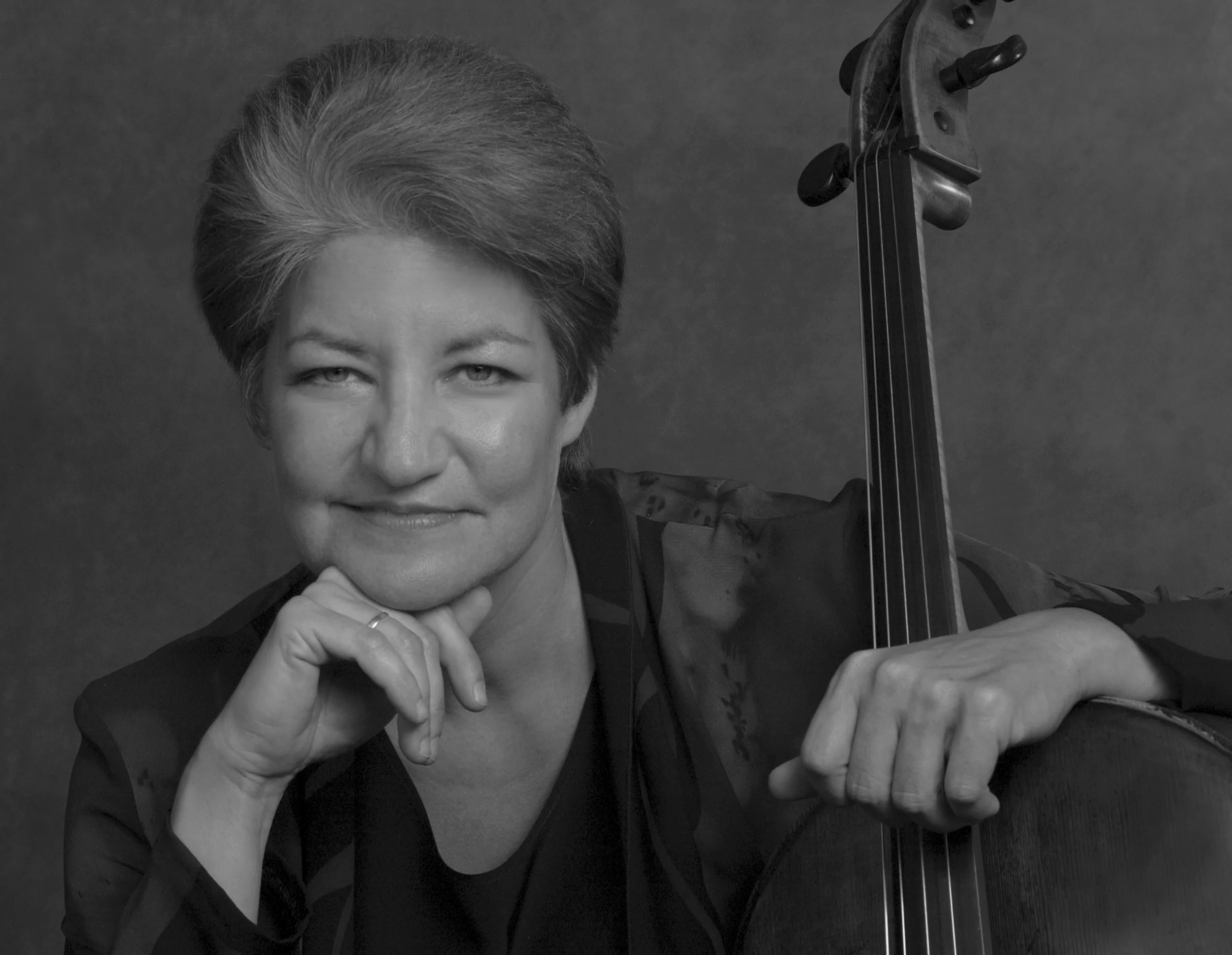
Full Circle: Marcy Rosen on Chamber Music
Marcy Rosen is an acclaimed cellist: soloist, chamber musician, teacher, and mentor. Somehow, in the midst of a stunningly rich career, Marcy and four of her equally gifted and in-demand friends (among them, our Artistic Director Peggy Pearson) made the time to form the La Fenice Quintet. She spoke to us on the role of chamber music in her life and career, the power and benefits of mentorship for both the mentor and protege, and why making music with friends is her preferred coping method in times of great trauma and grief.
Marcy Rosen has established herself as one of the most important and respected artists of our day. Los Angeles Times music critic Herbert Glass has called her “one of the intimate art’s abiding treasures.” She made her concerto debut with the Philadelphia Orchestra at the age of eighteen and has since appeared with such noted orchestras as the Orpheus Chamber Orchestra in Carnegie Hall, the Jupiter Symphony and Concordia Chamber Orchestra at Alice Tully Hall, and the Tokyo Symphony at the famed Orchard Hall in Tokyo. In recital she has appeared in New York at such acclaimed venues as Carnegie Hall, the 92nd Street “Y” and Merkin Concert Hall; in Washington D.C. at the Kennedy Center, Dumbarton Oaks, the Phillips Collection and the Corcoran Gallery, where she for many years she hosted a series entitled “Marcy Rosen and Friends.”
Marcy is a founding member of the world renowned Mendelssohn String Quartet and with this group she was Artist-in-Residence at the North Carolina School of the Arts and for nine years served as Blodgett-Artist-in Residence at Harvard University. The Quartet, which disbanded in 2010, toured annually throughout the United States, Canada and Europe for 31 years. Since 1986 she has been the co-artistic director of the Chesapeake Chamber Music Festival in Maryland and as a long time participant at the Marlboro Music Festival she has taken part in eighteen of their “Musicians from Marlboro” tours and performed in concerts celebrating the 40th and 50th Anniversaries of the Festival.
The recipient of many awards and prizes, Marcy Rosen won the 1986 Young Concert Artists International Auditions and was further honored with the Walker Fund Prize and the Mortimer Levitt Career Development Award. She is the winner of the Washington International Competition for Strings and was the first recipient of the Mischa Schneider Memorial Award from the Walter W. Naumburg Foundation. Marcy Rosen was born in Phoenix, Arizona, and she is a graduate of the Curtis Institute of Music. Ms. Rosen is currently Associate Professor of Cello at the Aaron Copland School of Music at Queens College and on the Faculty at the Mannes College of Music in New York City. She has also served on the faculties of the North Carolina School of the Arts, the Eastman School of Music, the New England Conservatory and the University of Delaware. Her performances can be heard on recordings from the BIS, Bridge. Deutsche Grammophon, Sony Classical, CBS Masterworks, Musical Heritage Society, Phillips, Nonesuch, Pro Arte, and Koch labels among others. You can read her full biography on her website, marcyrosen.com
Marcy Rosen is an acclaimed cellist: soloist, chamber musician, teacher, and mentor (see the bio to the left). Somehow, in the midst of this stunningly rich career, Marcy and four of her equally gifted and in-demand friends (among them, our Artistic Director Peggy Pearson) made the time to form the La Fenice Quintet, the featured ensemble on this month's Chamber Series concert.
Marcy was a gracious, warm, and thoughtful interview subject. She spoke on the role of chamber music in her life and career, the power and benefits of mentorship for both the mentor and protege, and why making music with friends is her preferred coping method in times of great trauma and grief.
How did you and Peggy meet?
Hard to remember, we’ve known each other for so long. We met, I believe, on an Orpheus tour to England in the early ‘80s, and we became friends then, and have been friends ever since. I remember we went to Bath together.
It seems like chamber music has been really central to your career: I see that you were a member of the Mendelssohn Quartet for over thirty years, you teach at the Marlboro Music Festival and are a long-time touring member of the “Musicians from Marlboro” group, and you have been the artistic director of the Chesapeake Chamber Music Festival since 1986. What is it about chamber music that draws you to these particular teaching and performance opportunities?
It’s been the whole course of my career. It’s always been just central to my music-making; playing with other people. As a teenager, I first went to the Marlboro festival and it was there that the direction of my life was really decided, or the focus of it became chamber music. It’s just been what I’ve done, and I was in my very early twenties when my quartet [the Mendelssohn Quartet] started, and that lasted for a very long time. That’s a very serious endeavor and a full-time job, being in a string quartet, and so that’s what I’ve done for my whole life. It’s been a great joy and a great privilege to play with so many different wonderful musicians and to make music with other people. One of the most special things that has happened was that we formed this group “La Fenice” in 2001 after the tragedy at the World Trade Center. We were supposed to play a concert together on Peggy’s series up in Boston, and at that time we decided to make our relationship more closely bonded with each other. So we formed our group, La Fenice, which refers to the symbol of the Phoenix coming out of the ashes, this wonderful strength. That’s been one of the most special relationships: all five of us in the group, the opportunity to play with each other, we love each other, and it’s just always an extraordinary experience when we’re together.

La Fenice: Maria Lambros, Cathy Cho, Diane Walsh, Peggy Pearson, Marcy Rosen
What was it about the events of September 11 that prompted you to formalize the relationship? As you said, many of you had known each other for a long time. Why was this particular event the catalyst?
It was very devastating, whether you were in New York, living in New York, or away; for those of us who lived in the city, it was terrifying. It was terrifying for a long time because of the incredible police presence that was around, and the frailty of our safety was unnerving. I think we wanted to have something that would be more solid, and we just wanted to be together. We talked about it and all agreed to do it.
I think that speaks very powerfully to the impact of the relationships formed in chamber music, that your response was to seek safety and security in forming a closer relationship with your fellow musicians.
Yes. It really was. And to this day, we still have that bond, even if we don’t see each other regularly. We do something together every year, and it’s always such an incredible joy for all of us.
What was it about your experience at Marlboro as a teenager that put you on that course towards chamber music?
Well, just exploring the repertoire was the first thing. The people that I was working with there were incredible mentors and inspirations to me. I had a very close relationship with Felix Galimir, who was an amazing Austrian violinist who worked with Berg and Schoenberg. To hear from him how to play music like that was pretty incredible. Also, I was inspired very much by an Italian violinist named Pina Carmirelli, who was part of I Musici back then. It’s a great small chamber orchestra that has some incredible recordings that go back to the sixties and seventies. The different approaches to music-making I found so inspiring, and I was able to have great relationships with these people and click with them, and to have the opportunity to work with, live with, eat with, and get to know and be inspired by great musicians is remarkable, and that’s the kind of thing that Marlboro offers. And it wasn’t just those two people —Rudolf Serkin who was an iconic pianist and unbelievable inspiration who guided Marlbor from its inception. I played frequently with the legendary Mieczyslaw Horszowski who was there. I played with Philipp Naegle, who was a dear friend, mentor and glorious violinist and violist, I met Sándor Végh and worked with him in Marlboro and then also in Europe. Doors and doors kept opening to me in that field, because of my relationships with these people and the people I had the privilege of working with at Malrboro. That was the course that my life went, and it’s been a pretty great life, I’m pleased to say.
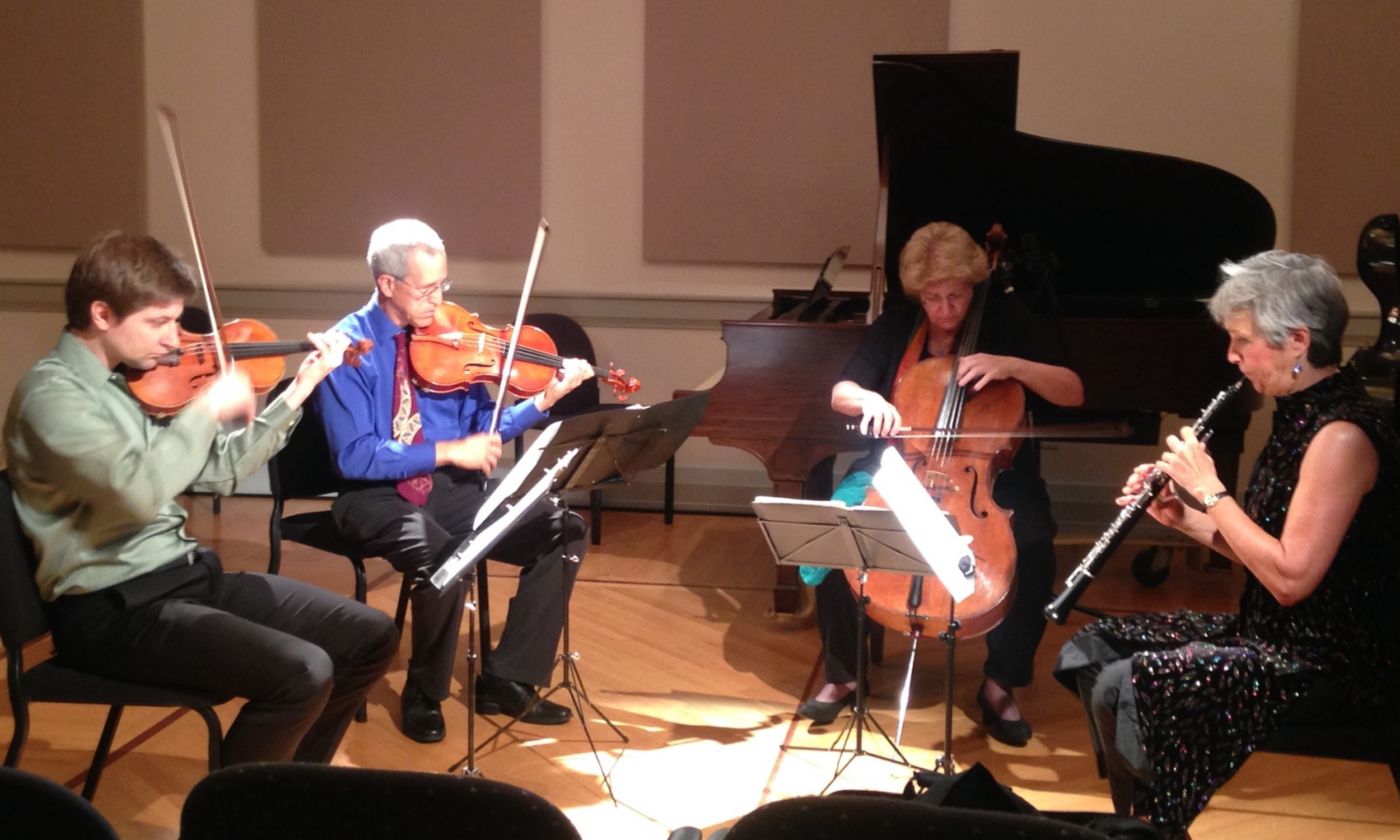
Playing with Peggy at Chesapeake Chamber Music, where she is Co-Artistic Director. Photo credit: Chesapeake Chamber Music
As you’ve attested in our conversation today, a great deal of the joy of playing chamber music comes from being in such a close relationship with your fellow musicians. The audience isn’t able to directly participate in that relationship in the way the musicians do, so why do you think chamber music still feels so intimate and enjoyable to the audience?
The idea is that more and more people will continue to enjoy chamber music, we do have that issue of audiences becoming smaller in these days. I think the great thing about chamber music is that it’s intimate, and when performed in the right kind of space — which these churches that Peggy puts her series in are exactly the right kind of space — the audience is close enough to feel the interaction with the artists, to see it, and to have a tangible reaction to what’s happening on the stage.
As a teacher, how do you approach teaching both in a chamber music context (as a coach, or a participating coach as you are at Marlboro, and Peggy is in our mentoring program)? How does your work as a chamber musician influence your teaching philosophy as a whole, while working with soloists or orchestral musicians?
It’s a different situation at Marlboro than at my teaching studio at my college. In the situation at Marlboro, you’re working with the most unbelievably gifted players in the world. These are people whom — most of whom — have had some chamber music experience, but shockingly, when you sit down to play a piece that none of the other people in the group has ever played before, then you find yourself starting at a higher level than almost everywhere else, but still without the knowledge and background of what the piece might mean. What’s great about working there is that you’re not working on teaching them how to play the cello or the violin or the viola, we’re just talking about music. The idea of exploring musical ideas and expression and the composers wishes and what’s written on the page… we have time to do that in great depth, so that’s what’s fantastic about being at Marlboro. In my teaching studio, and I think rightly so, a good portion of every lesson is spent working on the instrument, and then also talking about the exploration of music. It’s a different approach, because I may have four or five years to work with the student, but the beginning of those years are going to be spent working on the instrumental part of it, and then the later part of the years will probably be working on the musical side. At Marlboro, we can skip a few of those instrumental steps.

Musicians from Marlboro. Photo credit: Smithsonian Magazine
Peggy has told you about our new mentoring program — Which I think is fantastic, that’s such a great thing. — I’m curious: with the students at Marlboro, which is a similar context to our mentoring program, how do you, as the guiding mentor, open these conversations or guide these conversations?
By encouraging the participants to take part in the discussion, and not to just sit there and let me tell them what to do. I want an interaction, I don’t want to be the boss. If I think something’s going off the wrong way, then I can pull it back. It’s hard for me to believe that — although I know it’s true — that some of the participants at Marlboro look up to me the way I looked up to the other people who guided me in my early years. They see me in that same light, and that’s humbling. To be in a position where you’re influencing other people, one just wants to make sure you’re doing the best you can do, and not influencing them in an incorrect or silly way, but really to try to be truthful and honest and whole in what you’re conveying.
Do you find that it’s a leap for some of the participants to enter those conversations? In other words, I think sometimes the educational conversation in classical music can be fairly one-sided. In an orchestral setting, you’re receiving instruction from a conductor or concertmaster, as a student soloist, there is a history of taking teacher’s word as scripture, for lack of a better metaphor. Was the conversational mode of chamber music a leap for you as a student, and do you see your students making that leap? How do you guide them through that?
That’s a hard question. I do see the change, when people become involved and confident enough, and smart enough, really, to start speaking their mind in the group. I think that mostly that comes from experience, just like anything else. I’m often asked for my advice about what to do: “Should I join a quartet? Should I form my own quartet? How do I do that? Where should I go? How do I find people?” It’s hard to answer some of those questions. Many of the people at Marlboro are now in successful quartets, and part of that, they’ve told me, is from experiences they had at Marlboro playing string quartets with me. That’s a great thing, I feel really honored that I’ve had that influence on people, and that they chose that path because of what they learned during the summer. I don’t know if that really answers your question, because it’s hard to say how somebody comes into their own, which is what you’re describing, when someone starts to move away from being shy and inexperienced to someone who is confident and wanting to reveal their feelings. Then you have a partner to work with and not a student anymore. I think that’s the transition that happens there. From somebody’s first year to their third year, the transition is usually very palpable, very noticeable, and the maturity level changes tremendously.

Members of the Mendelssohn Quartet in 2007. Photo credit: Henry Fair
You said before that what it takes to achieve that transition is experience, and I wonder if maybe the key ingredient that Marlboro provides, and that hopefully our program will be providing, to these young people is simply the safe space to gain that experience, that they know that’s a place they’re going to gain experience that would otherwise be hard to come by.
I think that's absolutely true. I don’t know a lot of the kids in your mentoring program, but I do know Tony Rymer, and he transformed from an inexperienced youngster to an incredibly confident, totally capable chamber music player, not to mention that he’s also a very fine soloist, but he just really, really grew through Peggy’s mentoring and he came to Marlboro last summer and he did incredibly well, so I know good things are being done.
How were you first introduced to chamber music, even before Marlboro? Had you heard recordings or seen performances? What got you to Marlboro?
I grew up in Phoenix, Arizona, and there was a chamber music society called the Phoenix Chamber Music Society, it still exists - my mother was interested in music and she was a member. I started playing piano when I was six, and my piano teacher would offer housing to the visiting artists. I started playing the cello when I was nine; and I was pretty serious as a young child in music. Around the age of ten or so, became the page-turner for the Phoenix Chamber Music Society. I remember turning pages for Menahem Pressler and the Beaux Arts Trio (and he remembers me doing it, too!) and when I was about eleven or twelve I was lucky enough to get cello lessons with some of the visiting artists. Of course I now understand now how much of an imposition that was! That my mother would ask them to give her twelve-year-old kid a lesson and they would agree! Anyway - I heard all of these fantastic chamber music groups and soloists. I turned pages for the great Zara Nelsova and her husband Grant Johannesen playing a recital… I had contact with these great people as a little kid and that’s how I was exposed to chamber music. I was immersed in it through no fault of my own, but because of my parents. I heard the Budapest Quartet, the Hungarian Quartet, the Amadeus Quartet, the Juilliard Quartet, the Beaux Arts Trio, among many others. I heard all kinds of really great groups. The concerts were held in a beautiful old studio with a balcony and chairs on the main floor. It was a very intimate, very lovely space, and it was fantastic.
Are there any highlights in the Fauré or the Haydn that you’re particularly looking forward to?
I’m looking forward most to playing with my people in La Fenice. We can play anything at all and we’re just thrilled to be playing together and I think that our love for each other comes out in our performances. The Haydn is a fantastic piece, and it’s a Peggy arrangement of a Haydn string quartet, and those are always really wonderful to do, because it’s a different sound, but a really great way to be playing the music of Haydn. I always love doing those with her. The Fauré is one of the really great Piano Quartets, the C Minor Piano Quartet, which is very dramatic and very soulful and very beautiful, and a perfect piece for us, we just love it.