

How George Li Captures Time
It's been a big year for George Li, and for someone who had already performed at the White House for Barack Obama and Angela Merkel by age 15, that's saying something. A Lincoln Center/New York concerto debut, a silver medal from the Tchaikovsky Competition, a string of high profile recital and concerto bookings, and a $25,000 Avery Fisher Career Grant... and those are just the highlights. Did we mention that he's also in a dual degree program at Harvard and NEC?

It's been a big year for pianist George Li, and for someone who had already performed at the White House for Barack Obama and Angela Merkel by age 15, that's saying something.
In May 2015, George made his Lincoln Center/New York concerto debut with the Orchestra of St. Luke's and Gerard Schwarz, to rave reviews by the New York Times. That July, he took home a silver medal from the Tchaikovsky Competition, setting off a chain of high profile recital and concerto bookings that have continued to intensify his popularity at home and abroad. And just this March, George was one of five recipients of a $25,000 Avery Fisher Career Grant.
Did we mention that he's also in the second year of a dual degree program at Harvard University and the New England Conservatory?
We are delighted that he made time not only to perform on the final concert of Winsor Music's 2015-16 season, but also to give this interview. Don't miss your chance to hear him live at St. Paul's Church in Brookline on Tuesday, May 24 at 7pm.
It’s been a year and a half since we spoke: a lot has happened since then! In our last interview, I asked you what you were most looking forward to, and here’s what you said: "A concert next May in Lincoln Center; that will be a very big moment for me. It will be a great experience to play with St. Luke’s Orchestra, and I’m very excited to play the Tchaikovsky Concerto.” Before we get into everything else: how did that go?
Yeah, that was great experience! It was my orchestral debut at Lincoln Center, and I had a great time.
Speaking of Tchaikovsky, how about that competition? Congratulations on your incredible placement. What sticks with you the most about that whole experience?
It was a life-changing experience for me. It was really something else. It was of course, extremely stressful, for the whole month; it was not only hard physically, but it was a mental marathon as well. I guess what helped, and made it easier for me, was the kindness of the people in Russia. They were all great listeners, and I felt an amazing chemistry with the audience, so I didn't have to just worry about the competition and the stresses of it. When I played, I just felt really comfortable on stage, and I felt like I could really communicate myself to them. That made the mental aspect much easier.

Photo from the Tchaikovsky Competition website
What is life like for you as a full-time (dual-degree!) college student and a high-profile, internationally sought-after performer? How do you prioritize, make decisions about where your time goes?
It's tough, but of course, the first thing I prioritize is music. It is tough to balance out when I can get my work in, and if I can complete everything by the deadline. But, when it gets to those crunch times, then I prioritize: I have to play this concert first, I have to practice for that concert, and then I go from there and just do my best and try to survive. Academically, for me, it’s not as much about the grade as it is about learning something. That’s why I wanted to come to the Harvard/NEC program. As long as I feel like I learned something and was able to get something out of my education, I’m pretty happy.
What are you studying in the Harvard half of your degree?
I’m majoring in English literature.
Any particular area of focus?
I’m currently in the elective program, so it’s more of a free choice of courses, as long as you’re within English literature. Last semester I took English romantic poetry, and this year I’m taking “Shakespeare after Hamlet” and “The Modern Novel,” a course that focuses on James Joyce and Dostoevsky. They’re all really good classes and I’ve learned so much. I feel that English and music are really deeply intertwined. Studying English has really helped me grow musically and as a person just over these last few months, which has been great.
Are you sleeping at all?
There are times when I don’t sleep as much as I should, but that’s college life. Everyone deals with moments like this!
Have you done much chamber music since we saw you last?
I did chamber music during the fall semester of this school year, but instead of the usual piano trio/quartet/quintet, I was in a duo piano group with one of my best friends and fellow pianist Alex Beyer. We played the Rachmaninoff Suite No. 1 for two pianos, and it was an awesome time. I also played the Brahms Piano Quintet as a component for a piano competition at the Verbier Festival (the Vendome Competition), and I had the privilege of playing it with the Jerusalem String Quartet, which was an unbelievable experience.
So you’ll be performing that same Brahms Piano Quintet for this concert. What's your history with him? You mentioned that you played it for the competition, but have there been any other memorable encounters with his music?
Yeah, I think most of the stuff that I've played of his has been chamber music, actually. I played the Brahms Trio in C major and the Brahms piano quartet in G minor. I'd definitely love to explore his music much more, especially the solo repertoire. Most of my experiences have been with his chamber music, but even from that aspect, his music is so profound and deep. It's something to do with his harmonies but also with the manner that he composes in terms of texture and sonorities that feels so heartfelt. The sounds that he gets from those harmonies are very special indeed.
You mentioned that you recently took a course on English romantic poetry, so I'm wondering how that course, or any of the work you've done in that era, informed your approach to Brahms now, after having taken those courses.
I think that reading poetry and literature helps with music making because they’re so intertwined— I believe that literature and poetry is about how we verbalize feelings, capturing any given moment and describing it in great detail, with finesse and nuance, preserving that particular memory and making it timeless. I feel like understanding that is so relatable to our lives, and therefore reading literature can really help us understand why we feel a certain way when there is a spectacular sunset, for example, which is really inspiring and nurturing for our soul. Applying that understanding to music really helps when you approach, for example, a passage in Brahms, when it requires this ethereal imagery or feeling. You can draw from moments that you've read in literature, which is basically a verbalization of moments you've experienced yourself. It's amazing how wonderful writers were able to put any moment into words in such an accessible and inspiring manner. It really helps me to use what I've learned from literature and apply it to music.
I know that there are many musicians who were particularly drawn to music precisely for its nonverbal qualities, for the more abstract approach to emotion. I'm curious: for you, how do you relate the more specific, verbal expressions that you work with in literature to the non-verbal expressions in music?
Like you said, music is very abstract, and very open to interpretation. For me, however, that understanding of literature helps me to further understand music. It’s of course not a word-for-word parallel to music, but there’s a mutual sense of understanding between music and literature where both are able to evoke all aspects of humanity with such clarity and profundity, and it’s these moments that are so moving. Maybe, in a sense, literature is like a stepping stone to understanding music.
So you have been traveling all over the world to perform. I'm wondering if you have a favorite travel experience from the past year?
Yes, I just came back from two weeks of touring, which was very tiring, of course, but one day, at five in the morning, I was about to travel from London to Switzerland, and at the airport I saw this beautiful sunrise that was just incomparable to anything I'd ever seen before. There was a mixture of beauty and a sense of the overpowering, which really struck me. It totally cleared my head and woke me up for the rest of the day!
Have there been any particular cities that you've visited that you thought you might like to go back for a more extended period of time, or maybe even thought: "I wish I could live here!"?
In general, when I play in cities abroad, I don't really get to explore as much as I would like, because I'm always either practicing or resting. I never really get a good chunk of a day to explore and walk through a town. When I was in Freiburg a couple of weeks ago, driving through the countryside, it was so beautiful, and walking through the streets just to get to the concert hall and around really showed the character of the place, and just I wish I could get to know Freiburg better in the future!
And when you come back to Boston, is there anything in particular that you look forward to?
Whenever I look out of the window at the skyline, just seeing familiar things like the Prudential Center or Fenway Park, it just brings an overwhelming sense of finally being home. It always feels so good to be back, and even just seeing Storrow Drive contains this wonderful feeling to be back home.
Well, we're always glad to have you back, and we're really looking forward to having you on our final concert of this season. Thank you so much for your time today.
Thanks, I'm really looking forward to it as well.
Biography from GeorgeLiPianist.com
"Silver medalist in the 2015 International Tchaikovsky Competition and winner of the prestigious XIV Concours International Grand Prix Animato 2014 Paris, George Li (黎卓宇) is regarded as one of the world's most talented and creative young pianists. His astonishing technique, distinctive tonal quality, and exceptional musicality have earned him consistent critical acclaim (New York Times, Washington Post, International Piano Magazine, Toronto Star, The Boston Phoenix, The Boston Music Intelligencer) and enthusiastic audience response worldwide for his solo recitals, orchestral collaborations, and chamber music performances.
In addition to winning the Grand Prix Animato Piano Competition (with the Schumann Prize, the Brahms Prize and the Audience Prize) in December 2014, George won third prize in the 2015 US Chopin Competition, and second prize in the 2014 Vendome Prize. In 2012, George received the prestigious Gilmore Young Artist Award, becoming its youngest recipient. With his exceptional musical gifts being recognized by Alfred Brendel, Dimitri Bashkirov, and Menahem Pressler, George was the winner of the Tabor Foundation Piano Award at the 2012 Verbier Academy. In 2010, George won first prize in the prestigious Young Concert Artists International audition and since that time has been under management of the YCA. In 2010 he also won first prize at the Inaugural Cooper International Piano Competition. In 2008 George won second prize at the Gina Bachauer International Piano Junior Artist Competition. In 2011 George performed at a State dinner for President Obama and German Chancellor Angela Merkel at the White House.
In 2005, 9-year old George made his first orchestral debut as a soloist with the Xiamen Philharmonic Orchestra. Thereafter, he has frequently appeared as a soloist with many symphony orchestras, including the Cleveland Orchestra, Simon Bolivar Youth Symphony Orchestra of Venezuela, Boston Philharmonic Orchestra, Albany Symphony Orchestra, Symphony Pro Musica, Brooklyn Philharmonic Orchestra, Spartanburg Philharmonic Orchestra, Miami Symphony Orchestra, Nordic Chamber Orchestra (Sweden), the Norrkoping Orchestra (Sweden), Princeton Symphony Orchestra, Lexington Symphony Orchestra, Ridgewood Symphony Orchestra, Orchestra “I Solisti di Perugia” (Italy), Southern Arizona Symphony Orchestra, Waltham Symphony Orchestra, Boston Philharmonic Youth Orchestra, Boise Philharmonic Orchestra, Pasadena Symphony Orchestra, The Orchestra at Temple Square, the Longwood Symphony Orchestra, the Stamford Symphony Orchestra, the Akron Symphony Orchestra, the Hilton Head Symphony Orchestra, the Edmonton Symphony Orchestra (Canada), and the Orchestra of St. Luke’s.
An active recitalist and orchestral soloist, George has performed in venues throughout the world, including the Concertgebouw (Amsterdam), the Musikverein (Vienna), Rudolfinum’s Dvorak Hall (Czech Republic), Severance Hall, Symphony Hall, Jordan Hall, Mechanics Hall, The Tabernacle, Alice Tully Hall of Lincoln Center, Merkin Hall, and the Kennedy Center.
George is also an enthusiastic chamber musician. Since the age of 9 George has regularly performed in chamber music concerts, with repertoire ranging from Haydn to Beethoven, Brahms, Shostakovich, and Bolcom. As a member of the Vivace Trio, George performed for members of the US Congress on Capitol Hill. He has also played chamber music concerts with The Boston Trio and in the Winsor Chamber Music Series.
George has frequently been featured as guest artist on National Public Radio (WGBH). He also appeared on CBS TV (the Liz Walker Show and the Martha Stewart Show). At the age of 11, George performed at Carnegie Hall as a featured pianist in the TV series produced by From the Top. George has participated in numerous world-renowned summer festivals including the Verbier Academy (Switzerland), the Miami International Piano Festival, the Southeastern Piano Festival, and the Gilmore Keyboard Festival. He has had master classes with renowned pianists Alfred Brendel, Emmanuel Ax, and Richard Goode.
A resident of Lexington, Massachusetts, George Li graduated from Walnut Hill School for the Arts and the Preparatory School of New England Conservatory, where he studied piano with Ms. Wha Kyung Byun (卞和暻). George’s previous piano teachers include Mrs. Dorothy Shi (杨镜钏) [from the ages of 4 to 12] and Mr. Chengzong Yin (殷承宗) [ages 7 to 12].
George is currently enrolled in the dual degree program at Harvard University and the New England Conservatory, continuing his piano studies with Ms. Wha Kyung Byun as well as Maestro Russell Sherman, a renowned pianist and Distinguished Artist in residence at the New England Conservatory."
Learn more at http://www.georgelipianist.com/

Living Among Legends: Andreia Pinto Correia's Life and Work
Andreia Pinto-Correia is an award-winning Portuguese composer, a student of John Harbison, and the featured composer on the final concert of Winsor Music's 2015-16 season. The prestigious Jornal de Letras wrote: "The music of Andreia Pinto-Correia has been a major contribution to the dissemination of Portugal’s culture and language, perhaps a contribution larger than could ever be imagined."

Andreia Pinto-Correia is an award-winning Portuguese composer, a student of John Harbison, and the featured composer on the final concert of Winsor Music's 2015-16 season. Born and raised in Lisbon, educated in both Lisbon and Boston, and now commissioned by ensembles and institutions all over the world, Ms. Pinto-Correia "writes music of visceral sonic impact, combined with an eclectic, even scholarly curiosity about music’s place in the world. With a strong tendency toward drama and theater, she frequently draws on literary sources for inspiration" (Robert Kirzinger, Boston Symphony Orchestra).
Andreia's composition for Winsor Music, Dalla Legenda aurea, is a response to her encounter with a famous Italian fresco, Piero della Francesca's "Legend of the True Cross," and was written specifically for Peggy Pearson's sound. Do not miss the opportunity to hear a world premiere by Andreia Pinto Correia alongside stellar performances by rising star George Li, piano, and our own artistic director Peggy Pearson, oboe. As one of the major Portuguese newspapers, Expresso, wrote: "Andreia Pinto-Correia. Remember this name."
How would you describe your music to someone who has never heard it before?
I am very attracted to instrumental colors and timbres, and harmony has always had a very important role in my work. As I descend from a family of scholars and writers, my compositions are often influenced by literary works.
I tend to do a lot of research prior to my “composing mode,” since I enjoy writing with a strong sense of tradition. In the case of Dalla Legenda aurea, I studied in depth several oboe quartets by Mozart, Elliott Carter, Harrison Birtwistle, Benjamin Britten, and Colin Matthews as well as writings about Piero della Francesca, including biographies, monographic works, and articles by Della Francesca’s scholars such as Marilyn Aronberg Lavin.
Regarding Dalla Legenda aurea: I started to write this work while in Umbria, Italy, where I was a fellow at the Civitella Ranieri Foundation. I was fortunate to spend a substantial amount of time looking at Piero della Francesca’s frescoes, traveling throughout Umbria and Tuscany to cultivate the appropriate frame of mind.
How did you come to composition?
I have a somewhat atypical background. I started studying music as a performer simultaneously in two different institutions with two different approaches: classical and jazz. When I arrived in the United States I was enrolled in a performance degree. During my first semester I suffered an accident that left me paralyzed in my right arm. I returned to my country, Portugal, and I curtailed my studies for 6 years while I underwent several surgeries.
Eventually I returned to the United States and, knowing that I could not be a performer any longer, I decided to make the most of my education. I studied theory, orchestration, conducting, and film scoring. Eventually I wrote my first work Aljezur, for jazz orchestra, during the last semester of my undergraduate studies. After that I never stopped writing music.
What do you remember about the first piece you wrote? Did you know at that point that you would want to make this your profession?
Aljezur was influenced by Iberian folk traditions and rituals, and in particular by the processions in southern Iberia. I think these are aspects that informed my writing. Alzejur is much more rhythmically oriented than my recent works. Curiously, there is a large section that shows my early interest in set theory without me being fully aware of it.
After Aljezur, I started to receive commissions yet I felt the need to further develop my skills. So I went back to school (New England Conservatory of Music) where I studied for a masters’ degree – with the late composer Bob Brookmeyer – and a doctorate – with composer Michael Gandolfi. I was also fortunate to have crossed paths with John Harbison, a composer that who has been a major influence on my music.
“I can say that I am pretty much a Boston “product”!”
One of my most important “teachers” was the Boston Symphony Orchestra. During my student years at the New England Conservatory, I deeply cherished my College Card and would attend concerts and rehearsals almost every week, having studied previously the scores to be performed. Being accepted as a fellow at Tanglewood in my early composer years was also very important. It opened many doors and possibilities for my growth as a composer. I can say that I am pretty much a Boston “product”!
In answer to your initial question, I would not say that one single moment defined my choice to become a composer, rather a set of circumstances, some more sanguine than others. One of those moments was when I realized that I could never become a soloist, the other when I heard my work being performed with an orchestra for the first time. That was like discovering a whole new world for me. But, I was extremely fortunate to have crossed paths with fantastic mentors and to have them as my role models. That was part of my ultimate decision to become a composer.
What composers and/or other musical traditions would you cite as influences?
I am a huge Mahler fan, although it might not be immediately evident for someone listening to my music. Messiaen, Stravinsky, Debussy, Bartók, Ravel, Ligeti, Dutilleux, and Birtwistle are some of the composers who have influenced me in one way or another. And Bach, of course. More locally, I would say Elliott Carter, Jacob Druckman, and John Harbison.
Regarding other musical traditions, I was lucky to have grown up surrounded by music from various parts of the world. My father listened mostly to classical music and in particular to opera. He also had a very good Jazz LP collection at home. Growing up in Lisbon, Portugal, I was exposed to fado (our urban song), flamenco, and music from our former colonies such as Brazil, Cape Verde and Angola. Later on I became curious about music from South of India, and in particular from Goa (a former colony of Portugal). This is all during my teenage years...
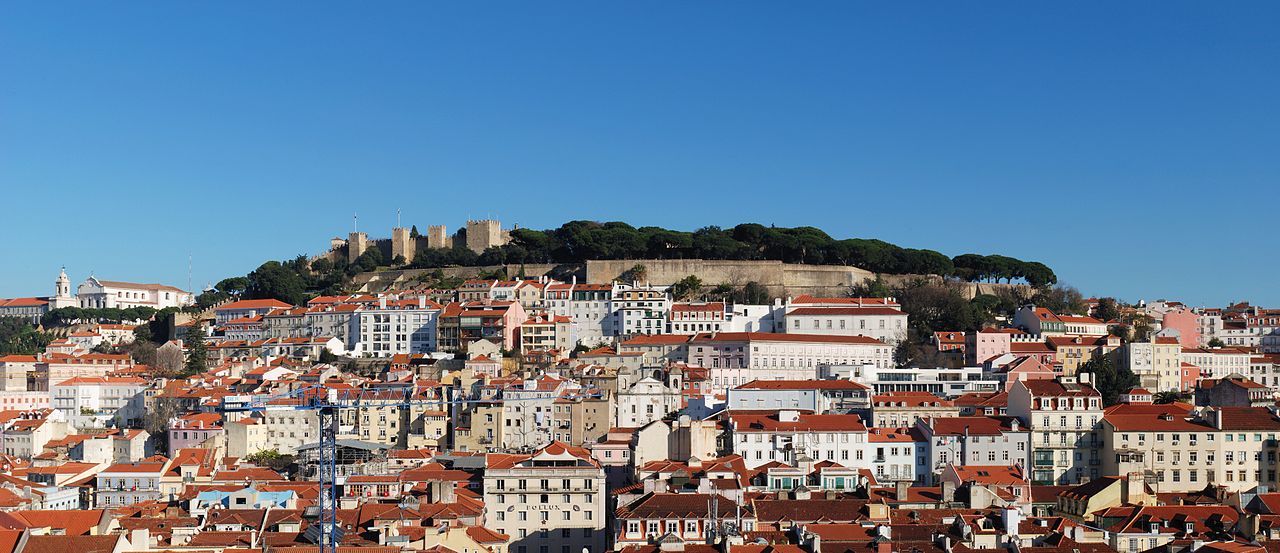
I owe this curiosity to my parents and in particular my father, who is a Medievalist. I often accompanied him during his fieldwork, and later on I worked with him in his Center of Research at the University of Lisbon. I am very interested in his work on Medieval Iberian traditions, tales, prayers, superstitions, and songs such as the incredible Cantigas de Santa Maria, a thirteenth century collection of medieval songs attributed to King Alfonso X, El Sabio (The Wise One).
My mother is a translator from German to Portuguese, and was a professor of German literature also at the University of Lisbon. I grew up watching her incessantly trying to find the word or expression that could do justice to Goethe or Zweig. My passion for detail is probably derived from my mother’s search for refinement and precision.

Are there places in the piece you wrote for Winsor that we might hear some of those influences?
I doubt that you will hear these influences in an immediate way. Probably, you will hear my affinity towards certain “ritualistic” atmospheres, in a more abstract, perhaps even subconscious way. I do tend to be attracted to certain emotional ambiences as a response or counterpoint to a source of inspiration – Della Francesca’s The Legend of the True Cross (1454-1458) in this case.
As I started to enter della Francesca’s world, and to know more about his personal story and work process, I gradually became more aware of his use of perspective, spatial
organization, proportion, and detail. Certainly my acute awareness of these elements in his work and in this cycle influenced my process of composition.
Can you give us a tour of some of the musical landmarks of the piece?
I chose to divide my work into ten separate parts corresponding to the main sections of Della Francesca’s cycle The Legend of the True Cross. These parts are performed continuously in an identical sequence to the events depicted in the frescoes.
On a smaller scale, and as indicated in my program notes, Della Francesca's rich array of colors, landscapes, personages, and parallel narratives – in continuous movement from one side of the cycle to the other – appear in my composition in association with particular musical gestures and instrumental textures.

For instance, the two battle scenes Section VI (Victory of Constantine) and Section IX (Victory of Heraclius) share the same harmonic material. While they both represent the two peaks of intensity, dynamics, and texture, these elements manifest in very different ways. Victory of Constantine presents continuous ascending lines (derived from the original oboe flurries) in a more predictable and organized manner, while in Victory of Heraclius, the texture is more raw, a de-construction of the former battle material. Similarly, Section II (The Story of Queen Sheba and King Solomon) and Section VII (Invention of the Cross) are related thematically mirroring the narrative arch and movement of della Francesca’s cycle.
The Raising from the Well (Section VII) is believed to have been painted by a disciple of Della Francesca. In my composition this section is shorter, and as though it were an unfinished imitation of something more refined. Throughout the piece a “unifying” chord, played at a pianissimo dynamic, functions as an anchor, continually emerging as a far-away remembrance.
Finally, The Death of Adam: Three Death Scenes Under the Blue Sky, the opening section, consists of three short expositions, each an exploration around pitch “A”. Curiously, it was only after the work was written that I realized that these three expositions were all developed around “A” as in Adam. At the very end, the work is reduced to its core skeleton, a simple recitative that reiterates the pitch “A” underlying its importance in the arch of the musical narrative.

Why did you apply this inspiration to this instrumentation? What about the Legenda painting sparked this particular sound in your mind?
I first heard Peggy Pearson many years ago while I was a student in Boston, and I remember that I was completely taken away by her sound, lyricism, and expression. I heard her many times at the Emmanuel Church, and perhaps in an unconscious level that association of her sound with the sacred remained with me. So, rather than being a piece that “adapts” or translates a certain work of art (della Francesca’s Legenda della Croce), this composition is a work written for a very specific soloist with her unique sound in mind.
Regarding your question about instrumentation: Paradoxically my reaction towards the overwhelming experience of the frescoes was one of scarcity and reduction of forces. There is so much color, detail, movement, and richness in Piero della Francesca’s cycle that I felt the need to relate the sensory explosion into a more confined and reduced impression. The instrumentation of Oboe Quartet with Peggy Pearson as a soloist seemed perfectly suited for the occasion.
Can you explain some of your approach to writing chamber music, specifically chamber music for a mixed (woodwind/string) ensemble?
Although I am at ease with larger instrumental forces, such as orchestral, I find myself enjoying more and more writing for smaller groups with particular performers in mind. I really appreciate the whole process of writing for a specific soloist, getting to know their sound, discovering their personal tastes, quirks, and repertoire.
In the case of Dalla Legenda aurea, I wanted to integrate key moments of virtuoso playing and lyricism, balanced within tutti ensemble textures. In addition, I wanted to incorporate some soloistic moments for the string trio.
Finally, do you have a favorite piece (or pieces) of chamber music by another composer?
I find myself enjoying certain pieces at different phases of my compositional life. Thus, I am not a big fan of lists. But, here is an effort, a list of some pieces that have influenced me in the past (not in any particular order):
Johann Sebastian Bach: The Well-Tempered Clavier, Goldberg Variations
Johannes Brahms: Clarinet Quintet
Olivier Messiaen: Quatour por la fin du temps, Vingt regards sur l’Enfant-Jésus
Henri Dutilleux: Ainsi la Nuit
Igor Stravinsky: Histoire du soldat
György Ligeti: String Quartet Nr. 1 and Nr. 2
Peter Maxwell Davies: Eight Songs for a Mad King
Elliott Carter: A Mirror on Which to Dwell, Night Fantasies, String Quartet No. 5
Luciano Berio: Sequenza
Bela Bartok: String Quartet Nr. 4
Harrison Birtwistle: Silbury Air
John Harbison: November 19, 1828, Mirabai Songs, Wind Quintet
Franco Donatoni: Omar
Jacob Druckman: Reflections on the Nature of Water, Second String Quartet
Georg Friedrich Haas: String Quartet No. 3 “ In iij. Noct”
From her website:
The prestigious literary magazine Jornal de Letras describes Andreia Pinto-Correia’s compositions as “a major contribution to the dissemination of Portugal’s culture and language, perhaps a contribution larger than could ever be imagined.” Her music — described by the Boston Globe as “compellingly meditative” and by the New York Times as an “aural fabric” — is characterized by close attention to harmonic detail and timbral color. Following a family tradition of scholars and writers, her work often reflects the influence of literary sources from the Iberian Peninsula and beyond.
Ms. Pinto-Correia is a 2015 John Simon Guggenheim Memorial Foundation Fellow. Honors include commissions from the European Union Presidency, League of American Orchestras and the Toulmin Foundation, Fromm Music Foundation at Harvard University, Boston Symphony Orchestra Brass Quintet, American Composers Orchestra at Carnegie Hall, Tanglewood Music Center, Albany Symphony Orchestra, and Culturgest National Bank of Portugal. Her work Timaeus, a concerto for orchestra commissioned by the Boston Symphony’s Tanglewood Music Center in memory of Elliott Carter, was recently premiered at the opening concert of the Contemporary Music Festival’s 75th anniversary.
Her works have been performed by the Minnesota Symphony Orchestra, Berkeley Symphony Orchestra, Calouste Gulbenkian Foundation Orchestra, Orquestra Metropolitana de Lisboa, and the Borromeo and the Mivos String Quartets. She has also been the recipient of a League of American Orchestras/ New Music USA Music Alive Composer Residency, a Rockefeller Foundation Center Fellowship, a Civitella Ranieri Foundation Fellowship, the Alpert Award in the Arts/Ucross Residency Prize, and the Toru Takemitsu Composition Award by the Japan Society. In addition, she was the curator of the Fertile Crescent Festival for Contemporary Music at the Institute for Advanced Study in Princeton.
Born in Portugal, Ms. Pinto-Correia began her musical studies in her native Lisbon and received her Masters and Doctoral of Music degrees with Academic Honors from the New England Conservatory of Music as a student of Bob Brookmeyer and Michael Gandolfi. She attended the Minnesota Composer Institute, the European Network of Opera Academies (ENOA), the American Opera Projects (AOP), the Composers Conference, and the Tanglewood and Aspen Festivals.
Photos of Ms. Pinto-Correia by Daniel Blaufuks