
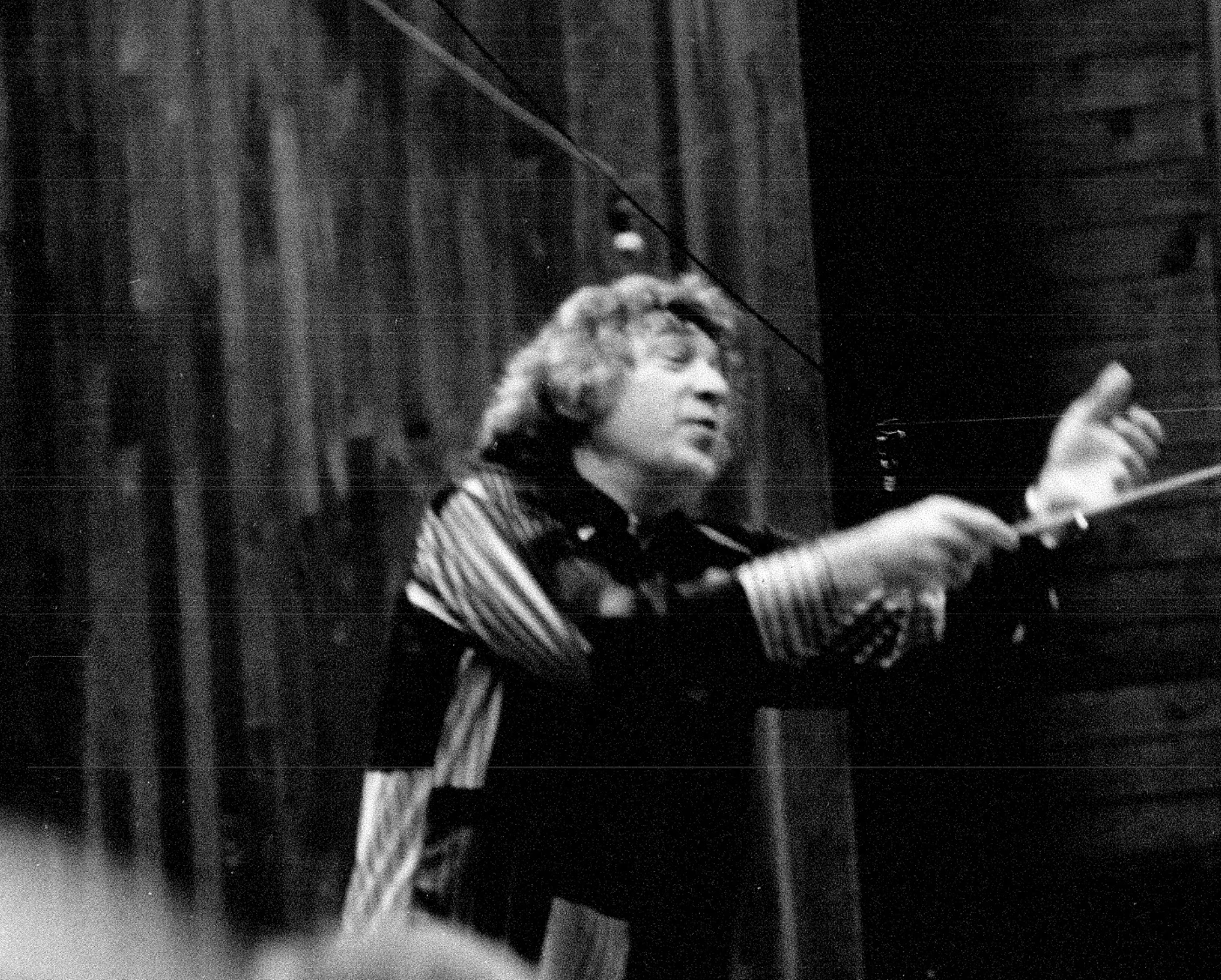
Bruce Creditor Remembers Gunther Schuller
On November 23rd, at 7pm, at St. Paul’s Church in Brookline, our featured contemporary work will be the Sonata for Oboe and Piano by composer, conductor, author, and educator Gunther Schuller, who passed away on June 21st this year at the age of 89. Our concert is the last in a series of events honoring Mr. Schuller, and to learn more about him, we spoke with Bruce Creditor, a long-time friend and colleague of both Mr. Schuller and our artistic director, Peggy Pearson.
On November 23rd, at 7pm, at St. Paul’s Church in Brookline, our featured contemporary work will be the Sonata for Oboe and Piano by composer, conductor, author, and educator Gunther Schuller, who passed away on June 21st this year at the age of 89. Our concert is the last in a series of events honoring Mr. Schuller, and to learn more about him, we spoke with Bruce Creditor, a long-time friend and colleague of both Mr. Schuller and our artistic director, Peggy Pearson. Mr. Creditor’s biography can be found at the end of the interview, but to introduce our conversation, we’d like to share the elegy he wrote for the local union, the Boston Musician’s Association, after Mr. Schuller’s death.

Gunther's death brought an end to an era. Or several eras. There are obituaries in many publications and online which speak to the more public aspects of his life - the composing, the conducting, the writing, the Third Stream, the leadership of various institutions. But what lies below that public persona is the Gunther Schuller that we knew as a musician. For those who were fortunate to experience his life force we were inspired by his drive for excellence in performance, how to approach music, the arts and life. Many of us call him our mentor, our muse, our friend. Make no mistake about it, Gunther spoke his mind in rehearsals as well as in more formal occasions. Because he cared. And now we mourn his loss.
How did you first meet Gunther?
Interestingly enough, it was at a performance of the New York Philharmonic at Lincoln Center, there were three composers conducting their own works on the program, in 1968. I was in high school, and it was the premiere of Gunther’s double bass concerto. He was then in a more thorny, abstract, modernistic mode of composing, and I really disliked the piece. It didn’t speak to me at all; the other two pieces on the program, by Bernstein and Copland, really did get to me, but that piece did not. That did not stop me from applying to New England Conservatory, and in fact, one of the aspects that appealed to me was that he was the president. My first interaction with him at NEC was the audition that decided which orchestra I would be in, and he asked me to play the first page of Don Juan, which of course, the clarinet is not soloistic, it’s very rhythmic, repetitive notes, so I thought “What the heck?” but I was chosen for his orchestra, so I guess that went ok. Those were my first two interactions with Gunther.
What role did he play in your life?
There were many roles over the many years. From the start of my playing at NEC, he was of course a conductor and teacher at that point, and in fact he had rather large sessions — he wanted to make sure the student body knew about rhythm and all the breakdowns and subdivisions. So he held these masterclasses of sorts giving his explanations of rhythm; they were called the Rhythm Lectures. So from then I was invited to play in the Ragtime Ensemble, which had a good twenty-five year lifespan. That interaction was just one of joy, of learning that genre of music, touring, recording with Gunther, just an amazing experience. Mentor — he was just a wonderful mentor. Although some of the things that he said were rather biting and acerbic, his intent was always to convey the integrity of the music.

After that, he was the artistic director of the Tanglewood Music Center, and I spent two summers there. While there, I started working as an editor and copyist for him, for his music publishing company, which is Margun Music, and later, its affiliate company, GunMar Music. The names were combinations of his and his wife’s, Gunther and Margie. From then, I was librarian at the Tanglewood Music Center while he was the artistic director, did more of this type of editing, and eventually he invited me to be the general manager of the company. So there, he was my boss, although he disliked the term “boss,” which I found out just before he died; he preferred “employer” and “coworker.” Learning from him in that role, preparing publications, working with composers — he saw part of his mission as to encourage and promote and publish music of younger composers, that other publishers would not necessarily take on, and also the large catalogue of the American composer Alec Wilder. This he did fully self-subsidized. We had some income from sales and rentals, but the predominant financial support was his own. Then, of course, we started a record company, GM Recordings, spreading out a little bit more. In time, I needed to seek other things, so I left his employ and over the next twenty, twenty-five years, we retained the relationship of friends and colleagues. We would chat every once in awhile, he’d call me for some arcane information, I was supposed to remember where something was in the house twenty-five years later! It was through various roles that my relationship with him evolved throughout the course of my life. I was very fortunate, and I also saw these roles played out with other conductors, composers, his colleagues, those mentoring relationships were with many people.
What role did chamber music play in his life?
Throughout his life, he participated in chamber music, early on, I know with some groups from the Cincinnati Symphony, when he was there, but more importantly, when he was at the Metropolitan Opera, he founded the Metropolitan Opera Wind Quintet. He thought his colleagues there were wonderful, and they in fact got together to learn and perform the Schoenberg Wind Quintet. They were the first group to record it, on Dial Records. It took them several years to prepare it, and I don’t know how many times they performed it — they would perform it on tour, when the Met Orchestra was touring — he would set up concerts for the Wind Quintet along the way. (Just as an aside, the Emmanuel Wind Quintet — which was me, Peggy, David Hoose, Chris Krueger, and Phil Long — was formed to study and perform the Schoenberg Wind Quintet, so that’s another interesting connection there.) From his experiences in that quintet, he came to realize that the repertoire was rather sparse, as far as works from the nineteenth century, and he did quite a few transcriptions for wind quintet.
And did the Emmanuel Wind Quintet make use of those transcriptions?
Several of them. There’s a transcription of the Ravel Le Tombeau de Couperin which includes all six movements, where another popular transition only includes four. It’s very difficult, he tried to stay as true to the original orchestration as possible, so where solo lines were in certain instruments, he would try to keep them there. We played that a good number of times. And his compositional catalogue includes — not as many as for orchestra — but a good deal of chamber music. And in particular, he liked the idea of consorts of similar instruments. He wrote a piece for a group of sixteen horns, four cellos, etc. He wrote a piece for twelve trumpets recently that was premiered at Tanglewood, so he had that ear and desire to write for those groupings of like instruments.
Gunther started teaching in 1950 at the Manhattan School of Music, but by 1967 he had been appointed President of the New England Conservatory. How did he come to that appointment? What was the conservatory looking for from him in particular?
I know that the line goes from Manhattan, then to Yale, and at the same time became the Composition Chair at Tanglewood. Erich Leinsdorf invited him to that position on the recommendation of Aaron Copland, who had been the Chair at Tanglewood, which you can read about in the Copland letters. From that, I’m not sure how the search committee at NEC worked. I know they were looking for artistic direction — the then-president, Chester Williams, had a music ed focus. He was a pleasant, warm and caring person, and became the dean when Gunther became president. He was a very valued and loved person, but I think they were looking for a stronger artistic figure, and I guess Gunther came to their attention. I also know that the financial situation was starting to become a concern, and I believe he was also brought in to spearhead the effort to shore up the finances as well.
If they were looking for artistic direction, it must have been a very strong signal that Aaron Copland recommended him for the Composition Chair at Tanglewood.
Yes, there’s a very clear line there. Let me go back a moment to the roles he played in my life. He was obviously an important writer, and he authored many books, articles, liner notes, etc., including two jazz histories, a horn tutor, The Compleat Conductor, and a first volume of his autobiography. One of these is a book called Musings. When I worked for him, our offices were on the third floor of his house. While I was working there, there were lots of piles of music and writings around. I happened to look through them, and I thought that these unpublished writings should be published and made available, instead of just sitting on the floor. I spoke to his publisher and editor at Oxford University Press. Long story short, for his sixtieth birthday, we put together that volume and it was published as Musings. I bring that up because I believe a speech of his while at the conservatory is included in that book, and would give insights into what he understood the conservatory to be asking of him.
Other than the addition of jazz and Third-Stream as focuses of conservatory training, what was his impact on the conservatory in a larger sense?
Faculty. He brought such important faculty that came from different areas and had great impact on that school and on the students. For instance, Russell Sherman, the pianist, came at his invitation. Also John Heiss, who is still there. Donald Martino, Rudolf Kolisch, Ran Blake, Richard Pittman, Frank Battisti, who led the Wind Ensemble, and these are just a few. If one was to look through the catalogue of NEC during those years, you would see an amazing amount of faculty who came because of Gunther. They respected Gunther enough to come to the conservatory. That was his immediate and lasting impact on the conservatory. Another was his standard of believing in the complete musician, which was one of his driving forces.
Can you describe your understanding of what he believed to be a complete musician?
All aspects: listening, playing, learning, looking. Everything. All of the senses. All of the available means of assimilating information and then not to have only one focus. Another impact on the conservatory: his choice of repertoire for the orchestra was amazing. There was one concert that started with Japanese court music and went through Schoenberg Erwartung, and Beethoven’s Sixth Symphony, and ended with Ligeti’s Lontano. And in his last year at NEC, they performed Wozzeck and Gurre-Lieder! That’s just a microcosm of his desire to have the orchestral program be striking and not limited.
I’ve read that he was proud of his status as a self-taught composer (as several great composers have been). How did this self-image play out as the president of a conservatory?
I don’t think it ever did. No one ever stopped to say: “Oh, he doesn’t have a high school degree.” I think it was beyond that. He never used it as an excuse or as a badge of honor. He had the greatest ears in the world. There is the violin concerto by the composer Alban Berg, and Gunther had an early 78 RPM recording of that concerto, but there was no score available in this country at that time. He listened to that recording and transcribed it in music notebooks. He was proud to say that there were only a couple of mistakes he made in the course of it, which is astounding, but he didn’t say, “Oh, I’m doing this because I didn’t go to school.” He did it because he soaked up music of all kinds. It was just part of his being. I really don’t think it had any impact or relevance to how we saw him at the conservatory.
What was his teaching philosophy like, either as a private teacher or coach, or in a classroom situation?
I think it just goes back to what I mentioned about the complete musician concept and the integrity of the music. This comes up a number of times, specifically in his book The Compleat Conductor. Sincerity to what the score says. That was an overriding attitude of Gunther’s philosophy that he tried to impart. That’s perhaps a controversial concept, because then there’s the whole interpretation idea of performance, and it could be somewhere in between that, but his meter was to the side of respecting the letter of the composer. I don’t know if he was a classroom teacher, except, as I mentioned, during those rhythm lectures. He obviously taught composition classes at Tanglewood, and there were techniques that he used to teach those, but I wasn’t witness to that.
Incorporating jazz into contemporary classical music has become much more familiar and attractive to audiences and musicians than it was when Gunther began his career. Did he ever discuss with you, or did you observe, how the jazz musicians in his life viewed the incorporation of their idiom into a world that had, at least in some part, disdained their contributions to music?
First, let’s not forget his devotion to the music of Duke Ellington — the first and perhaps most important influence in his assimilation of jazz into his creative process. He had, from the beginning of his involvement in jazz, which was the early ‘50s, very strong allies and advocates in certain jazz performers. I wouldn’t say this was across the whole spectrum of jazz. Based mainly in New York, because that’s where he was, and because that’s where a large part of the jazz scene was based. Aside from his performing and helping out in recording sessions with Miles Davis, which is of course the badge of honor that is always mentioned with him, the Modern Jazz Quartet truly was an ally of his and worked with him in this mode of music. There were others, other jazz performers, Gerry Mulligan, Ornette Coleman, Charles Mingus, among others. He was not alone. Some of them he enlisted just by the power of his personality. They were looking, perhaps, for this outlet, this new creative impulse. Gil Evans was another; he was the arranger for a number of these projects, and also the pianist Bill Evans. That gave some cohesion to this effort. One comment: Third Stream incorporated what was then called “modern jazz” or “post-be bop jazz” and contemporary American music. It was not pop. It wasn’t Top 40. Some people think, when you’re talking about Third Stream music, “Oh, jazz and classical, it’s that simple stuff.” This was not. This was very advanced, very on the edge. It wasn’t comfort music, or easy listening.

A.B. Spellman (right) with the 2008 recipient of the A.B. Spellman NEA Jazz Masters Award for Jazz Advocacy, Gunther Schuller (left). From Wikimedia Commons
Gunther was obviously highly lauded and the recipient of several high-profile awards, including the Pulitzer and a MacArthur Foundation Grant. How did he respond to this recognition?
I think it gave him some validation. He didn’t need it, but I think when he saw his colleagues being honored in this way, he enjoyed it, but he never bragged about it. When the awards came into the house, they sat somewhere, they weren’t up front, and in the center of things. I wouldn’t say that he accepted them sheepishly, that’s not the right idea, but humbly. With a sense of validation, but humility.
Do you have a favorite composition of his?
Have you got an hour to listen? There are so many, it would be hard to say one piece. Of the pieces I can play: Sonata Serenata, which is a piece for the Messaien grouping: clarinet, piano, violin, cello. It’s a chamber music piece of his; I played on the premiere. It’s inventive, there’s some Third Stream moments in it, it’s just well-written for the ensemble, and I enjoyed playing it tremendously. There is a work for solo clarinet, Episodes, which is one of those thorny pieces that I learned and played for Gunther when he had it published, by Schirmer, at that point. I wouldn’t say it’s a favorite, but it’s a piece that instrumentally got under my skin. There are of course the orchestral works, and his catalogue is mainly instrumental, although he has the two operas and other works. Of those pieces: there’s the Seven Studies on Themes of Paul Klee, which was one of his earliest repertoire works (pieces that really got picked up). It’s just so imaginative, and he was about 32 or 33 when the piece was written, and it’s just an amazing work combining a lot of different musics. There’s one called “Arab Village” which has a Middle Eastern flute offstage. A couple of other works that I’d love to point out: there’s the work for twelve trumpets which was just done, and not just twelve regular trumpets, it’s a whole range in the family of trumpets. It’s one of those consort pieces that starts to sum up a lot of his musical life. You can hear a lot of different references in it. Then there’s Deai, which has only been performed twice. It was written for the Boston Symphony and the Toho School of Music in Japan. It’s a piece for three orchestras: one on stage and two satellite orchestras in the hall. "Deai" means “encounters” and what happens in the course of the piece, specifically in the third movement, is that the two orchestras gradually infiltrate and meld into the orchestra onstage, hence the “encounters.” I think it’s a masterpiece not only because of the drama in it, but the musical content is just amazing, and there’s a wonderful clarinet solo in the second movement! The only other time it was performed was with the Boston Symphony and the Tanglewood Music Center Orchestra. Like other orchestral or wind ensemble pieces of Gunther’s, it calls for large forces, and it limits the performances they’re going to get, but that was of less concern to him than his sound world and what the pieces should contain. The one other piece to mention: he has a whole series of concertos, and among them is the Concerto Quaternio which is for a group of four soloists: flute, trumpet, violin, and oboe (a Brandenburg group), and each of the soloists has a satellite orchestra with them, and again, it’s just amazing what he brings with the concept of those soloists. It should also be noted that other concertos that could be on my favorites list are: the trumpet concerto, the trombone concerto, and believe it or not, the contrabassoon concerto. And also important: works for large wind ensemble.
Can you share a favorite memory of Gunther?
To narrow them down is difficult. Performing with the New England Ragtime Ensemble (NERE) for over 25 years - which started out as the New England Conservatory Ragtime Ensemble but changed our name when we who all were students at NEC graduated provided many great experience. We performed at all of the major music festivals and indeed all over the world, recorded several albums one of which - The Red Back Book - won a Grammy Award, tape TV shows, etc. But the point I want to highlight is that every time a concert started, usually with Joplin's Maple Leaf Rag, the joy that spread over Gunther's face is something I'll never forget. It spread from him to each of us and to the audience. Ragtime was only one such music he championed. From Charles Ives to Paul Whiteman, from Duke Ellington and Charles Mingus to George Perle and many, many others. There's a poster, a caricature of Gunther for a festival at the Hartt School of Music showing him with all of these different hats floating around him.
There is one other indelible memory - this time on a NERE trip. Our plane was fogged in and we were waiting in a small airport near Buffalo. There were empty chairs in the room and Gunther just took stuff out of his briefcase, laid it around and just started working. I don't remember if he was composing at that point, but there were papers all around. He make use of any and every opportunity. This was the work ethic that governed his entire life. That's how he accomplished enough for several lifetimes. He was very focused and concentrated in his focus. His work was his joy.
Bruce Creditor has been Assistant Personnel Manager of the Boston Symphony Orchestra since September 1992, having joined the Personnel Office in March 1986. Mr. Creditor is an honors graduate of New England Conservatory in both clarinet (studies with former BSO clarinetist, the late Peter Hadcock) and musicology. He was a Fellow at the Tanglewood Music Center in 1976 and 1978 and then joined the TMC staff as orchestra librarian. Mr. Creditor's extensive freelance activities have included performances with the Boston Symphony, Boston Pops and Boston Pops Esplanade orchestras, as well as the New Hampshire Symphony, Boston and Rhode Island philharmonics, Boston Ballet, Boston Musica Viva, Collage New Music, Cantata Singers and Ensemble, Emmanuel Music, Winsor Music, Andover Chamber Music, Holy Cross Chamber Players, Brandeis Contemporary Chamber Ensemble, Aeolian Chamber Players, and other ensembles. He has performed, recorded, and toured worldwide, including many of the major summer music festivals, as clarinet and assistant conductor of the Grammy Award-winning New England Ragtime Ensemble.
A founding member of the Emmanuel Wind Quintet (winner of the prestigious Naumburg Award in Chamber Music), Alea III (the contemporary music ensemble in residence at Boston University), and Montage Music Society, Mr. Creditor has given the Boston premieres of works by Schuller, Martino, Wyner, Harbison, Antoniou, Tower, Lerdahl, Starer, and others, and has recorded for Albany, Arsis, CRI, GM, Koch, Naxos, Neuma, New World, and Nonesuch (with Natalie Merchant). Prior to coming to the BSO, Mr. Creditor was general manager of Margun/GunMar Music and GM Recordings, twice receiving the Paul Revere Award for Graphic Excellence from the Music Publishers Association, and assistant to composer/conductor Gunther Schuller. He was also orchestra manager of the 1988 "Making Music Together" American-Soviet cultural exchange, has been on the faculty of New England Conservatory, and has co-chaired peer review panels of the National Endowment for the Arts. Mr. Creditor is also a contributing editor to The Clarinet, journal of the International Clarinet Society, is associated with the Zamir Chorale of Boston, and is active in various non-profit and religious organizations. He enjoys collecting and listening to recordings of a wide range of musical genres. He lives in Sharon, Massachusetts with his wife Susan.
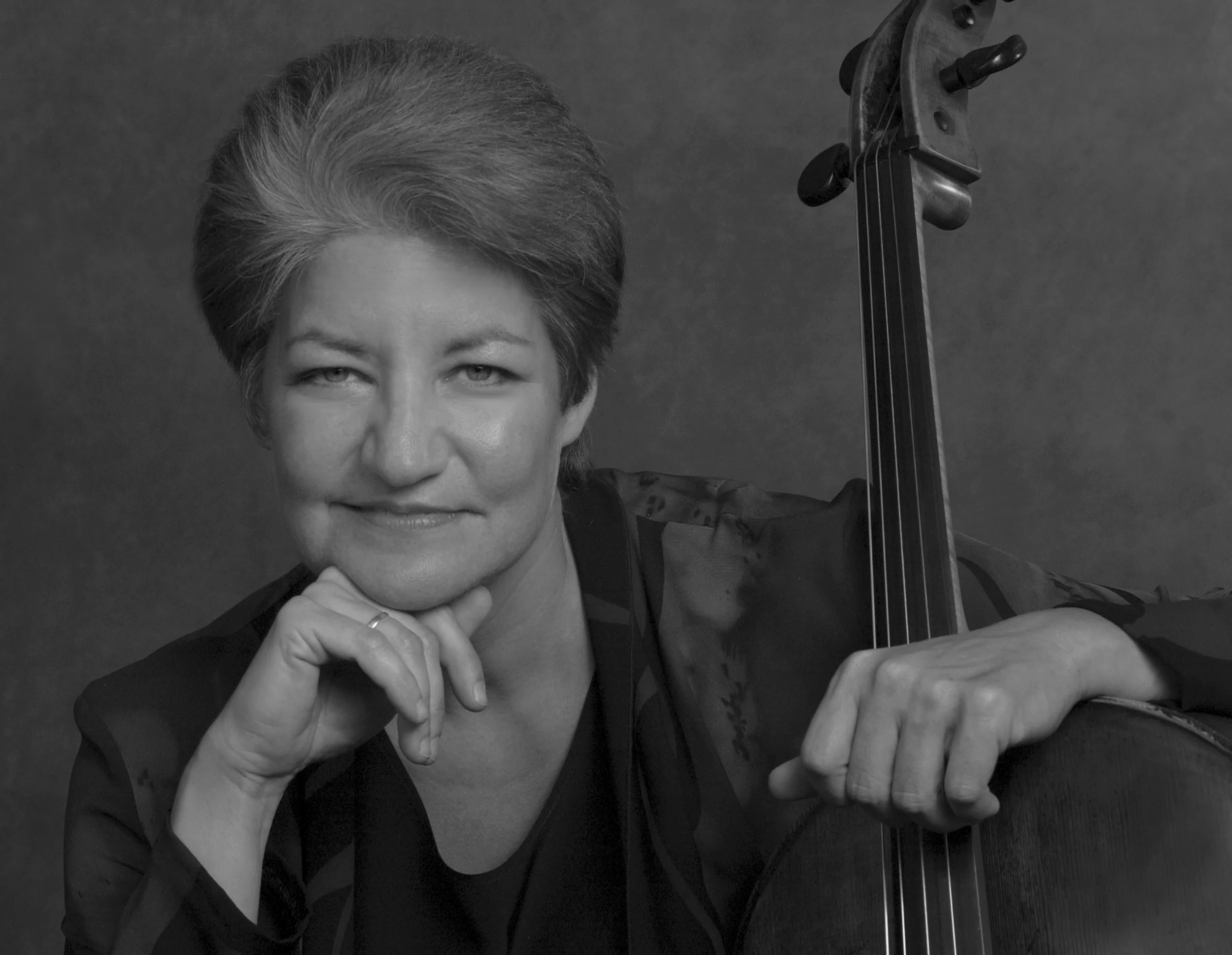
Full Circle: Marcy Rosen on Chamber Music
Marcy Rosen is an acclaimed cellist: soloist, chamber musician, teacher, and mentor. Somehow, in the midst of a stunningly rich career, Marcy and four of her equally gifted and in-demand friends (among them, our Artistic Director Peggy Pearson) made the time to form the La Fenice Quintet. She spoke to us on the role of chamber music in her life and career, the power and benefits of mentorship for both the mentor and protege, and why making music with friends is her preferred coping method in times of great trauma and grief.
Marcy Rosen has established herself as one of the most important and respected artists of our day. Los Angeles Times music critic Herbert Glass has called her “one of the intimate art’s abiding treasures.” She made her concerto debut with the Philadelphia Orchestra at the age of eighteen and has since appeared with such noted orchestras as the Orpheus Chamber Orchestra in Carnegie Hall, the Jupiter Symphony and Concordia Chamber Orchestra at Alice Tully Hall, and the Tokyo Symphony at the famed Orchard Hall in Tokyo. In recital she has appeared in New York at such acclaimed venues as Carnegie Hall, the 92nd Street “Y” and Merkin Concert Hall; in Washington D.C. at the Kennedy Center, Dumbarton Oaks, the Phillips Collection and the Corcoran Gallery, where she for many years she hosted a series entitled “Marcy Rosen and Friends.”
Marcy is a founding member of the world renowned Mendelssohn String Quartet and with this group she was Artist-in-Residence at the North Carolina School of the Arts and for nine years served as Blodgett-Artist-in Residence at Harvard University. The Quartet, which disbanded in 2010, toured annually throughout the United States, Canada and Europe for 31 years. Since 1986 she has been the co-artistic director of the Chesapeake Chamber Music Festival in Maryland and as a long time participant at the Marlboro Music Festival she has taken part in eighteen of their “Musicians from Marlboro” tours and performed in concerts celebrating the 40th and 50th Anniversaries of the Festival.
The recipient of many awards and prizes, Marcy Rosen won the 1986 Young Concert Artists International Auditions and was further honored with the Walker Fund Prize and the Mortimer Levitt Career Development Award. She is the winner of the Washington International Competition for Strings and was the first recipient of the Mischa Schneider Memorial Award from the Walter W. Naumburg Foundation. Marcy Rosen was born in Phoenix, Arizona, and she is a graduate of the Curtis Institute of Music. Ms. Rosen is currently Associate Professor of Cello at the Aaron Copland School of Music at Queens College and on the Faculty at the Mannes College of Music in New York City. She has also served on the faculties of the North Carolina School of the Arts, the Eastman School of Music, the New England Conservatory and the University of Delaware. Her performances can be heard on recordings from the BIS, Bridge. Deutsche Grammophon, Sony Classical, CBS Masterworks, Musical Heritage Society, Phillips, Nonesuch, Pro Arte, and Koch labels among others. You can read her full biography on her website, marcyrosen.com
Marcy Rosen is an acclaimed cellist: soloist, chamber musician, teacher, and mentor (see the bio to the left). Somehow, in the midst of this stunningly rich career, Marcy and four of her equally gifted and in-demand friends (among them, our Artistic Director Peggy Pearson) made the time to form the La Fenice Quintet, the featured ensemble on this month's Chamber Series concert.
Marcy was a gracious, warm, and thoughtful interview subject. She spoke on the role of chamber music in her life and career, the power and benefits of mentorship for both the mentor and protege, and why making music with friends is her preferred coping method in times of great trauma and grief.
How did you and Peggy meet?
Hard to remember, we’ve known each other for so long. We met, I believe, on an Orpheus tour to England in the early ‘80s, and we became friends then, and have been friends ever since. I remember we went to Bath together.
It seems like chamber music has been really central to your career: I see that you were a member of the Mendelssohn Quartet for over thirty years, you teach at the Marlboro Music Festival and are a long-time touring member of the “Musicians from Marlboro” group, and you have been the artistic director of the Chesapeake Chamber Music Festival since 1986. What is it about chamber music that draws you to these particular teaching and performance opportunities?
It’s been the whole course of my career. It’s always been just central to my music-making; playing with other people. As a teenager, I first went to the Marlboro festival and it was there that the direction of my life was really decided, or the focus of it became chamber music. It’s just been what I’ve done, and I was in my very early twenties when my quartet [the Mendelssohn Quartet] started, and that lasted for a very long time. That’s a very serious endeavor and a full-time job, being in a string quartet, and so that’s what I’ve done for my whole life. It’s been a great joy and a great privilege to play with so many different wonderful musicians and to make music with other people. One of the most special things that has happened was that we formed this group “La Fenice” in 2001 after the tragedy at the World Trade Center. We were supposed to play a concert together on Peggy’s series up in Boston, and at that time we decided to make our relationship more closely bonded with each other. So we formed our group, La Fenice, which refers to the symbol of the Phoenix coming out of the ashes, this wonderful strength. That’s been one of the most special relationships: all five of us in the group, the opportunity to play with each other, we love each other, and it’s just always an extraordinary experience when we’re together.

La Fenice: Maria Lambros, Cathy Cho, Diane Walsh, Peggy Pearson, Marcy Rosen
What was it about the events of September 11 that prompted you to formalize the relationship? As you said, many of you had known each other for a long time. Why was this particular event the catalyst?
It was very devastating, whether you were in New York, living in New York, or away; for those of us who lived in the city, it was terrifying. It was terrifying for a long time because of the incredible police presence that was around, and the frailty of our safety was unnerving. I think we wanted to have something that would be more solid, and we just wanted to be together. We talked about it and all agreed to do it.
I think that speaks very powerfully to the impact of the relationships formed in chamber music, that your response was to seek safety and security in forming a closer relationship with your fellow musicians.
Yes. It really was. And to this day, we still have that bond, even if we don’t see each other regularly. We do something together every year, and it’s always such an incredible joy for all of us.
What was it about your experience at Marlboro as a teenager that put you on that course towards chamber music?
Well, just exploring the repertoire was the first thing. The people that I was working with there were incredible mentors and inspirations to me. I had a very close relationship with Felix Galimir, who was an amazing Austrian violinist who worked with Berg and Schoenberg. To hear from him how to play music like that was pretty incredible. Also, I was inspired very much by an Italian violinist named Pina Carmirelli, who was part of I Musici back then. It’s a great small chamber orchestra that has some incredible recordings that go back to the sixties and seventies. The different approaches to music-making I found so inspiring, and I was able to have great relationships with these people and click with them, and to have the opportunity to work with, live with, eat with, and get to know and be inspired by great musicians is remarkable, and that’s the kind of thing that Marlboro offers. And it wasn’t just those two people —Rudolf Serkin who was an iconic pianist and unbelievable inspiration who guided Marlbor from its inception. I played frequently with the legendary Mieczyslaw Horszowski who was there. I played with Philipp Naegle, who was a dear friend, mentor and glorious violinist and violist, I met Sándor Végh and worked with him in Marlboro and then also in Europe. Doors and doors kept opening to me in that field, because of my relationships with these people and the people I had the privilege of working with at Malrboro. That was the course that my life went, and it’s been a pretty great life, I’m pleased to say.
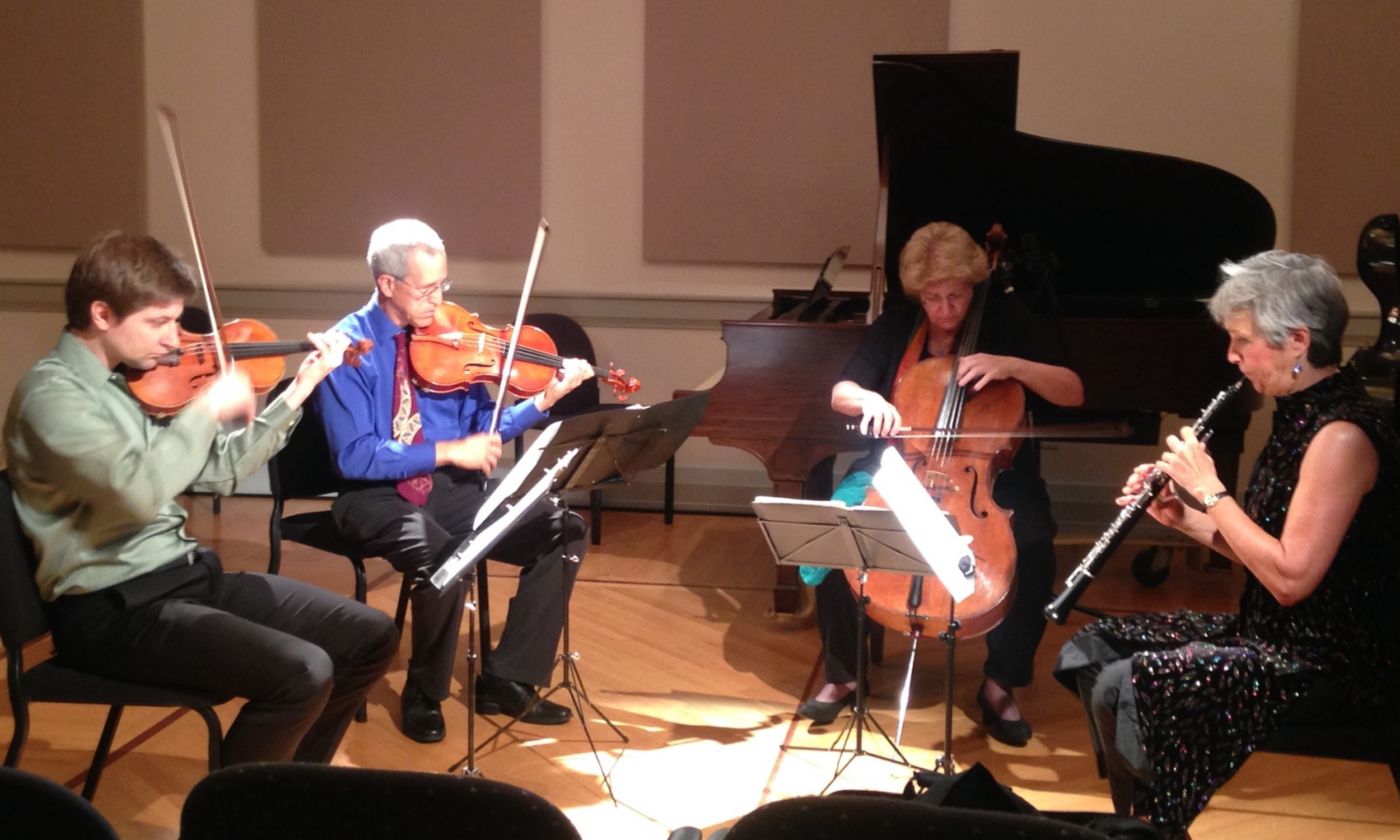
Playing with Peggy at Chesapeake Chamber Music, where she is Co-Artistic Director. Photo credit: Chesapeake Chamber Music
As you’ve attested in our conversation today, a great deal of the joy of playing chamber music comes from being in such a close relationship with your fellow musicians. The audience isn’t able to directly participate in that relationship in the way the musicians do, so why do you think chamber music still feels so intimate and enjoyable to the audience?
The idea is that more and more people will continue to enjoy chamber music, we do have that issue of audiences becoming smaller in these days. I think the great thing about chamber music is that it’s intimate, and when performed in the right kind of space — which these churches that Peggy puts her series in are exactly the right kind of space — the audience is close enough to feel the interaction with the artists, to see it, and to have a tangible reaction to what’s happening on the stage.
As a teacher, how do you approach teaching both in a chamber music context (as a coach, or a participating coach as you are at Marlboro, and Peggy is in our mentoring program)? How does your work as a chamber musician influence your teaching philosophy as a whole, while working with soloists or orchestral musicians?
It’s a different situation at Marlboro than at my teaching studio at my college. In the situation at Marlboro, you’re working with the most unbelievably gifted players in the world. These are people whom — most of whom — have had some chamber music experience, but shockingly, when you sit down to play a piece that none of the other people in the group has ever played before, then you find yourself starting at a higher level than almost everywhere else, but still without the knowledge and background of what the piece might mean. What’s great about working there is that you’re not working on teaching them how to play the cello or the violin or the viola, we’re just talking about music. The idea of exploring musical ideas and expression and the composers wishes and what’s written on the page… we have time to do that in great depth, so that’s what’s fantastic about being at Marlboro. In my teaching studio, and I think rightly so, a good portion of every lesson is spent working on the instrument, and then also talking about the exploration of music. It’s a different approach, because I may have four or five years to work with the student, but the beginning of those years are going to be spent working on the instrumental part of it, and then the later part of the years will probably be working on the musical side. At Marlboro, we can skip a few of those instrumental steps.

Musicians from Marlboro. Photo credit: Smithsonian Magazine
Peggy has told you about our new mentoring program — Which I think is fantastic, that’s such a great thing. — I’m curious: with the students at Marlboro, which is a similar context to our mentoring program, how do you, as the guiding mentor, open these conversations or guide these conversations?
By encouraging the participants to take part in the discussion, and not to just sit there and let me tell them what to do. I want an interaction, I don’t want to be the boss. If I think something’s going off the wrong way, then I can pull it back. It’s hard for me to believe that — although I know it’s true — that some of the participants at Marlboro look up to me the way I looked up to the other people who guided me in my early years. They see me in that same light, and that’s humbling. To be in a position where you’re influencing other people, one just wants to make sure you’re doing the best you can do, and not influencing them in an incorrect or silly way, but really to try to be truthful and honest and whole in what you’re conveying.
Do you find that it’s a leap for some of the participants to enter those conversations? In other words, I think sometimes the educational conversation in classical music can be fairly one-sided. In an orchestral setting, you’re receiving instruction from a conductor or concertmaster, as a student soloist, there is a history of taking teacher’s word as scripture, for lack of a better metaphor. Was the conversational mode of chamber music a leap for you as a student, and do you see your students making that leap? How do you guide them through that?
That’s a hard question. I do see the change, when people become involved and confident enough, and smart enough, really, to start speaking their mind in the group. I think that mostly that comes from experience, just like anything else. I’m often asked for my advice about what to do: “Should I join a quartet? Should I form my own quartet? How do I do that? Where should I go? How do I find people?” It’s hard to answer some of those questions. Many of the people at Marlboro are now in successful quartets, and part of that, they’ve told me, is from experiences they had at Marlboro playing string quartets with me. That’s a great thing, I feel really honored that I’ve had that influence on people, and that they chose that path because of what they learned during the summer. I don’t know if that really answers your question, because it’s hard to say how somebody comes into their own, which is what you’re describing, when someone starts to move away from being shy and inexperienced to someone who is confident and wanting to reveal their feelings. Then you have a partner to work with and not a student anymore. I think that’s the transition that happens there. From somebody’s first year to their third year, the transition is usually very palpable, very noticeable, and the maturity level changes tremendously.

Members of the Mendelssohn Quartet in 2007. Photo credit: Henry Fair
You said before that what it takes to achieve that transition is experience, and I wonder if maybe the key ingredient that Marlboro provides, and that hopefully our program will be providing, to these young people is simply the safe space to gain that experience, that they know that’s a place they’re going to gain experience that would otherwise be hard to come by.
I think that's absolutely true. I don’t know a lot of the kids in your mentoring program, but I do know Tony Rymer, and he transformed from an inexperienced youngster to an incredibly confident, totally capable chamber music player, not to mention that he’s also a very fine soloist, but he just really, really grew through Peggy’s mentoring and he came to Marlboro last summer and he did incredibly well, so I know good things are being done.
How were you first introduced to chamber music, even before Marlboro? Had you heard recordings or seen performances? What got you to Marlboro?
I grew up in Phoenix, Arizona, and there was a chamber music society called the Phoenix Chamber Music Society, it still exists - my mother was interested in music and she was a member. I started playing piano when I was six, and my piano teacher would offer housing to the visiting artists. I started playing the cello when I was nine; and I was pretty serious as a young child in music. Around the age of ten or so, became the page-turner for the Phoenix Chamber Music Society. I remember turning pages for Menahem Pressler and the Beaux Arts Trio (and he remembers me doing it, too!) and when I was about eleven or twelve I was lucky enough to get cello lessons with some of the visiting artists. Of course I now understand now how much of an imposition that was! That my mother would ask them to give her twelve-year-old kid a lesson and they would agree! Anyway - I heard all of these fantastic chamber music groups and soloists. I turned pages for the great Zara Nelsova and her husband Grant Johannesen playing a recital… I had contact with these great people as a little kid and that’s how I was exposed to chamber music. I was immersed in it through no fault of my own, but because of my parents. I heard the Budapest Quartet, the Hungarian Quartet, the Amadeus Quartet, the Juilliard Quartet, the Beaux Arts Trio, among many others. I heard all kinds of really great groups. The concerts were held in a beautiful old studio with a balcony and chairs on the main floor. It was a very intimate, very lovely space, and it was fantastic.
Are there any highlights in the Fauré or the Haydn that you’re particularly looking forward to?
I’m looking forward most to playing with my people in La Fenice. We can play anything at all and we’re just thrilled to be playing together and I think that our love for each other comes out in our performances. The Haydn is a fantastic piece, and it’s a Peggy arrangement of a Haydn string quartet, and those are always really wonderful to do, because it’s a different sound, but a really great way to be playing the music of Haydn. I always love doing those with her. The Fauré is one of the really great Piano Quartets, the C Minor Piano Quartet, which is very dramatic and very soulful and very beautiful, and a perfect piece for us, we just love it.