

Open Doors, Open Minds: Rupert Thompson's Mission
Rupert Thompson's life story is a testament to the power of mentoring and the necessity of arts education in public schools. His belief in and advocacy of these ideas is compelling and urgent, grounded in his own history and lived every day through his work at the Apple Hill Center for Chamber Music. You can come and meet Rupert and the other members of the Apple Hill String Quartet, at our concert on Sunday, April 24, at 7:00pm, at St. Paul's Church in Brookline.
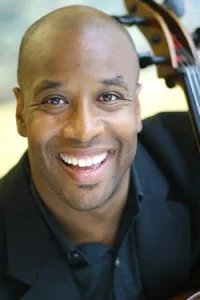
From applehill.org
Rupert Thompson, cello, made his solo debut with the Baltimore Symphony Orchestra at the age of 18. He has studied with Mihaly Virizlay and Timothy Eddy, holding degrees from the Peabody Institute (BM) in Baltimore Md; and SUNY Stony Brook of New York (MM and DMA). Rupert has received a career grant from the Concert Artist Guild, as well as the C.D. Jackson Memorial Award of Merit from the Tanglewood Music Center. Live radio broadcasts of his solo engagements include WFMT of Chicago and WQXR in New York City. He began his association with Apple Hill as a resident artist in 2000 and is now cellist of the Apple Hill String Quartet where he tours around the world through Apple Hill’s Playing for Peace program. In addition to his active concert schedule, Rupert is also a photographer, a screen writer, and served as film composer for the award-winning movie Sensation of Sight.
Rupert's life story, which he generously shared with us during the interview below, is a testament to the power of mentoring and the necessity of arts education in public schools. His belief in and advocacy of these ideas is compelling and urgent, grounded in his own history and lived every day through his work at the Apple Hill Center for Chamber Music. As both a teacher and performer — at the festival with students, on a Playing for Peace tour — his mission, and that of Apple Hill, is to "accept people for exactly who they are, where they are." You can come and meet Rupert and the other members of the Apple Hill String Quartet, at our concert on Sunday, April 24, at 7:00pm, at St. Paul's Church in Brookline.
How did you get started with the cello?
How did I get started with the cello? A very interesting question. I am probably what one might call the poster child for the arts in public schools. I am someone who started out knowing absolutely nothing about classical music. Some friends of mine, when I was in the fourth grade, told me that the music teacher was giving out instruments. They all played the cello, all my friends in the neighborhood at that time, believe it or not, all of my friends who are predominantly African American were all playing the cello, which is still in this current day, still a bit of an impressive thing to know that actually one small town in Annapolis, MD, at Parole Elementary School, there was a handful of young African American cellists who weren’t quite aware of what was going on and what they were doing, but the program — we had a great teacher there, Virginia Benack, who just loved to inspire young players, and we played all of these cute little Christmas songs and stuff like that. Somehow I ended up being the only one who stuck with the cello. I played football in high school, I did a few other things, and then my senior year, it all clicked. I was chosen to be a soloist with the Baltimore Symphony and the journey officially started. So public school and the arts: that’s me.

Timothy Eddy, cello | Credit: Heifetz Institute
And then how did you get started with chamber music?
Chamber music didn’t really happen for me until I got to college. I did a little bit in the Peabody Preparatory Program in high school and then in the undergraduate at Peabody, but it wasn’t the main focus. Then I went off to graduate school at SUNY Stonybrook, which was a more chamber music-focused school at the time, and things started to click there. So by the time I finished up my doctoral degree at SUNY Stonybrook, having worked with Timothy Eddy of the Orion String Quartet, I was then very much in chamber music. Looking back on it, a ton of us who graduated from that class with Tim Eddy, all of us are string quartet cellists for the most part.
You choose a program for a reason, so it’s interesting that having come from the solo and orchestral background at Peabody, you chose a teacher for your graduate work that put you in a chamber direction.
In terms of graduate school, you’re trying to find a situation where, first of all, you’re continuing on with a great teacher . So that was the pursuit, and I was very fortunate. The focus was chamber music. It was a smaller school that had the capability to do everything but there was more going on than just solo and orchestral playing.
I remember from interviewing the quartet last year that you in particular really spoke to a lot of what Apple Hill does as a holistic program: not just performing, but outreach and touring with Playing for Peace, with your education work through the camp. What about the Apple Hill job drew you and kept you there? You could have gone for a lot of string quartet jobs that would have been more straightforward or narrowly defined, but this is a very broad program and I’m wondering what the draw was for you.
You know, it was a very interesting thing: I made a decision after graduate school. I was taking auditions for orchestras, doing the usual thing that most people do: you’re practicing and trying to get ready to go out into the world. I was very fortunate to get into the Leonard Rose Cello Competition and compete with cellists from around the world and represent our country. Then there was the Apple Hill thing: I was touring and getting performing experience with Apple Hill, I also was getting great teaching experience at the music festival — which is very hard to do when you’re coming out graduate school, it’s hard to get a position where you can be teaching on a professional level — so coming from that perspective, Apple Hill was there, providing some important moments on a larger level. After a while, you start to realize: hey, this is it! You’re actually doing what everybody wants to do. You could freelance and that would be rewarding, you could be an orchestral player… but I happen to be doing something that a lot of people love a lot and really want to do.
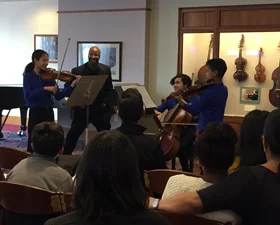
Rupert with ProjectSTEP students Isabel, Maria, and Amir
For instance, we just did a great masterclass yesterday with ProjectSTEP down at Symphony Hall. There’s a lot of rewards , I mean, we’re in a room in Symphony Hall, and we’re working with these young players who are fantastic, and sound great, and they’re on their way to careers in classical music, and they’re like 10, 14, 15. That’s the life. That’s technically what it is at Apple Hill. Helping folks and learning from it. Teaching the tools of the trade so one can figure out this stuff and get the wheels spinning a little bit more in their brains about how much they actually love to play music — about how much music can give something back which fulfills and feeds the human spirit, perhaps even teaches us how to be better human beings.
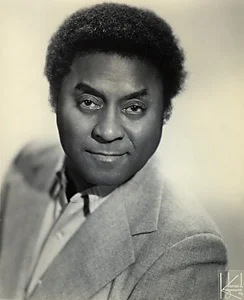
William Ray, baritone | Credit: Hopkins Symphony Orchestra
Did you have any particular mentors in your career trajectory, who helped you find that spark, or helped you find your way to where you are in your career?
Yeah, I have a series of individuals that were really special. One was a really famous African American bass baritone, his name is William Ray. He was a professor at the Peabody Conservatory and had a huge career in Europe and in Germany in particular as an opera singer. He came up in the days when it was difficult to get work because of skin color. When I was growing up, he came to my high school and heard me play: he grabbed me, and took me to Peabody Prep.
There I met Eileen Cline, who was the first African American dean of a major conservatory in the United States; another Oberlin graduate— these two massive figures in classical music took me under their wings — and as William Ray said to me: “Oh, Rupert was just someone who didn’t quite understand where he was going.” They knew! And they got me in. And from there, I met Mihaly Virizlay, who was the principal cellist of the Baltimore Symphony, a great, Hungarian, virtuoso cellist, and he would say I was his “Hungarian son” and he took me in and he mentored me. And from there, I worked with Timothy Eddy, who just has a wealth of knowledge, another great cellist, who opened my mind up to critical thinking as a cellist.
Then I went to Tanglewood and I got to work with Joel Krosnick of the Juilliard String Quartet, who recently is retiring from that quartet and Eugene Lehner, violist of the Kolisch Quartet. Talk about a major figure: the Bartók String quartets were written for him, the Berg Quartets were written for him, he was also at Tanglewood. He was extremely encouraging of my gift.
You’ve got to understand how important it is to let the kids know — and at that point, I wasn’t really a kid anymore, I was in my mid-twenties — but to let the young musicians, the young artists, the young kids, know when they’re doing something right, that’s golden. Especially if you come from a situation where your parents aren’t classical musicians, like I did. Again, I’m a product of the public school system. Mentors are important!
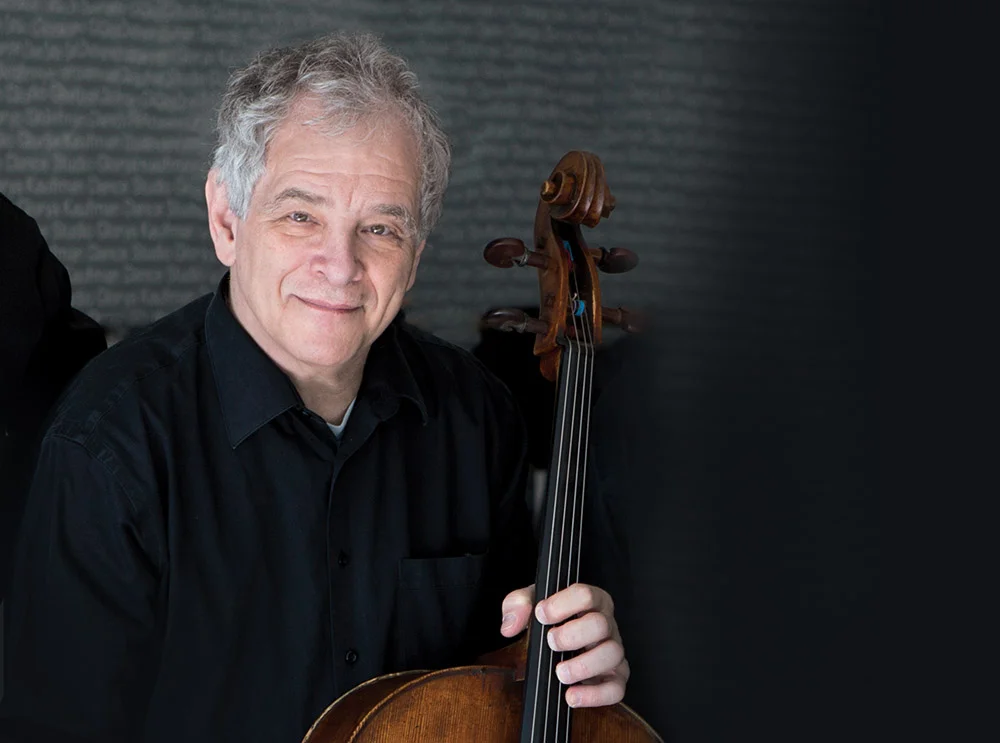
Joel Krosnick, cello | Credit: Simon Powis, published in The Juilliard Journal
There is so much to talk about in that answer that I’m not even sure where to go next! There is so much in what you just said that resonates with everything happening in the conversation around the arts in Boston, our mentoring program at Winsor, the scholarship program and our collaboration with ProjectSTEP...
ProjectSTEP: that’s some serious stuff going on there, and the Boston Strings Program, my kids are a part of that. There’s a wealth of great organizations here: New England Conservatory Prep, the Boston Conservatory, I mean, the list just goes on and on and on… the stuff that Ben Zander does, there’s so much going on for the kids, and they’re learning and they’re doing great. Like I said, yesterday, our ProjectSTEP moment, that was just… top notch stuff. Their friends and family were there to say: we support you and we’re going to get you to the next level in style. Symphony Hall is style. That kind of support: you can’t go wrong with it, you just can’t. They can pursue excellence all day. What does it mean to open the door for someone? What does it mean to open a door for someone and say “Please, after you!” That’s what I’m talking about. People did that for me constantly. And a lot of times, I didn’t know where I was going when they opened that door, but they heard or saw or felt the spark in me and opened a door.
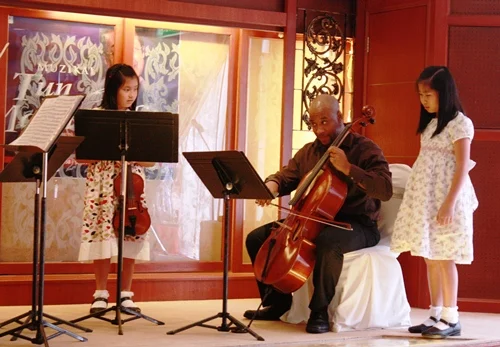
Rupert at the US Embassy in Malaysia | Credit: US Embassy, Kuala Lumpur
That’s exactly what our mission statement is about in a way. At Apple Hill, our mission statement is to accept people for exactly who they are, where they are. That’s what we believe in, that’s how we teach. That means, first of all, when you’re approaching a young player (after a performance), you’re encouraging what was positive about it before you even start to work. You’re automatically in it with the intent to encourage. “How did this young player do that?” The bow hold may not be exactly what you would have done, but they tapped into the music somehow. Or some young player who is really struggling: even that scenario is encouraging. You see them working through it. There are so many positive things that we can offer to a person when we greet them for the first time. That’s where we are at Apple Hill. So in a way, you started this whole thing off with: “How did you start?” Ironically, I ended up in a place that really is known for cherishing and nurturing and doing its best to accept and welcome folks from various different regions, areas of conflict, people whose countries may be at war with each other, and somehow, we’re able to go to these countries, offer scholarships to come back to Apple Hill, and play in chamber music groups with each other and become friends without ever having to talk about what their countries are going through. What does that mean? It means accepting people for where they are, who they are. And chamber music does that to us anyway. I’ve got to sit down and figure out how to match what it is that I want to do with three other people in a string quartet, and sometimes what I want to do is not the best thing for the whole. But when you learn to be flexible, you’re realizing that you’re still putting forth a great moment, perhaps an even more powerful scenario, because it involves a larger good, a larger whole, working together. A team working towards a bigger process.
You brought it full circle, and I cannot think of a better way to end. Thank you so much.
Thank you.

Look What We Hatched!
We are beyond delighted and grateful to be able to tell you that we not only met but exceeded the goal of our Hatchfund campaign! Because of the generosity of our campaign supporters, we were able to add three new students to the mentoring program, and we are delighted to introduce them to you now.
Dear Friends,

We are beyond delighted and grateful to be able to tell you that we not only met but exceeded the goal of our Hatchfund campaign! Thanks to all of our amazing supporters who gave us a strong early start, kept the momentum going, and pushed us over the finish line.
As a result of your generosity, we have been able to add the extraordinary Gabriela Diaz as our emerging program's second mentor, and three new students to the program. It's our pleasure to introduce you to the students of Violobos I and II! Click on the photos for full-size images.
Our three newest students come from the Walnut Hill School for the Arts, an independent boarding and day high school offering a transformational high school experience purposefully designed for artists in grades 9-12. We are excited to be partnering with the Walnut Hill School as we expand our program, and are indebted to the support of their experienced faculty and staff, especially Jenny Elowitch, Director of Music, and Laura Thielke, Director of Chamber Music.
Thank you again to everyone who helped with this campaign, through giving, sharing, or encouraging! This is just the beginning of an exciting journey for our new program, and we hope you'll come along for the ride.
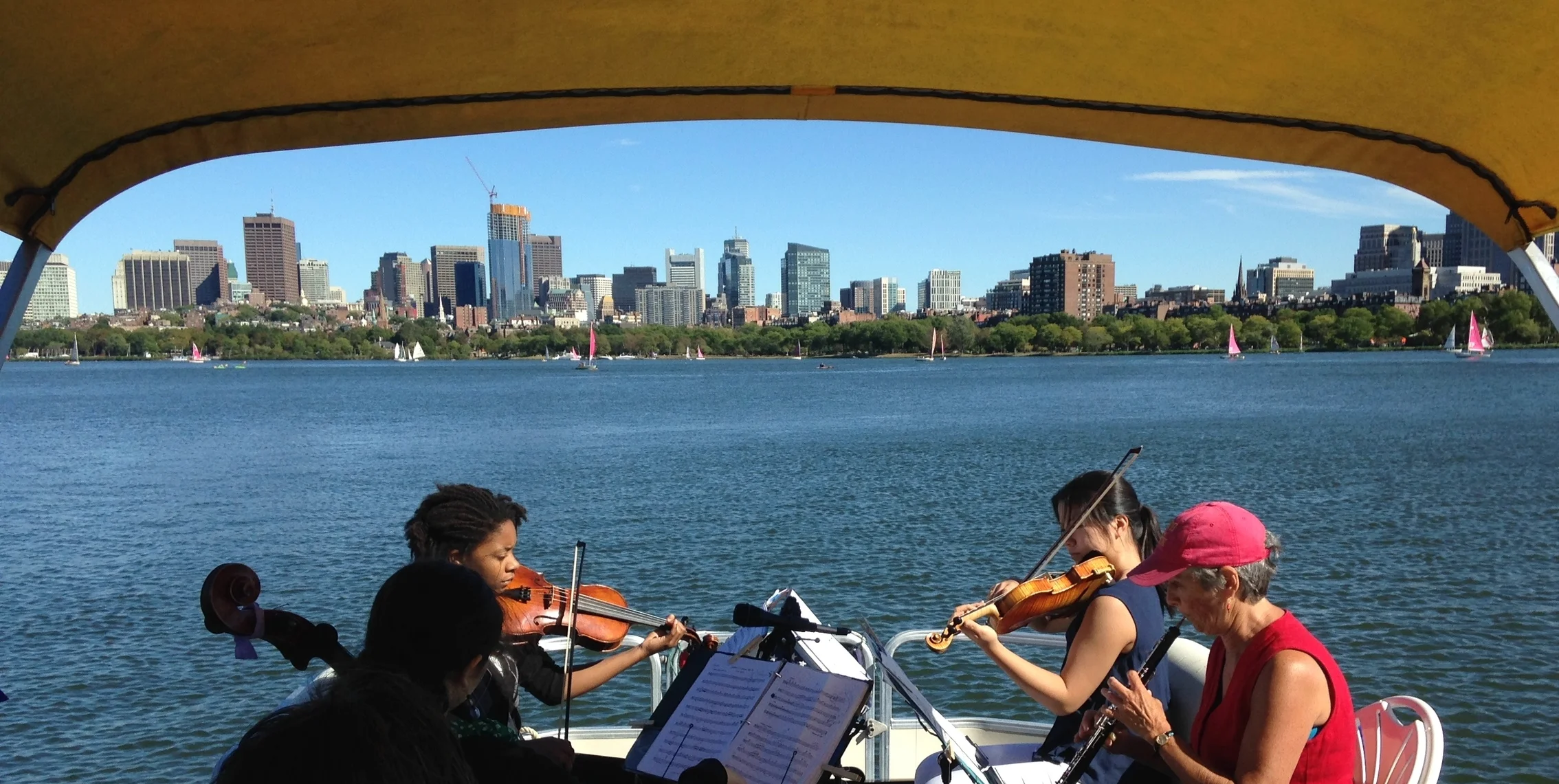
Chamber on the Charles
Did you miss our concert on the Charles River Basin with Violobos and Captain Benjamin Zander? If so, never fear — you can re-live the journey with our slideshow!
Did you miss our concert on the Charles River Basin with Violobos and Captain Benjamin Zander? If so, never fear — you can re-live the journey with our slideshow!

An Interview with Mitsuru Yonezaki, violin
Mitsuru Yonezaki is our featured young artist for the first concert of our 2015-16 season, and a founding member of Winsor Music's first mentoring ensemble, Violobos! She began her violin studies at the age of four and currently studies with Joanna Kurkowicz. She took time out of her busy schedule to speak with us about how she has embraced chamber music, how singers and wind players like Peggy inspire her, and how music fits into her present and future.
Mitsuru Yonezaki is our featured young artist for the first concert of our 2015-16 season, and a founding member of Winsor Music's first mentoring ensemble, Violobos! She began her violin studies at the age of four and currently studies with Joanna Kurkowicz. Having enrolled at the New England Conservatory Preparatory School under Fudeko Takahashi (2004-2013), she has become the youngest member of many orchestras, including their top orchestra, the Youth Philharmonic Orchestra, at age 11. She has been selected as the winner of various competitions including NEC Prep School’s competitions (category B - 2nd, 2013), the Kobe International Competition (2011, Grand Prize and Special Award for Artistic Excellence), and Newton’s Classical Idol Competition (January 2010). Mitsuru is currently a member of the Boston Philharmonic Youth Orchestra, led by Maestro Benjamin Zander, which toured the Czech Republic, Germany and Switzerland this past June to perform in 9 different halls, some of which include the Smetana Hall in Prague, Berliner Philharmonie in Berlin, and Kultur und Kongresszentrum in Luzern.
When Mitsuru is not practicing or at school, she enjoys cooking, reading, and spending time with her friends sight-reading music. She took time out of her busy schedule to speak with us about how she has embraced chamber music, how singers and wind players like Peggy inspire her, and how music fits into her present and future.
You are a rising junior in high school?
Sort of - I’m also completing my senior year now. I’m taking the courses that I need to graduate.
So you’re going to be done at the end of this year?
Yes.
What’s the plan after that?
Hopefully going to a music school.
It says in your bio that you’ve been playing the violin since you were four years old. How did you start?
My sister, who also plays the violin, was my inspiration - I frequently went with her to her lessons, watched her practice, and it kind of made me curious about music, so I also started the violin.

Photo credit: Kendra Colton
Did you ask for lessons when you were four?
Yes, I did.
Why did you stick with it? A lot kids start, but not a lot of kids get to the point that you’re at now.
I just really liked all of the repertoire I had to explore. I was doing orchestral and solo music, and some duets with my sister, and I think there’s still so much to learn, both musically and repertoire-wise. I just really enjoyed making music. — You never got bored. — Yes.
Did you imagine or hope when you were younger that music would be such a huge part of your life now?
I guess to a certain extent, I expected myself to keep working with it, but I wasn’t sure how it would turn out. At first it was more of a thing that I liked to do, but now it’s a huge part of my life.
Do you remember the first chamber group that you participated in? What did you play? What was the experience like?
Yes, I do. My first real chamber group was the summer of 2012 at camp, that was when I was first exposed to it. I remember playing Mendelssohn Op. 44, No. 3, 2nd movement. Everyone else in the group had been at the camp for a while, so they were helping me through the process. They made a big impression on me, concerning chamber music. They made everything about rehearsal seem so fun and interesting, even when it was the tedious things that you have to work through, they would make it fun. Having different people lead, exchanging the parts. Everything about it became really fun.

If your first chamber group was in 2012, how many years had you been playing violin prior to that experience?
Around nine years.
That’s a lot of experience as a violinist before you ever got into a chamber setting. Was it a shift for you? When you say they were helping you work through the process, what did you have to work through as you were making that adjustment?
I had to learn how to really listen for other people, and respond to and interact with what they were giving me. Because I was playing second violin, I had to make sure that I wasn’t playing second violin underneath; it has to be equally as strong as the first violin. I think that was a different experience; sometimes the first violin feels more like the soloist in an orchestra. To play second violin was to support the group but also sometimes have these moments where you shine out. That was a different idea that I sometimes now use in my solo playing as well to vary phrases, when I want to be more intimate or reserved, that second violin instinct kicks in and helps me do that.
You had been playing in orchestras before you started playing chamber music. How old were you when you started playing in orchestras?
I began at the NEC String Training Orchestra when I was five, and I first got into an orchestra with winds and brass when I was six.
So you have been in orchestras for as long as you’ve been playing. When you were making that adjustment to chamber music, were you adjusting from being a soloist, or adjusting from being an orchestral player, or a little bit of both?
It was a little bit of both, because in the orchestra, you have your whole section to play with you, so you try to play with each other. In that sense, playing with each other [in a chamber group] wasn’t that big of a change from the orchestra, but in the sense that you’re the only one on the part, it was an adjustment, so I think it was a mixture of being a soloist and in an orchestra. I was finally coming to the middle of those two extremes, of being part of a group and being the only one.
I know you spent part of your summer on tour with the BPYO, and part of your summer at the Perlman Music Program, an intensive music camp. Can you tell me about both of those experiences?
For the tour, we got to experience different cultures and different foods, which I really liked. All of these places that we performed at and visited gave me more insight into the composers’ mind. We visited some Jewish museums, which gave me some ideas around some European Jewish composers. Playing at these great halls was just… it was mind-blowing that we were all there. We also got to listen to the Berlin Philharmonic. I happened to have a seat that was behind the timpanist for that concert, so I was watching the conductor and observing how people from that angle were interacting with each other and with the conductor. It gave me some ideas as to how I could change as an orchestral musician. I was mainly observing the principal stands to learn more about leading and how they do it. I thought it was incredible that they would give small cues, but because they were slightly turned in, everyone would see that and do the same. That was one of the things I learned there: even the smallest gesture can make a big difference if you let show to others.
At camp [the Perlman Music Program], because I was one of the older campers there, who had been there longer, I got to experience being a kind of mentor to some of them. There were some people new to chamber music, so it was like my first summer but the roles were reversed. I got to help with the rehearsal process - giving ideas on how we wanted to phrase things. Because we also do singing at camp, that gave me different ideas, because when you sing you have to breathe. When I play violin, I don’t need to take breaks, so by singing, it helped me. During practice, I would sing a little to figure out where I needed to take “breaths” or make a phrase.
So singing is a part of the core curriculum at your camp? What kind of repertoire were you doing?
It’s choral repertoire, some Schubert, Handel, and a piece by Gyorgy Orban in Latin about the devil. It was very intense and in a different style from the beautiful tunes by the other composers. I think they intended for us to have a variety. They said that singing could give you new ideas about how to phrase, and thinking about breathing.

Photo credit: Kendra Colton
Along those lines, what has it been like for you, in your experiences with Violobos, to work so closely with a wind player/instrument? I know it’s not necessarily something that other young string players experience. Has it affected you in any way?
Playing with a wind instrument, especially the oboe, has changed my playing because when I’m playing with another violinist, we both know how loud and soft we can play. With wind players, it’s a different kind of range. It’s probably easier for the strings to adjust to the wind player, and the breathing comes in again. I’m still working on blending to [Peggy’s] sound, but I think I’m getting better.
As a string player, what is involved when you’re working to blend with Peggy (or anyone, for that matter)?
I mainly listen. Because the oboe has a more naturally — I don’t know what the right word is — angular? — sound, I try to focus on my contact point. I also try to take cues from the way that she breathes. If she takes a slower breath, I feel like it’s supposed to be a warmer sound.
When you talk about your bow placement in regards to her more angular sound, are you trying to match her sound or complement it?
Sometimes I try to match her sound, especially when we’re playing similar rhythms to each other. When I’m playing, for example, a counter-melody or the bass line, I try to complement it so that her voice comes out more than mine.
What are you most looking forward to about this concert?
It’s a different group of people, I’m excited to be working with these people. I recognized one name - the cellist, Rafael Popper-Keizer — because I know him as the principal of the Boston Philharmonic. I’m looking forward to working with these people who are much more experienced than me. I also like working with people my own age, but learning from the more experienced players is always fun.
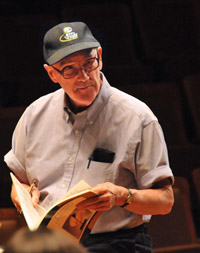
Composer John Heiss
Is there a piece that stands out to you at this stage of preparation?
I’m excited about Mr. Heiss’ piece because I’ve heard of him, as a living composer. Some of the ways that he wrote reminded me of Schoenberg, so I’ve been trying to compare other contemporary works with this piece, and it’s been really fun.
What role has music played in your life so far? Is it a supplement to your other activities or is everything else a supplement to music, or is there a balance?
I think music is a balance for me. It helps me in my academics, but then there is the math in music, so academics comes into music. It goes both ways, but I see music as my main focus.
Is it too soon to ask what your plans are for the future? You mentioned that conservatory is on the horizon.
I am going to try to pursue a career in music performance. I want to go to conservatory or any school with a teacher that I would love to work with. I want to make my music unique to me and figure out how to present myself as an individual and make sure my technique is well-polished.

Announcing: the Hatchfund Campaign for our Mentoring Program
We are officially launching our Mentoring Program campaign on Hatchfund, a non-profit crowd-funding website dedicated exclusively to supporting art and artists like us. I am happy to say that with the support of donors like you, we have already raised $1600, or an astounding 40% of our target goal!
Dear Friends,
We are excited to share our latest news with you: today, September 1, we are officially launching our Mentoring Program campaign on Hatchfund, a non-profit crowd-funding website dedicated exclusively to supporting art and artists like us. I am happy to say that with the support of donors like you, we have already raised $1600, or an astounding 40% of our target goal! Now we need your help to reach our “stretch goal” of $6,000 by September 30 so we can expand our mentoring program for the coming year.
In Winsor Music’s Mentoring Program, high school students and a professional mentor play together in a small chamber music group. Last January, we started our first mentoring ensemble, Violobos, with Alma Bitran, Njioma Grevious, Mitsuru Yonezaki and myself. This ensemble rehearses 2 hours every two weeks over the course of the academic year. The ensemble also performs for the Boston community in Winsor Music’s outreach concerts, as well as on our chamber series alongside professional soloists and ensembles. This season, we are formalizing and expanding the program to include more students, and violinist Gabriela Diaz will lead the next ensemble.

The money raised through this campaign will be used as a stipend to fairly compensate our mentor Gabby for her time and commitment to the program and her students. All donations are tax-deductible. Any surplus raised over the original goal will be used to fund the mentoring project in future years. We’re offering some great rewards for your donation, like VIP attendance at a closed dress rehearsal or even a house concert!
Please check out our project page here: http://www.hatchfund.org/project/mentoring_program and don’t hesitate to reach out to us if you have any questions about the program, the campaign, or anything else.
Thank you so much, as always, for your support of Winsor Music. You have told us, and we agree, that the future of our organization is in educating and supporting the next generation of musicians and music lovers. We love this work, and we are so grateful that you help us to do it.
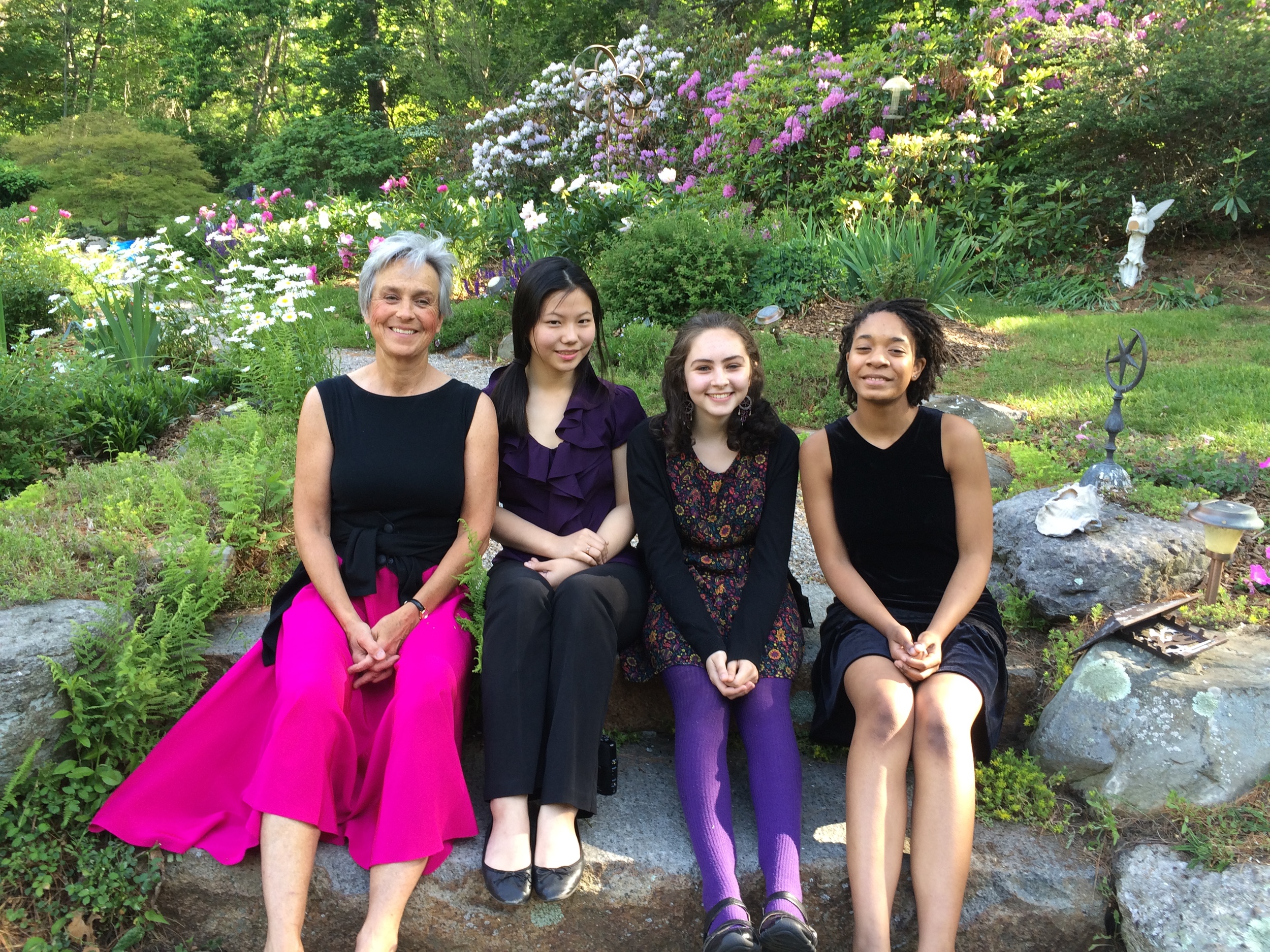
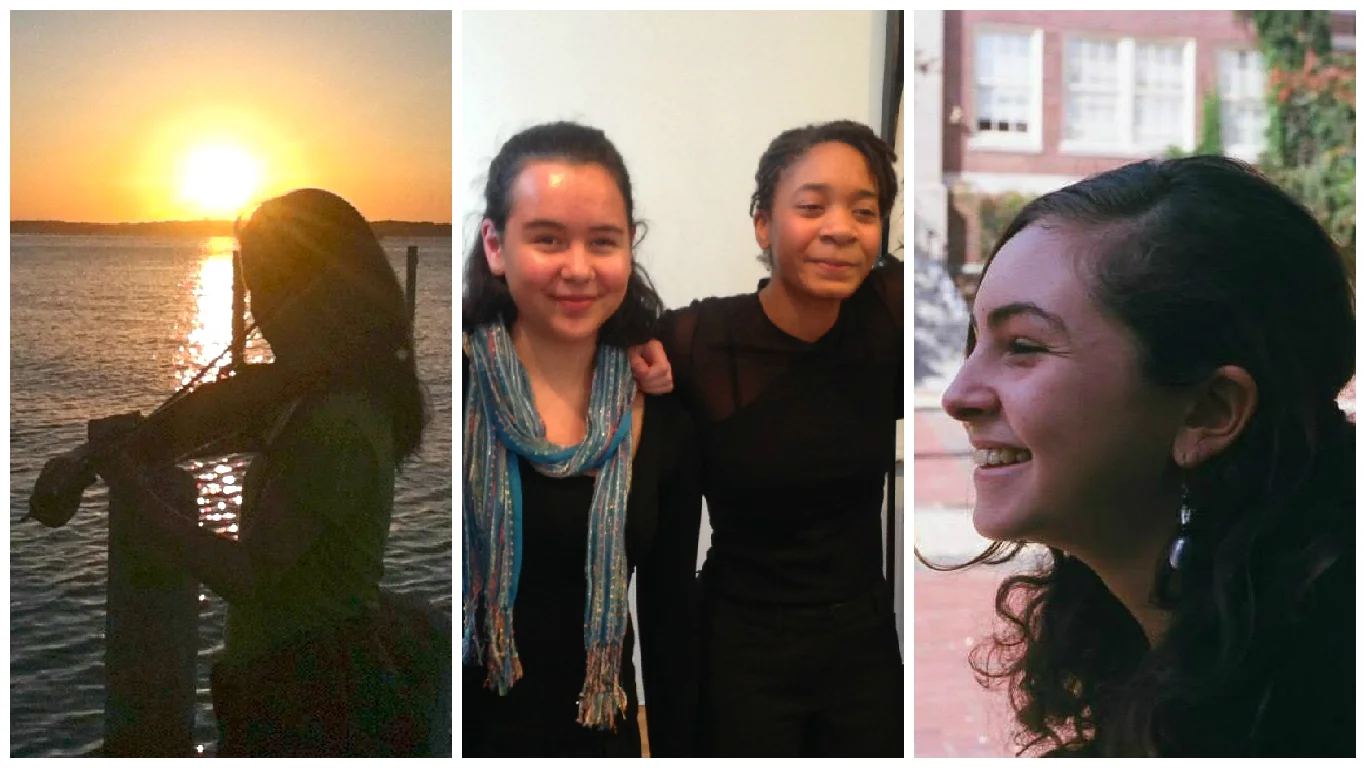
Violobos: Did you know...?
Which Violobos member wants to play the bagpipe? Who performed in a bathroom once? Which composer would two out of three members go back in time to visit, and maybe even marry? Learn more about these fantastic and funny students if you missed our post on Facebook!
For any of our blog readers who aren't on Facebook!
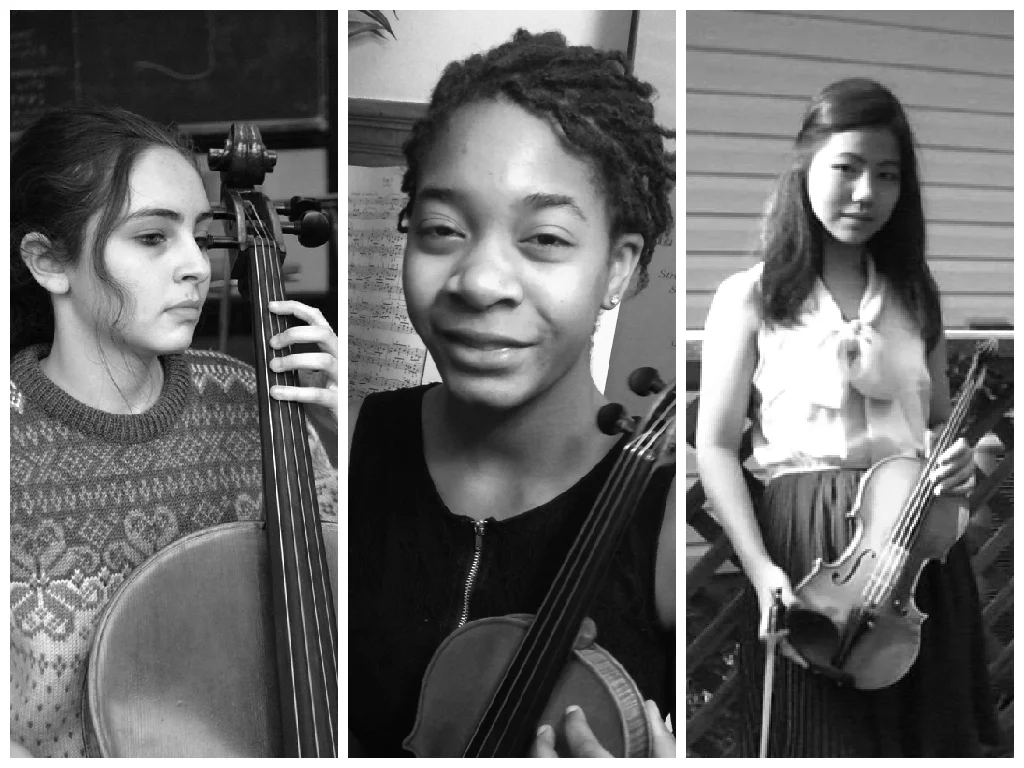
Introducing VIOLOBOS
We are pleased to introduce you to the members of Winsor Music's newest quartet: Violobos! Mitsuru Yonezaki, violin, Njioma Grevious, viola, and Alma Bitran, cello, are outstanding high school students who were personally selected by Peggy Pearson, oboe, to participate in a long-term mentoring and performance program in the form of a regular oboe quartet. At a recent rehearsal, Mitsuru, Njioma, and Alma took fifteen minutes to give a group interview.
We are pleased to introduce you to the members of Winsor Music's new quartet: Violobos!

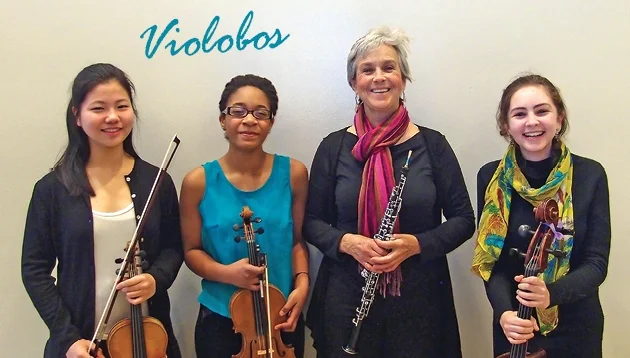
From left to right: Mitsuru Yonezaki, violin; Njioma Grevious, viola; Peggy Pearson, oboe; Alma Bitran, cello.
Artistic Director Peggy Pearson formed Violobos after our most recent benefit concert, on which all three of these outstanding students performed; they demonstrated an admirable work ethic, a high degree of musicianship, and an easy, natural chemistry when performing together. Violobos will provide them with multiple opportunities for different kinds of performances (outreach, house concert, concert series) through and with the invaluable experience of an ongoing mentoring relationship with a working professional musician.
At a recent rehearsal, Mitsuru, Njioma, and Alma took a fifteen-minute break to discuss their new group, their musical wish-lists, and their upcoming debut on March 23.
Winsor Music: Please tell us your name, class year, how long you’ve played, and who you study with.
Alma Bitran, I play the cello, I’ve been studying for 9.5 years, and my teacher is Ron Lowry.
Mitsuru Yonezaki, I am a sophomore, and I’ve played the violin for about 12 years, and I study with Joanna Kurkowicz.
Njioma Grevious, I’m a sophomore, I’ve been studying violin for 10 years, viola for 2 years, and my current teacher is Irina Muresanu.

Mitsuru Yonezaki, violin
All three of you are in the Boston Philharmonic Youth Orchestra and now Violobos. How do you balance these prestigious musical groups with being full-time students and teenagers?
AB: I just try to do the best I can with everything. I try to not have too much on my plate at once. I have enough time to balance school and music. It can get tricky sometimes, but it’s manageable, usually.
MY: For me, being a teenager isn’t really like going out with school friends, it’s more like being in the music world, so that kind of makes it easier. — WM: Your social life is your musical life? — MY: Yes.
NG: I’d have to agree with Mitsuru. My musical life is my social life. It can sometimes be difficult to manage my time. More times than not, I have to figure out whether an English assignment due tomorrow should be completed before I practice or visa versa, but I work it out.
Do you think learning to do that balancing act has been good for you in the long run?
NG: Yes, definitely.
Have any of you played in chamber groups before, and if so, have you done anything like Violobos, where you play with a professional on a long-term basis?
AB: I’ve played in lots of chamber groups before, but never like Violobos. I’ve never done anything [long-term] with a professional.
MY: Same. Well, for me, I do [chamber music] in the summer. We do three in the summer and one in the winter, so that’s my experience. And we do get to sightread chamber music with some professionals, but never anything year-round.
NG: At the moment, I have three running chamber music groups, but Peggy has really been the long-term professional with whom I have been working. Working with her has been an adventurous learning experience.
What experiences so far would you say are unique to this group?
AB: Playing quartets with an oboe! I’ve never heard of that being done.
NG: I feel a warmth and comfort playing with Violobos. I’d say it’s a combination of our deep love for music and the fact that we genuinely enjoy each other.
MY: It’s nice, because we don’t feel too stressed. Peggy’s our coach and also our first violin. It doesn’t feel too stressful. — WM: A good way to learn without the pressure? — MY: Yes.

Njioma Grevious, viola
Does the Haydn quartet tell a particular story to you, or set a particular mood or scene? What would you want people to listen for?
AB: The quartet really tells its own story, and if you’re listening, you’ll hear everything it has to say. The movements contrast, and definitely share their ideas in a very up-front way that any listener can pick up on.
MY: It’s up to the listener because each person wants to listen to different parts. We have a basic idea: this is the way that we want to present it, but it’s really more up to the listener to get what they want out of it.
NG: I agree, although, one thing I think audience members should keep in mind is that Haydn was a court musician for most of his life. I think this theme is particularly evident at the beginning of the 1st movement.
Is there a particular moment or line that you really love and want the audience to hear?
MY: Overall, I love the third movement the most.
AB: I love that violin melody that Mitsuru has in the third movement.
MY: Yes, it’s really different from the rest of that movement.
NG: I love the beginning of the Haydn; I answer to the melody, first played by Peggy.
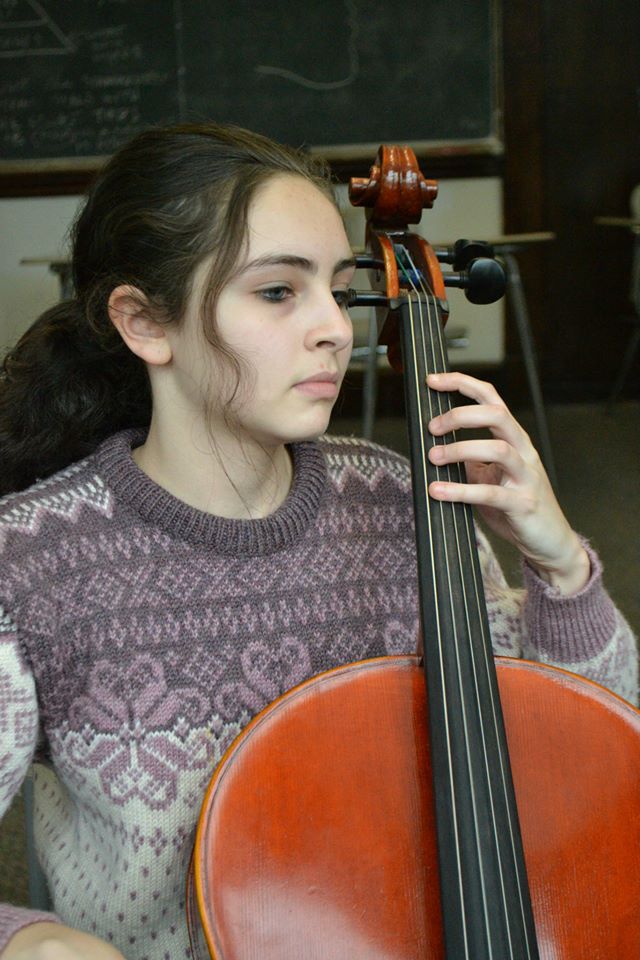
Alma Bitran, cello
Do you have a wish-list of pieces that you’d like the quartet to work on after this piece?
AB: So many… I’ve never played any Beethoven late quartets, I would love to do that.
MY: Peggy said something about trying to play pieces that aren’t too common, so I’m not really sure what to expect! I feel like at this point I only know the well-known repertoire.
NG: I would love to play some Shostakovich ; it would sound so amazing with an oboe.
AB: It might have a really nice quality! I can hear that.
Peggy transcribes a lot of quartets to include the oboe. Are there any particular pieces that your instrument was left out of that you would like to be included in?
AB: I wish I could play all the violin solos in all orchestral music. They’re always the most beautiful parts in every orchestral piece.
MY: I wish I had a concerto like the ones Dvorak or Elgar wrote for the cello.
NG: As a person who plays viola and violin, I think that I have a nice blend of both the melody and the supporting voice — I’m all set.
We have a Wait List!
We're excited to say that we've already sold out for our March 23rd concert, but we hope you will make use of the wait list feature built in to our ticketing system. We anticipate that quite a few seats will open up in the weekend before the concert, and we will contact you promptly when these seats become available.

Dear Friends,
We hope that you all made it to the other side of this winter safely! We're looking forward to spring on March 20... and to our next Winsor Music Concert on March 23! This concert will feature Boston's own critically acclaimed Arneis Quartet and the outstanding young musicians of Violobos performing works of Haydn, John Wallace and Beethoven. We hope that you can join us to celebrate high quality performance, community outreach, and mentoring the next generation of musicians as well as the return of spring!
The Visiting Nurse Assisted Living Community is graciously hosting us for this concert in their Community Room, where Winsor Music regularly performs concerts for the residents of the VNA. Given the residential nature of the venue, we are asking that you, our guests, register your free seats in advance at winsormusic.org/tickets. Each guest must have their own ticket, which we will scan at the door. We will have ushers to help direct you to the Community Room when you arrive, and we hope that you will join us in greeting the musicians and residents of the VNA at a reception after the performance.
We're excited to say that we've already sold out, but we hope you will make use of the wait list feature built in to our ticketing system. We anticipate that quite a few seats will open up in the weekend before the concert, and we will contact you promptly when these seats become available. Just register for a ticket as you normally would, and watch your inbox!
If you reserve a seat, but change your plans, please contact us to cancel your order so that we can open that seat up to someone on the waiting list.
We are excited and honored to be hosting the first chamber series concert in collaboration with one of our favorite outreach communities, and look forward to seeing you there!
Thanks,
Peggy Pearson
and the staff of Winsor Music