

Open Doors, Open Minds: Rupert Thompson's Mission
Rupert Thompson's life story is a testament to the power of mentoring and the necessity of arts education in public schools. His belief in and advocacy of these ideas is compelling and urgent, grounded in his own history and lived every day through his work at the Apple Hill Center for Chamber Music. You can come and meet Rupert and the other members of the Apple Hill String Quartet, at our concert on Sunday, April 24, at 7:00pm, at St. Paul's Church in Brookline.
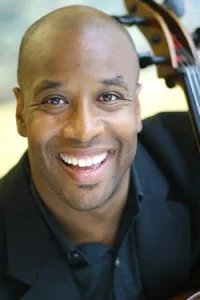
From applehill.org
Rupert Thompson, cello, made his solo debut with the Baltimore Symphony Orchestra at the age of 18. He has studied with Mihaly Virizlay and Timothy Eddy, holding degrees from the Peabody Institute (BM) in Baltimore Md; and SUNY Stony Brook of New York (MM and DMA). Rupert has received a career grant from the Concert Artist Guild, as well as the C.D. Jackson Memorial Award of Merit from the Tanglewood Music Center. Live radio broadcasts of his solo engagements include WFMT of Chicago and WQXR in New York City. He began his association with Apple Hill as a resident artist in 2000 and is now cellist of the Apple Hill String Quartet where he tours around the world through Apple Hill’s Playing for Peace program. In addition to his active concert schedule, Rupert is also a photographer, a screen writer, and served as film composer for the award-winning movie Sensation of Sight.
Rupert's life story, which he generously shared with us during the interview below, is a testament to the power of mentoring and the necessity of arts education in public schools. His belief in and advocacy of these ideas is compelling and urgent, grounded in his own history and lived every day through his work at the Apple Hill Center for Chamber Music. As both a teacher and performer — at the festival with students, on a Playing for Peace tour — his mission, and that of Apple Hill, is to "accept people for exactly who they are, where they are." You can come and meet Rupert and the other members of the Apple Hill String Quartet, at our concert on Sunday, April 24, at 7:00pm, at St. Paul's Church in Brookline.
How did you get started with the cello?
How did I get started with the cello? A very interesting question. I am probably what one might call the poster child for the arts in public schools. I am someone who started out knowing absolutely nothing about classical music. Some friends of mine, when I was in the fourth grade, told me that the music teacher was giving out instruments. They all played the cello, all my friends in the neighborhood at that time, believe it or not, all of my friends who are predominantly African American were all playing the cello, which is still in this current day, still a bit of an impressive thing to know that actually one small town in Annapolis, MD, at Parole Elementary School, there was a handful of young African American cellists who weren’t quite aware of what was going on and what they were doing, but the program — we had a great teacher there, Virginia Benack, who just loved to inspire young players, and we played all of these cute little Christmas songs and stuff like that. Somehow I ended up being the only one who stuck with the cello. I played football in high school, I did a few other things, and then my senior year, it all clicked. I was chosen to be a soloist with the Baltimore Symphony and the journey officially started. So public school and the arts: that’s me.

Timothy Eddy, cello | Credit: Heifetz Institute
And then how did you get started with chamber music?
Chamber music didn’t really happen for me until I got to college. I did a little bit in the Peabody Preparatory Program in high school and then in the undergraduate at Peabody, but it wasn’t the main focus. Then I went off to graduate school at SUNY Stonybrook, which was a more chamber music-focused school at the time, and things started to click there. So by the time I finished up my doctoral degree at SUNY Stonybrook, having worked with Timothy Eddy of the Orion String Quartet, I was then very much in chamber music. Looking back on it, a ton of us who graduated from that class with Tim Eddy, all of us are string quartet cellists for the most part.
You choose a program for a reason, so it’s interesting that having come from the solo and orchestral background at Peabody, you chose a teacher for your graduate work that put you in a chamber direction.
In terms of graduate school, you’re trying to find a situation where, first of all, you’re continuing on with a great teacher . So that was the pursuit, and I was very fortunate. The focus was chamber music. It was a smaller school that had the capability to do everything but there was more going on than just solo and orchestral playing.
I remember from interviewing the quartet last year that you in particular really spoke to a lot of what Apple Hill does as a holistic program: not just performing, but outreach and touring with Playing for Peace, with your education work through the camp. What about the Apple Hill job drew you and kept you there? You could have gone for a lot of string quartet jobs that would have been more straightforward or narrowly defined, but this is a very broad program and I’m wondering what the draw was for you.
You know, it was a very interesting thing: I made a decision after graduate school. I was taking auditions for orchestras, doing the usual thing that most people do: you’re practicing and trying to get ready to go out into the world. I was very fortunate to get into the Leonard Rose Cello Competition and compete with cellists from around the world and represent our country. Then there was the Apple Hill thing: I was touring and getting performing experience with Apple Hill, I also was getting great teaching experience at the music festival — which is very hard to do when you’re coming out graduate school, it’s hard to get a position where you can be teaching on a professional level — so coming from that perspective, Apple Hill was there, providing some important moments on a larger level. After a while, you start to realize: hey, this is it! You’re actually doing what everybody wants to do. You could freelance and that would be rewarding, you could be an orchestral player… but I happen to be doing something that a lot of people love a lot and really want to do.
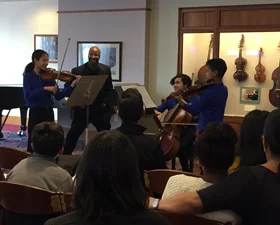
Rupert with ProjectSTEP students Isabel, Maria, and Amir
For instance, we just did a great masterclass yesterday with ProjectSTEP down at Symphony Hall. There’s a lot of rewards , I mean, we’re in a room in Symphony Hall, and we’re working with these young players who are fantastic, and sound great, and they’re on their way to careers in classical music, and they’re like 10, 14, 15. That’s the life. That’s technically what it is at Apple Hill. Helping folks and learning from it. Teaching the tools of the trade so one can figure out this stuff and get the wheels spinning a little bit more in their brains about how much they actually love to play music — about how much music can give something back which fulfills and feeds the human spirit, perhaps even teaches us how to be better human beings.
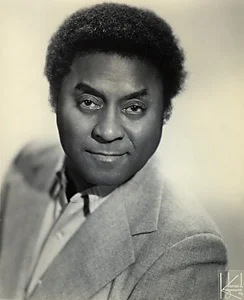
William Ray, baritone | Credit: Hopkins Symphony Orchestra
Did you have any particular mentors in your career trajectory, who helped you find that spark, or helped you find your way to where you are in your career?
Yeah, I have a series of individuals that were really special. One was a really famous African American bass baritone, his name is William Ray. He was a professor at the Peabody Conservatory and had a huge career in Europe and in Germany in particular as an opera singer. He came up in the days when it was difficult to get work because of skin color. When I was growing up, he came to my high school and heard me play: he grabbed me, and took me to Peabody Prep.
There I met Eileen Cline, who was the first African American dean of a major conservatory in the United States; another Oberlin graduate— these two massive figures in classical music took me under their wings — and as William Ray said to me: “Oh, Rupert was just someone who didn’t quite understand where he was going.” They knew! And they got me in. And from there, I met Mihaly Virizlay, who was the principal cellist of the Baltimore Symphony, a great, Hungarian, virtuoso cellist, and he would say I was his “Hungarian son” and he took me in and he mentored me. And from there, I worked with Timothy Eddy, who just has a wealth of knowledge, another great cellist, who opened my mind up to critical thinking as a cellist.
Then I went to Tanglewood and I got to work with Joel Krosnick of the Juilliard String Quartet, who recently is retiring from that quartet and Eugene Lehner, violist of the Kolisch Quartet. Talk about a major figure: the Bartók String quartets were written for him, the Berg Quartets were written for him, he was also at Tanglewood. He was extremely encouraging of my gift.
You’ve got to understand how important it is to let the kids know — and at that point, I wasn’t really a kid anymore, I was in my mid-twenties — but to let the young musicians, the young artists, the young kids, know when they’re doing something right, that’s golden. Especially if you come from a situation where your parents aren’t classical musicians, like I did. Again, I’m a product of the public school system. Mentors are important!
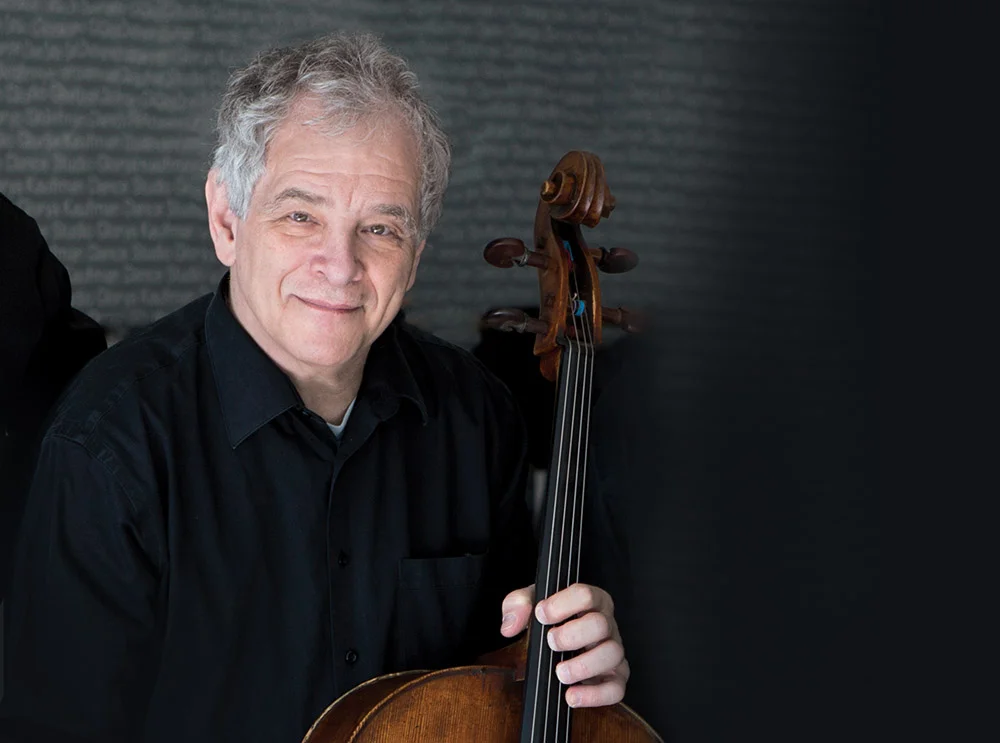
Joel Krosnick, cello | Credit: Simon Powis, published in The Juilliard Journal
There is so much to talk about in that answer that I’m not even sure where to go next! There is so much in what you just said that resonates with everything happening in the conversation around the arts in Boston, our mentoring program at Winsor, the scholarship program and our collaboration with ProjectSTEP...
ProjectSTEP: that’s some serious stuff going on there, and the Boston Strings Program, my kids are a part of that. There’s a wealth of great organizations here: New England Conservatory Prep, the Boston Conservatory, I mean, the list just goes on and on and on… the stuff that Ben Zander does, there’s so much going on for the kids, and they’re learning and they’re doing great. Like I said, yesterday, our ProjectSTEP moment, that was just… top notch stuff. Their friends and family were there to say: we support you and we’re going to get you to the next level in style. Symphony Hall is style. That kind of support: you can’t go wrong with it, you just can’t. They can pursue excellence all day. What does it mean to open the door for someone? What does it mean to open a door for someone and say “Please, after you!” That’s what I’m talking about. People did that for me constantly. And a lot of times, I didn’t know where I was going when they opened that door, but they heard or saw or felt the spark in me and opened a door.
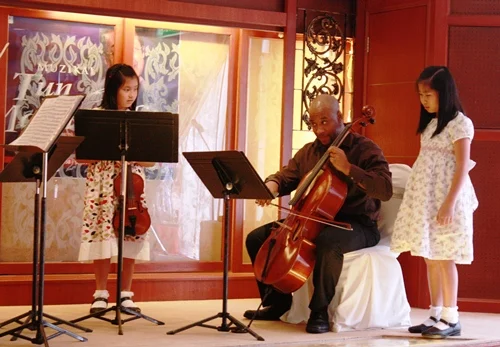
Rupert at the US Embassy in Malaysia | Credit: US Embassy, Kuala Lumpur
That’s exactly what our mission statement is about in a way. At Apple Hill, our mission statement is to accept people for exactly who they are, where they are. That’s what we believe in, that’s how we teach. That means, first of all, when you’re approaching a young player (after a performance), you’re encouraging what was positive about it before you even start to work. You’re automatically in it with the intent to encourage. “How did this young player do that?” The bow hold may not be exactly what you would have done, but they tapped into the music somehow. Or some young player who is really struggling: even that scenario is encouraging. You see them working through it. There are so many positive things that we can offer to a person when we greet them for the first time. That’s where we are at Apple Hill. So in a way, you started this whole thing off with: “How did you start?” Ironically, I ended up in a place that really is known for cherishing and nurturing and doing its best to accept and welcome folks from various different regions, areas of conflict, people whose countries may be at war with each other, and somehow, we’re able to go to these countries, offer scholarships to come back to Apple Hill, and play in chamber music groups with each other and become friends without ever having to talk about what their countries are going through. What does that mean? It means accepting people for where they are, who they are. And chamber music does that to us anyway. I’ve got to sit down and figure out how to match what it is that I want to do with three other people in a string quartet, and sometimes what I want to do is not the best thing for the whole. But when you learn to be flexible, you’re realizing that you’re still putting forth a great moment, perhaps an even more powerful scenario, because it involves a larger good, a larger whole, working together. A team working towards a bigger process.
You brought it full circle, and I cannot think of a better way to end. Thank you so much.
Thank you.

Autumn in Springtime: Yi Yiing Chen's Oboe Quartet
Winsor Music is honored to present the world premiere of a personal, powerful new work by a young composer, Yi Yiing Chen. Her credentials are impressive, but her intellect, empathy, and openness shine her writing, both verbal and musical. We are so grateful that she has shared her story with us in her music and in this vivid and thoughtful interview.

Winsor Music is honored to present the world premiere of a personal, powerful new work by a young composer, Yi Yiing Chen. As a student of John Heiss and Michael Gandolfi and a recipient of Tanglewood Music Center's Elliott Carter Memorial Composer Fellowship, her credentials are impressive, but her intellect, empathy, and openness shine through in her writing, both verbal and musical. We are so grateful that she has shared her story with us in her music and in this vivid and thoughtful interview.
Born in Taiwan, Yi Yiing Chen’s music has been described as “very different, showing the composer’s versatility and breadth of range and influence” and “an exciting amalgam of eastern and western styles.” Her works have been performed at the Tanglewood Music Festival, the Women Composers Festival of Hartford, and the Primrose International Viola Competition & Festival. Received awards include the Tanglewood Music Center's Elliott Carter Memorial Composer Fellowship, the LungShan Temple Scholarship, the NEC Honors Ensemble composition, the NEC Symphony Composition Competition and the NTNU Presidential Scholarship.
Besides writing music, she is also an active pianist. She presented a solo piano recital in Taiwan and currently is an affiliated artist at Massachusetts Institute of Technology. Yi Yiing also plays flute, Chinese bamboo flute and Dulcimer.
Yi Yiing has studied or worked with many other talented musicians, including John Harbison, Oliver Knussen, Bright Sheng and Dimitri Murrath. Currently she is a doctoral student at the New England Conservatory studying with Prof. John Heiss and Prof. Michael Gandolfi funded by NEC's Francis Judd Cooke Scholarship. She also teaches at MIT, Yamaha Music School of Boston and Children's Music Center of J.P.. She previously received her M.M. from the Manhattan School of Music and B.A. from the National Taiwan Normal University, where her mentors included Richard Danielpour, Mao-Shuan Chen, Gordon Chin, Kris Falk, Nils Vigeland, Reiko Füting and Richard Sussman.
How would you describe your music to someone who has never heard it before?
These pieces are my music diaries – scenes, events, and moments I want to record, poems I want to sing with. The process of writing music allows me to unravel and reorder my scattered inner voices and thus better define and express myself. When these voices become simpler and clearer, and when I am able to let go, the piece has come to an end.
How did you come to composition? How do you balance your composition with your career as a pianist?
I started playing piano at age 4, and in the elementary school found I often had an interest in transcribing various music works. Around ten, I became fond of transcribing songs or music I heard on piano, such as music from the film Titanic and Chinese pop songs I heard on the radio. I really didn’t write any notes down until 1999, my last year of elementary school. I wrote a song with piano accompaniment as part of a class activity. Luckily, I was the only one among 30 students who submitted a piece, so my song was chosen and sung by the whole class with me as the piano accompanist. Actually it was not even a composition--I think I just arranged a song I heard on the TV for voice and piano--but it was an amazing experience for me and really encouraged me to do more “composing.”
Because my first attempts at “composing” were initiated mainly because I played piano, I haven’t consciously felt the need to balance my career as composer and as pianist; I believe they are from the very beginning inextricably tied together. Writing music is a state of solitude, both physically and mentally, whereas performing or teaching piano requires more immediate communication. Now I love to “create” things on my own, but I still love to read a piece and try to speak it in my own language, play songs I heard from YouTube or from next door, and voluntarily accompany for my family and friends playing other instruments. Doing these really brings joy and peace to my life.
What do you remember about the first piece you wrote? Did you know at that point that you would want to make this your profession?
When I was in middle school, my piano teacher suggested that I take “harmony” lessons studying figured bass and roman numerals. I then spent two years writing pieces in some different styles, from the organum of the middle ages to very basic 12-tone method. These lessons were actually my very first composition lessons, and the pieces I wrote during that time were my earliest “quasi-compositions.” Soon after, when I was 14, I wrote something for two violins and piano. This piece could be considered my first official composition. I chose these two instruments because there are many violinists in my family, including my three siblings. At that point I didn’t know that I would make writing music as my profession. This piece was later edited and included in the portfolio when I submitted my college application for a music composition degree.
What can you tell us about the piece you wrote for Winsor Music?
This piece is about how my grandmother gradually lost her memory because of Alzheimer’s. Her loss of memory at first made our family breathless and confused. I am sure she felt the same herself. Like a palindrome, as her character slowly faded and fragmented, she became like a child, with my grandmother’s spirit. Therefore, the piece follows a palindromic contour; the first and the last movements share the same beginning (the autumn theme), as do the two inner movements (the dawn theme), even though there are changes between the first and second statements of each theme.
The first movement, Autumn Leaves in Your Eyes, begins with a broad, autumn theme, then proceeds with a passage evoking my grandmother’s youth, about how Taipei, the city I grew up in, had been like when she was young. This passage, under the veil of time past, opens with the viola speaking through a long line portraying the busy and unceasing work at the steel factory where my grandfather worked while my grandmother took care of the home and children, waiting for his return. You may also hear the bicycle, the grassland, and the leaves swirling in the winds. These events function like flashbacks, turning very fast until the music moves directly into the second movement without any pauses in between. The tutti ending of the first movement is followed by a lingering single note of the oboe, F-sharp, to which the violin responds by playing the same F-sharp two octaves higher.
The second movement, The Sunset at Dawn, then begins with a relatively slower dawn theme. While the first movement serves as the source of the horizontal intervallic cell that I apply to the entire piece, the second movement is the juxtaposition between her present and her past. Her memories become fragmented, or redisplayed in time. When the juxtaposition ceases, the movement ends with an a-minor theme.
Like the second movement, the third movement, Sailing Against Time, begins with the dawn theme, then proceeds with a passages describes how her memory “called” for help when it begins to disintegrate; the juxtapositions in the previous movement become even more severe here.
Finally, like the first movement, the last movement, (He is) Waiting For Me (Downstairs), begins with the autumn theme, but this autumn theme eventually dissolves into the a-minor theme at the end of the second movement. (She died in her sleep in 2015.) The last day before her death, she told us that my grandfather was waiting for her downstairs. I feel that during the course of her losing her memory, we could have been more patient with her, in many ways. This last movement is a way for me to express whatever was not said or sung in the previous movements.
Can you give us a tour of some of the musical landmarks of the piece?
In the first movement, you may hear the busyness, the leaves swirling by winds, the grassland, her waiting and my grandfather’s return. These events would be like flashbacks, turning very fast until the music goes directly into the second movement without any pauses in between. The tutti ending of the first movement is proceeded by the second movement begins with a relatively slow dawn theme, led by the violin. This theme appears again at the beginning the third movement. The piece can be traced by a palindromic contour, the first and the last movements share the same beginning, as do the two inner movements, even though there are changes between the first and second presence of each theme. The last movement is devoted to whatever was not being said and sung in the previous movements.
Why did you apply this inspiration to this instrumentation? What about your experiences with your grandmother sparked this particular sound in your mind?
Every weekend my parents took me and my sister from our house at Shipai to Cheng de Road to visit my two grandmothers until we finally moved there when I was 8. The time I got to spend with my grandmother the most were the first four years when we lived together. Every weekend when we went to the market nearby, we could hear the outdoor Taiwanese folk opera, so in some way I always associate my grandmother with the haunting sounds of the opera. The sound of the oboe is very similar to suona, a very important wind instrument in the Taiwanese folk opera.
I have a basket of ideas/things that I usually save for possible future use in my music, such as music fragments, images, emotional themes or an approach to handle notes. The theme of my grandmother has been in the basket for the last few years since she began losing her memory, but I hadn’t decided to focus on these thoughts until the beginning of 2015. Later in the same year when I knew that I would be able to write a piece for this particular instrumentation (oboe, violin, viola and cello), I decided to face and interpret these ideas and associations.
Can you explain some of your approach to writing chamber music, specifically chamber music for a mixed (woodwind/string) ensemble?
I sometimes try to utilize both the balance and contrasts between different tone colors of woodwinds and strings. I also at times disregard the differences and treat each instrument as a single person that has unique stories to tell.
What composers and/or other musical traditions would you cite as influences?
I will list some of my personal favorites: Bach, Mozart, Beethoven, Schumann, Brahms, Debussy and Berg. I also have been inspired by film scores written by Joe Hisaishi.
Finally, do you have a favorite piece (or pieces) of chamber music by another composer?
Brahms’s Clarinet Quintet in B minor, Op. 115!

Miracles and Memories: Apple Hill Quartet returns to Winsor Music
We're less than a month away from our third concert of the season, and we'd like to introduce you to the pieces, performers and composers. Do you know how Haydn's "Miracle" Symphony got its nickname? Any guess as to who our newest young composer studies with? (Hint: it's an old friend!)
At our Chamber Series III on April 24th we are thrilled as always to offer committed and passionate performances as the Apple Hill String Quartet returns to perform a superlative chamber version of Haydn’s Symphony no. 102, the “Miracle” Symphony, with Peggy Pearson. Ms. Pearson and the Apple Hill Quartet will also be giving the world premiere of Yi Yiing Chen’s quartet for oboe and strings, Sailing Against Time. Finally, the Apple Hill Quartet will take the spotlight in their performance of Beethoven’s “Harp” Quartet.
Haydn’s Symphony No. 102 was originally scored for two flutes, two oboes, two bassoons, two horns, two trumpets, timpani and strings. A year after the completion of the nicknamed “Miracle” Symphony in 1794, it gave its premier at the King’s Theatre, London. As the concert advertised that Haydn himself would conduct the new piece, the audience pushed forward, clearing out rows of seats so that when a chandelier came crashing down during the premier performance, it miraculously hit only empty seats. At this, the audience cried out “miracle, miracle!” giving the magnificent symphony its notorious name.

Yi Yiing Chen is a composition major at New England Conservatory pursuing her Doctor of Musical Arts degree as a student of John Heiss and Michael Gandolfi. She is a recipient of the Elliott Carter Memorial Composer Fellowship at the Tanglewood Music Center, and will have a new work premiered this summer at Tanglewood for the Center's 75th anniversary. Yi Yiing Chen has been noted as a young composer with versatility and a breadth of range and influence, which can be heard in her quartet for oboe and strings, Sailing Against Time, a reflection on her family’s experience with Alzheimer’s disease. This reflective 4-movement journey begins with a bright depiction of her grandmother’s youth and travels through the dim moments of her illness, evoked through the juxtaposing themes of her past and present life by her heartrending condition.
In 1809, Beethoven’s String Quartet No. 10 in E-flat Major, Opus 74, commonly called the “Harp” quartet, was published. During this time, Beethoven completed three major works, all in the key of E-flat major. This string quartet was dedicated to Prince Lobkowitz, one of Beethoven’s three primary patrons. It has a slow introduction, but the main portion of the movement and its coda contain pizzicato figures, which have given the work its “Harp” nickname.
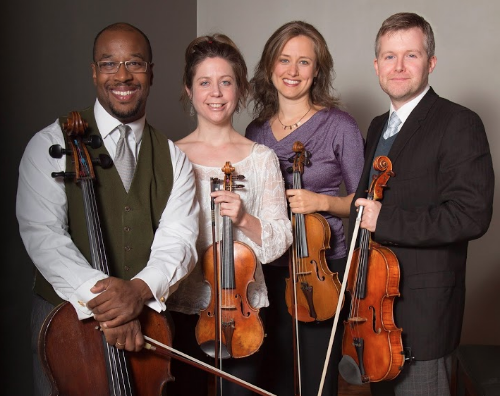
If you haven't heard our dear friends from Apple Hill before, you are in for a treat! Since its founding in 2007, the Apple Hill String Quartet has earned praise around the world for its concerts presenting interpretive mastery of traditional repertoire -- including Haydn, Mozart, Schubert, Schumann, Beethoven, and Ravel -- as well as for world premieres and commissioned pieces. As resident musicians at the Apple Hill Center for Chamber Music, the Quartet is featured in the summer concert series held every Tuesday night at the Center in Nelson, N.H. These concerts attract hundreds of visitors and have become a mainstay of the Monadnock area summer music offerings. Education is an integral part of the Quartet's mission. For three months in the summer, the Quartet comprises the core faculty for five separate 10-day summer workshops held at Apple Hill and attended by 300 participants. During the regular concert season, the Quartet conducts mini-residencies in embassies, communities, schools, and universities from the Monadnock region to major U.S. cities and around the world as part of Apple Hill's Playing for Peace program.
Purchase your tickets now to experience these exceptional, evocative works.